

CEE operators prioritize hyper-local content and strategic bundling to fight churn
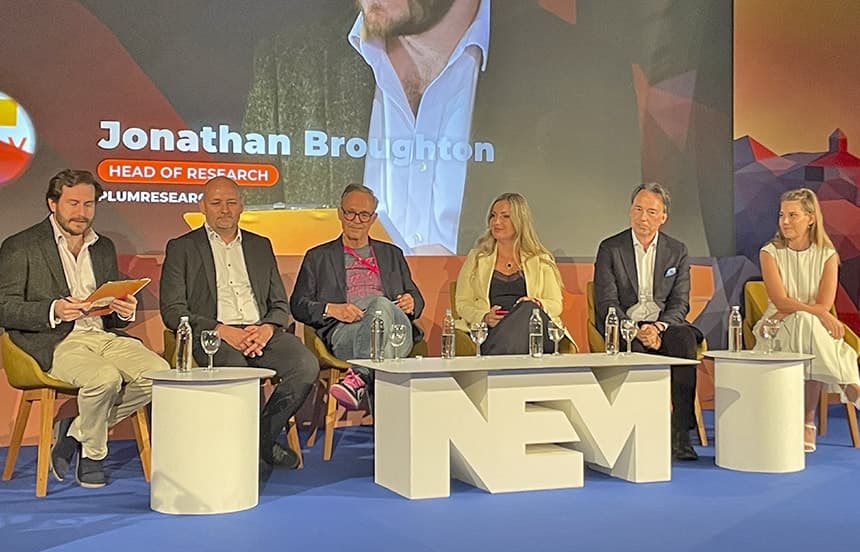
At NEM Dubrovnik 2026, Central and Eastern European (CEE) operators discussed tailored strategies for market dynamics, emphasizing localization and agile platform development to balance diverse consumer needs and compete with global giants. Executives highlighted how they leverage technology platforms to scale, centralize operations, and personalize content while navigating regional distribution challenges and maintaining profitability. The discussions touched on the dual need for standardization and localization in technology and content aggregation.
Key Takeaways
- Deutsche Telekom and A1 International prioritize standardizing tech platforms while keeping programming slates hyper-local to meet regional gaps.
- Yettel Hungary is developing highly configurable platforms to balance regional expertise with localized customer requests and partner ecosystems.
- Spain's content exports grew 600% in CEE over five years, fueled by hits like 'Velvet' and new medical event series '100 Miracles in 10 Days'.
- Disney showcased Nat Geo's 'Secrets of the Bees' and 'Pompeii Out of Time,' alongside a 2025 box office haul of nearly $6.6 billion.
Why It Matters
CEE operators are moving away from treating the region as a monolith, instead using 'agile' technology to scale back-end operations while doubling down on hyper-local content curation. As global giants like Netflix and Disney+ increase local investment, regional players are leveraging their legacy trust to act as primary aggregators, bundling local public interest content with international hits. The immediate implication is a more fragmented but resilient distribution landscape where household-level targeting—mixing linear for older viewers and social-vertical formats for younger ones—is the new standard for profitability. Watch the rollout of multi-series licensing deals like ITV's 'The Voice' in Serbia for signs of long-term regional commitment.
Additional Context
The CEE video market is witnessing a fundamental shift as regional SVOD revenues are projected to reach €3.3 billion by 2025, according to Prensario reporting. While global giants like Netflix maintain a dominant position, local services are growing faster by bypassing ad-supported models in favor of hardware-linked subscriptions. For example, the Latvian service Tet+ captured a 35% market share shortly after a 2021 rebrand, and Central European platforms like Voyo grew their subscriber bases by over 60% after pivoting away from ad-funding.
Recent data from the European Audiovisual Observatory indicates that 78% of SVOD viewing time in Europe is now devoted to episodic series, reinforcing the heavy investment in procedural dramas and medical event series seen at NEM Dubrovnik. Furthermore, per WPP Media’s 2026 VideoTrack study, pay-TV penetration remains exceptionally high at 90% in Romania and Hungary, making the 'frenemy' relationship between telcos and streamers essential. Operators in these markets are not facing the same cord-cutting pressures seen in North America, allowing them more room to experiment with hybrid linear-digital bundles.
Consolidation also remains a major theme across the region. Per CMS Romania, CEE deal-making accelerated in early 2026, with telecom and IT deal values rising sharply to roughly €5.24 billion. This trend towards megadeals supports the strategic shifts discussed by executives, as larger regional groups look to harmonize their tech stacks under unified platforms like those developed by Deutsche Telekom and A1. This structural integration is aimed at providing the scale necessary to compete with the impending arrival of more specialized technical requirements, such as AI-driven content discovery and anti-piracy infrastructure.
Read full article at senalnews.com
Enjoy our coverage?
Add StreamingMeme as a preferred source on Google to see more of our streaming news at the top of your Search results.
Add as preferred source