
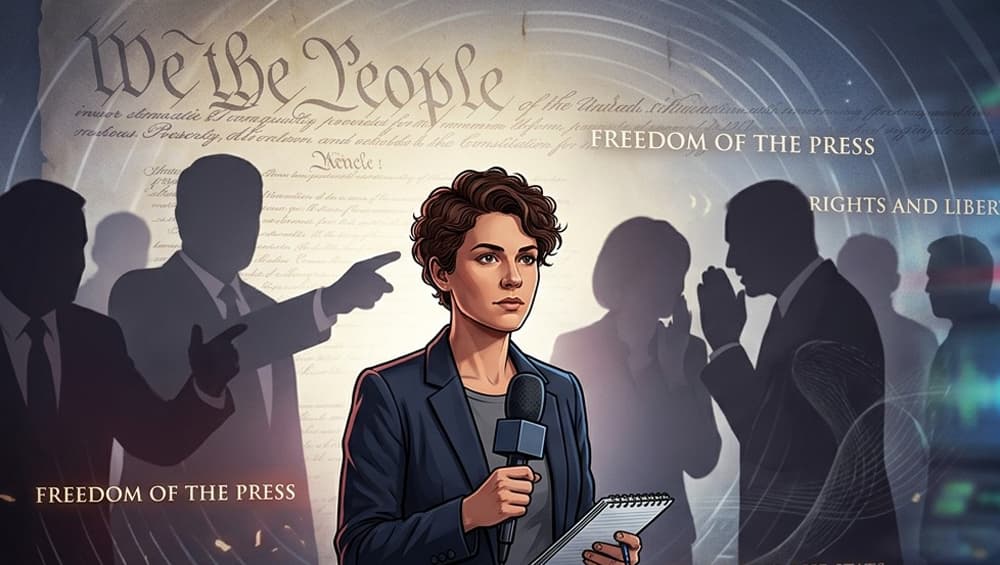
Industry advocates and journalists are debating the implications of FCC oversight under Chair Brendan Carr, specifically regarding broadcast programming and the potential chill on independent journalism. The discourse highlights industry tensions between station groups' desire for deregulation in areas like ATSC 3.0 and retransmission fees, and the constitutional concerns regarding news distortion rules.
The tension between seeking deregulation and defending editorial independence is forcing a strategic divide between corporate station owners and working journalists. If the FCC successfully reclassifies news-adjacent talk shows, it would permit unprecedented federal intervention in programming choices through equal-time mandates. This regulatory shift could fundamentally alter the cost of hosting political content and discourage broadcasters from airing controversial interviews during election cycles. For the broader ecosystem, this creates a climate of self-censorship that may drive political discourse further toward unregulated digital platforms. Watch for the D.C. Circuit Court’s response to the RTDNA’s writ of mandamus, which could force a definitive ruling on the current news distortion policy.
The regulatory pressure on broadcast news has reached a critical juncture following the FCC's move to investigate the Disney-owned ABC network. Per the Los Angeles Times in July 2026, the agency is specifically reviewing whether The View qualifies as a 'bona fide news program,' a designation it has held since 2002. This status exempts the program from equal-time rules that require broadcasters to provide comparable airtime to opposing political candidates. Semafor reported on July 5, 2026, that the inquiry has already had a chilling effect, as the show has not featured a single candidate in a competitive midterm race since the investigation began in February.
Simultaneously, a bipartisan coalition of former FCC officials and the Radio Television Digital News Association (RTDNA) has escalated legal challenges against existing rules. According to Radio World in April 2026, these groups filed a petition for a writ of mandamus in the U.S. Court of Appeals for the D.C. Circuit to compel the FCC to repeal its 'news distortion' policy. While Acting Media Bureau Chief Alex Sanjenis dismissed a related petition in June 2026 on procedural grounds, Democratic Commissioner Anna Gomez has publicly criticized these dismissals as attempts to avoid judicial review of the agency's actions.
While these editorial conflicts persist, the FCC remains active in infrastructure support. Per TVTechnology in spring 2026, more than 90 House lawmakers signed a letter urging Chair Brendan Carr to establish a 'date-certain' transition for the ATSC 3.0 standard. Broadcasters are advocating for this firm timeline to ensure manufacturing investment in NextGen TV receivers, which currently lag in consumer adoption despite the technology being available to over 75% of the U.S. population.
Add StreamingMeme as a preferred source on Google to see more of our streaming news at the top of your Search results.
Add as preferred source