
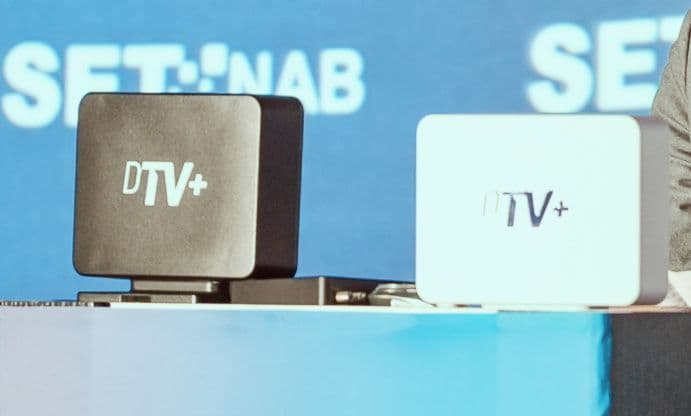
The Brazilian Ministry of Communications is developing a public policy for the distribution and subsidy of digital converters to support the upcoming transition to the TV 3.0 standard. Minister Frederico de Siqueira Filho noted that technical parameters are still being defined in collaboration with the local broadcast industry to ensure affordable and functional next-generation hardware.
The transition to TV 3.0 represents a pivotal shift for the Brazilian market, merging traditional broadcast with internet-based interactivity. If the government fails to deliver affordable converters, the digital divide could widen, as early hardware prototypes reportedly cost nearly R$ 700—a prohibitive price for the 80% of the population relying on open TV. This delay in policy finalization creates a bottleneck for consumer adoption of the ATSC 3.0-derived standard. Success hinges on a subsidized mass-distribution model similar to the 14 million digital kits provided during the 2016 analog switch-off. Watch for the official decree on hardware subsidies and defined technical benchmarks from Anatel by Q4 2026.
The transition to TV 3.0, publicly branded as 'DTV+,' officially entered its commercial pilot phase in June 2026. Per CSI Magazine (March 2026), Brazil's government extended the full implementation deadline to the end of 2027 to allow the broadcast ecosystem more time to mature. This extension followed the final nationwide switch-off of analog transmitters, which took 16 years to complete and successfully cleared the 700 MHz band for expanded 4G and 5G mobile coverage. While the government originally targeted the 2026 FIFA World Cup for a broader rollout, current availability remains limited to major metropolitan hubs like São Paulo, Rio de Janeiro, and Brasília.
Technically, Brazil’s TV 3.0 is a highly customized implementation of the ATSC 3.0 standard. According to V-Nova (June 2026), the system is the first in the world to mandate a dual-layer video architecture using Versatile Video Coding (VVC/H.266) and an MPEG-5 LCEVC enhancement layer. This stack allows for 4K UHD delivery at bitrates as low as 7.5 Mbps, significantly lower than traditional HD requirements. To support this advanced infrastructure, the Ministry of Communications secured BRL 2.7 billion (USD 500 million) in international financing from the World Bank and the Inter-American Development Bank, per Telecompaper (December 2025). This funding is primarily intended to provide credit lines for broadcasters to upgrade transmission hardware, but pressure is mounting to allocate similar resources toward consumer-side equipment.
The high cost of initial receiver kits, which integrate Android 14 and Wi-Fi 6 capabilities, remains a point of industry contention. At the 2026 NAB Show, as reported by TV Technology (June 2026), the focus shifted toward developing sub-$70 dongles to mirror the success of low-cost ATSC 3.0 devices in the U.S. and South Korea. If successful, Brazil's aggressive adoption of a hybrid broadcast-broadband model could serve as a regulatory template for the rest of Latin America, where terrestrial TV remains the dominant medium.
Add StreamingMeme as a preferred source on Google to see more of our streaming news at the top of your Search results.
Add as preferred source