

Brainstorm Suite 6.2 integrates NVIDIA Blackwell and Canon tracking for IBC 2025
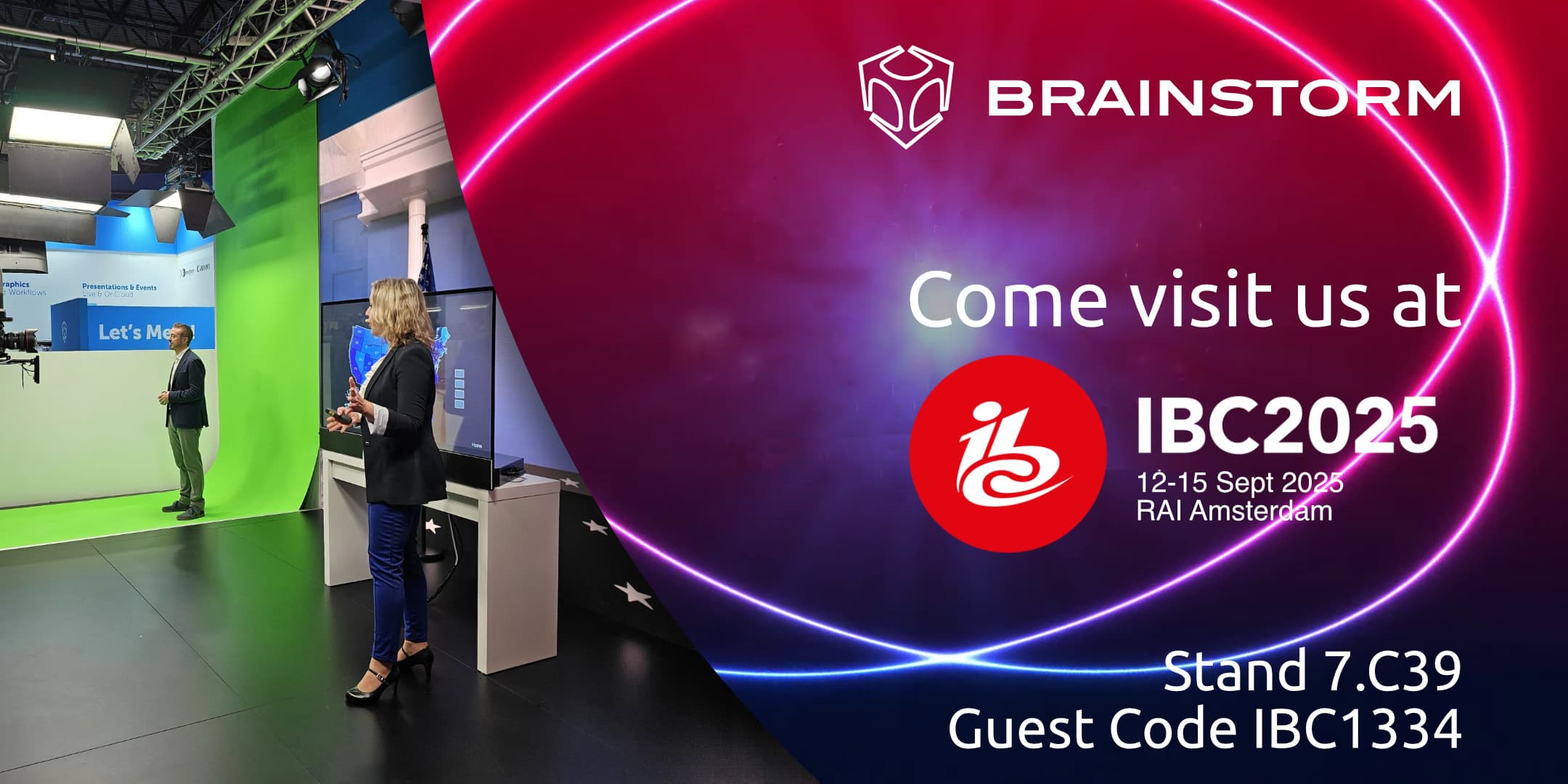
Brainstorm will demonstrate its Suite 6.2 virtual production tools at IBC 2025, featuring integrations with NVIDIA Blackwell, Unreal Engine 5, and Canon metadata technology. The showcase will focus on real-time AR graphics, multi-scene management, and hybrid workflows leveraging Alfalite LED volumes.
Key Takeaways
- Certification of NVIDIA Blackwell architecture and Dual GPU support allows a single workstation to manage entire LED and chroma multi-camera sets.
- Native support for Canon’s CV Protocol streamlines lens and camera calibration by transmitting real-time metadata directly to InfinitySet.
- New 'Instances' feature for Aston graphics tool creates a centralized asset system for reusing pre-compositions across collaborative, multi-channel workflows.
- Edison Ecosystem adds EdisonGO iPad capture and Edison OnCloud subscription services for corporate and educational immersive presentations.
Why It Matters
The integration of Blackwell processing and Canon’s CV Protocol marks a shift toward operational efficiency in virtual production, reducing the hardware footprint while automating complex calibration. By centralizing these tasks into a single-workstation environment, Brainstorm is addressing the high cost of entry that has historically restricted virtual production to tier-one studios. This efficiency is critical as the industry moves toward VP 2.0, where mid-market broadcasters and corporate creators demand real-time interactivity. Watch for whether this hardware consolidation translates to measurable reductions in set-up times and operational overhead for news and weather daily cycles.
Additional Context
The virtual production sector is entering a phase of high-speed technical consolidation, with market valuations projected to grow from roughly $3 billion in 2024 to over $10 billion by 2032, per CGW (February 2025). This 'VP 2.0' era is characterized by the convergence of AI tools and real-time rendering engines like Unreal Engine 5, aiming to replace traditional post-production tasks with in-camera visual effects (ICVFX). Per MarketsandMarkets (July 2025), hardware currently accounts for the largest share of this market, though software-driven automation is the primary lever for reducing site-specific expertise requirements.
Technological breakthroughs in GPU architecture are driving this shift. Per NVIDIA (March 2025), the Blackwell series provides up to 1.5 times the throughput of the previous Ada generation, specifically accelerating the 4:2:2 video processing and neural shading required for hyper-realistic virtual environments. This performance jump enables companies like Brainstorm to transition from multi-server setups to a single-machine paradigm, which is essential for space-constrained mobile and regional broadcast units.
Partnerships between hardware manufacturers and software developers are also standardizing how data flows between capture and render. Per Brainstorm (September 2025), the certification of Canon’s CV Metadata technology ensures that lens distortion and tracking data are transmitted via a readable JSON format, facilitating immediate visual consistency. This mirrors broader industry moves seen at IBC 2024 and 2025, where manufacturers like Alfalite and Sony launched dedicated LED and ceiling panels designed to integrate lighting and tracking data directly into the volume environment, simplifying the bridge between physical and digital production.
Read full article at brainstorm3d.com
Enjoy our coverage?
Add StreamingMeme as a preferred source on Google to see more of our streaming news at the top of your Search results.
Add as preferred source