

Beeble launches SwitchHDR to reconstruct 16-bit professional video from SDR
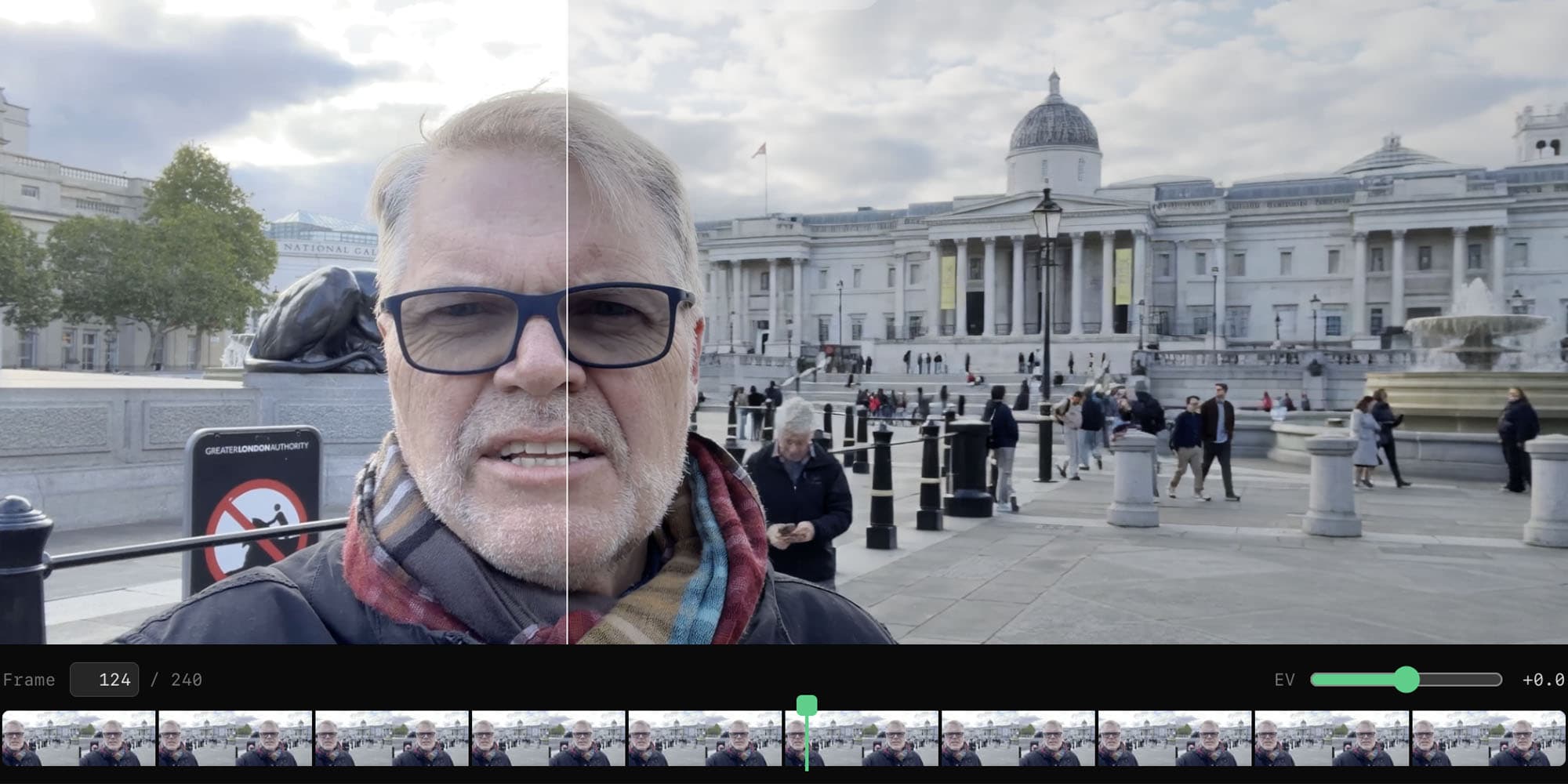
Beeble has released SwitchHDR, a machine-learning model designed to reconstruct HDR video from SDR source material for professional production workflows. The tool allows artists to output 16-bit EXR sequences using ACES2065-1 color standards while maintaining localized control over highlights and shadows.
Key Takeaways
- Outputs production-ready 16-bit EXR sequences in ACES2065-1 to ensure compatibility with professional compositing and finishing suites.
- Uses a machine-learning model trained on native HDR data rather than SDR upscaling to infer plausible luminance values in clipped or crushed regions.
- Provides localized artist control through luminance masks and text prompts to guide reconstruction in specific areas like highlights or shadows.
- Maintains temporal consistency across full video sequences to prevent flickering or artifacts common in individual frame processing.
Why It Matters
This launch addresses a critical bottleneck in the transition to HDR-native streaming libraries: the visual quality gap when mixing archival or SDR source material with modern high-brightness masters. By moving beyond simple signal remapping to informed AI reconstruction, Beeble provides a bridge for studios to upgrade legacy catalogs without the plasticky artifacts of traditional upscaling. The integration of 16-bit EXR and ACES standards indicates a shift toward 'production-grade' generative AI that prioritizes professional utility over mere automation. Watch for whether major streaming platforms adopt similar localized reconstruction to enhance their own back-catalogs as HDR-capable hardware becomes the consumer standard.
Additional Context
The push for high-fidelity HDR upscaling is accelerating across the streaming and hardware sectors. In January 2024, Nvidia released RTX Video HDR, a consumer-facing tool that uses Tensor cores to convert SDR browser video into HDR10 in real time. Unlike Beeble's professional-grade reconstruction for post-production, Nvidia’s solution targets end-users watching YouTube or Twitch on HDR10-compliant monitors. Similarly, Samsung unveiled its 'Vision AI' suite at CES 2025, which includes 'Auto HDR Remastering Pro.' Per Samsung (January 2025), this technology analyzes content frame-by-frame to expand colors and contrast for lifelike visuals on its latest Neo QLED and OLED lineups.
Industry interest in HDR is also fueled by the expanding reach of next-generation broadcasting and sports. According to InterDigital (March 2025), major events like the 2024 Paris Olympics served as high-profile testbeds for HDR distribution, driving broader consumer awareness and creator priority for the format. As of mid-2025, platforms including Netflix, Disney+, and Apple TV+ have continued to expand their UHD/HDR libraries, while French broadcaster Canal+ has confirmed early support for the newly introduced Dolby Vision 2 content intelligence standards (per PCMag, September 2025).
Beeble’s entry into this space follows its $4.75 million seed round in July 2024, led by Basis Set Ventures and Fika Ventures. Initially known for its virtual lighting tool SwitchLight, the company’s expansion into HDR reconstruction reflects a wider market trend toward AI as a utility for high-end VFX. Per SNS Insider (January 2026), the AI in VFX market is projected to reach approximately $28.66 billion by 2035, driven by larger studios utilizing these tools to reduce production timelines while maintaining cinematic quality in increasingly complex HDR-first workflows.
Read full article at fxguide.com
Enjoy our coverage?
Add StreamingMeme as a preferred source on Google to see more of our streaming news at the top of your Search results.
Add as preferred source