

286 encoding pros point to AV1, AI, and hybrid stacks
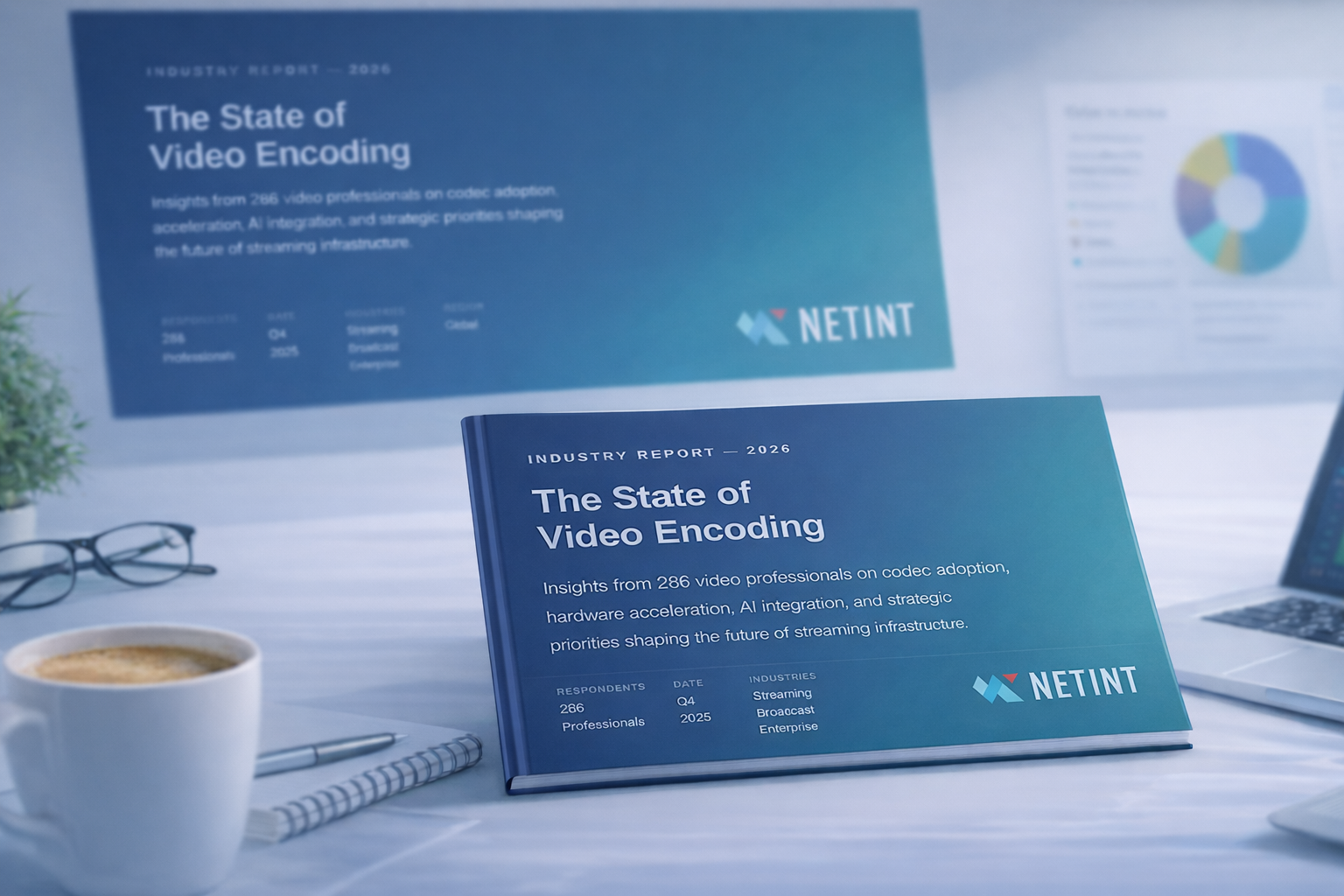
NETINT's "2026 State of Video Encoding" report, based on a survey of 286 professionals, highlights key trends including the diversification away from GPU-only hardware for encoding, the increasing adoption of the AV1 codec with a projected 231% growth rate, and the integration of AI/ML into core encoding workflows. It also identifies organizational barriers like budget constraints and team capacity as primary blockers, alongside a significant portion of the market lacking formalized Total Cost of Ownership (TCO) methodology, and the emergence of hybrid software/hardware solutions for large-scale operations.
Key Takeaways
- GPU and VPU evaluation intent is nearly even at 53.6% versus 51.5%, and 41% of hardware users already deploy more than one hardware type.
- AV1 is in production at 17% of organizations now, but 57% expect it deployed or planned by the end of 2026, a 231% planned growth rate.
- 60% of respondents already use AI/ML in at least one encoding workflow, and 53% plan to expand it in 2026.
- Budget constraints and limited team capacity each affect over 40% of respondents, while 49% of video teams have five or fewer people.
- At large scale, hardware-only drops to 16% and hybrid rises to 45%, making hybrid the dominant approach in that segment.
Why It Matters
The immediate signal is that encoding buyers are no longer treating GPU-only infrastructure, AV1, or AI/ML as side bets; they are planning around all three at once. The market angle is even clearer at scale, where hybrid software-hardware deployments rise to 45% and single-approach models shrink, while 30% of respondents still lack formal TCO methodology. Watch the AV1 rollout rate through 2026, especially the gap between the 17% already in production and the 57% who say it will be deployed or planned by year-end.
Read full article at netint.biz