
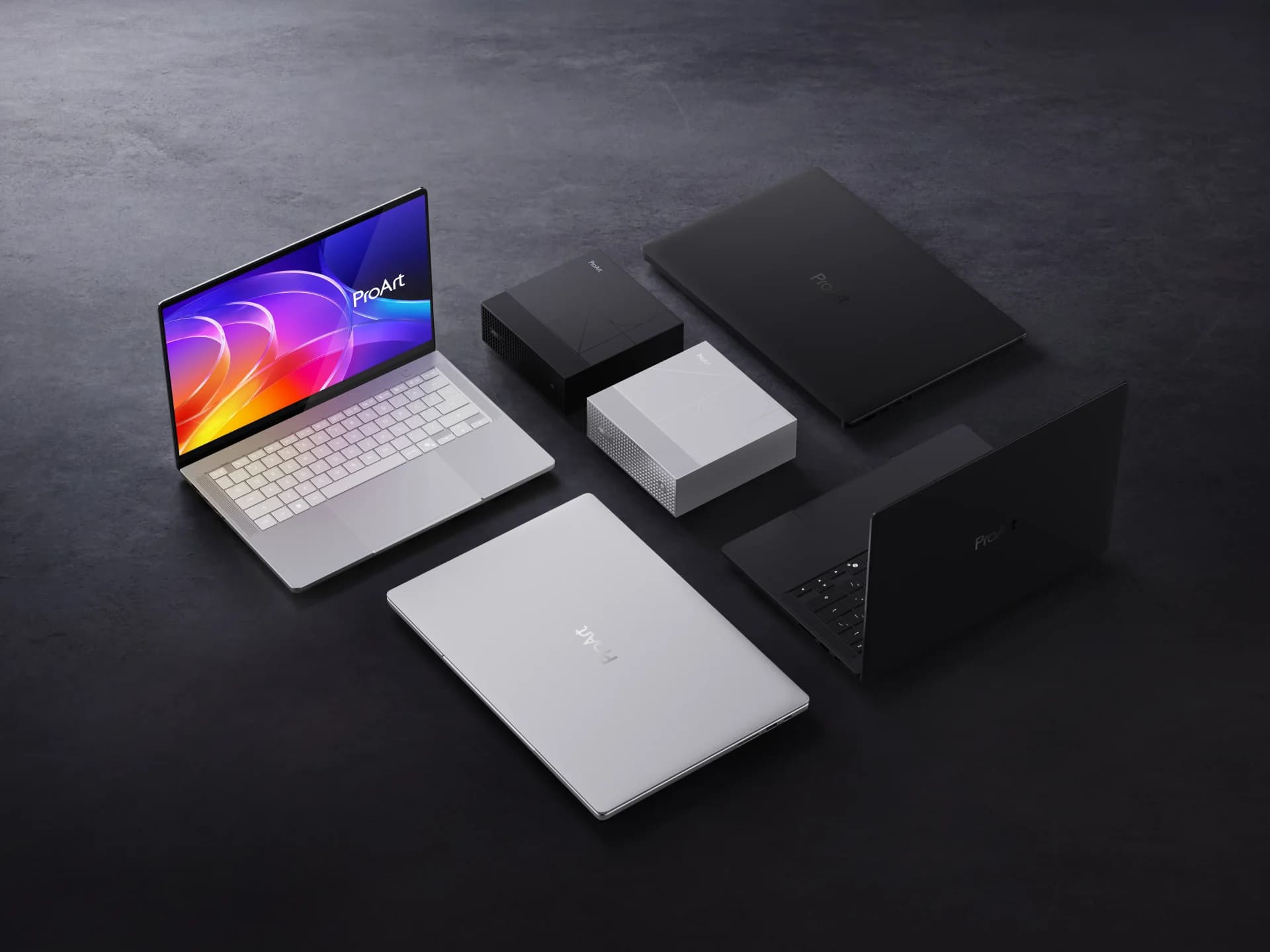
ASUS Malaysia is launching new RTX Spark-powered ProArt laptops (P16/P14) and Mini PCs in Malaysia, designed for demanding AI workloads, productivity, and gaming. These systems feature NVIDIA RTX Spark technology, enabling capabilities like 12K video editing, 4K AI video generation, and local execution of large language models with up to 120 billion parameters. The ProArt Mini PC offers up to 1 petaflop of AI performance in a compact chassis, targeting creators, developers, and edge AI deployments.
The introduction of RTX Spark-powered ProArt systems signifies a push for more powerful, localized AI processing capabilities for creative professionals and developers. This reduces reliance on cloud services for intensive computing tasks and could accelerate content creation workflows by bringing significant processing power directly to the workstation. The focus on local execution for large language models and high-resolution video tasks points towards a shift in how AI-driven production is approached, potentially lowering latency and increasing data privacy. What to watch is the adoption rate among studios and individual creators, and how this impacts the market for cloud-based rendering and AI services.
The ASUS launch follows a broader industry push for 'Personal AI Agents' initiated at Computex 2026, where NVIDIA and Microsoft positioned the RTX Spark platform as the premium tier for Windows on Arm. Per Wikipedia (June 2026), the platform is specifically architected to run advanced 'agentic' software that manages complex task automation locally, a move designed to address the privacy and latency bottlenecks of cloud AI. This aligns with Microsoft’s move to bring RTX Spark into its newly announced 'Copilot+ PC' category, which requires minimum AI performance standards for OS-level integration.
Technically, the RTX Spark’s use of NVLink-C2C allows for 600GB/s of interconnect bandwidth, a feature usually reserved for enterprise data centers. This high-speed link is essential for the 120-billion-parameter large language models (LLMs) cited by ASUS, which would otherwise struggle on standard consumer hardware. Leading creative suites are already pivoting; per PetaPixel (June 2026), Adobe is currently re-architecting Photoshop and Premiere Pro to run natively on Spark, targeting a 2x efficiency gain in AI-accelerated tasks like generative fill and auto-captioning.
Competitive pressure is mounting as this launch marks NVIDIA’s most aggressive entry into the PC processor space. According to NotebookCheck (June 2026), the ProArt Mini PC is positioned as a direct rival to the Apple Mac Studio and HP’s OmniDesk. While NVIDIA's Blackwell architecture provides a massive AI and gaming advantage—exceeding 100 FPS in 1440p AAA titles—analysts from PCMag (June 2026) note that the success of this ecosystem will depend on the software translation performance of Microsoft’s 'Prism' emulator for legacy x86 video production plugins.
Add StreamingMeme as a preferred source on Google to see more of our streaming news at the top of your Search results.
Add as preferred source