

Apple tests live sports production with 15-device iPhone 17 Pro setup
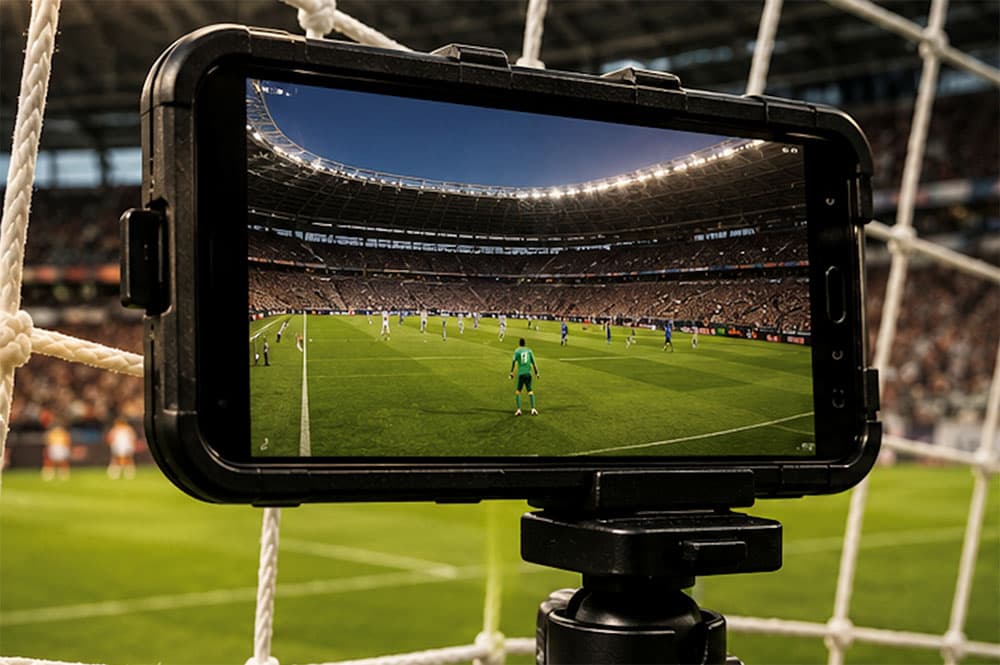
Apple demonstrated a live Major League Soccer broadcast using 15 iPhone 17 Pro devices to investigate the viability of replacing legacy production infrastructure with high-end consumer hardware. The project serves as a case study for shifting towards software-driven, AI-integrated production models to potentially reduce costs for lower-tier sports content.
Key Takeaways
- Production relied on 15 iPhone 17 Pro devices utilizing the Apple Log 2 video format for professional-grade color grading.
- The 48MP Fusion camera system replicated the utility of approximately eight standard broadcast lenses via computational photography.
- AI-driven processing handled stabilization and exposure correction at the edge, reducing the need for heavy on-site production crews.
- The test follows incremental trials including a September 2025 Friday Night Baseball matchup and highlights from the 2025 MLS Cup.
Why It Matters
This move signals a pivot toward software-driven production that could collapse the cost of broadcasting tier-two and tier-three sports content. By controlling the entire stack—from the iPhone capture layer to Apple TV distribution—Apple is demonstrating a vertically integrated model that bypasses expensive legacy trucks and specialized hardware. For the broader ecosystem, this suggests a future where high-quality live rights become viable for smaller leagues previously priced out of professional broadcast standards. Watch for viewer feedback on image compression and focus during fast-motion play as the primary technical hurdle remains bridging the gap between mobile sensors and dedicated glass.
Additional Context
Apple's push into mobile-first production coincides with a tactical restructuring of its sports rights portfolio. Per Sportico in November 2025, Apple and MLS revised their 10-year partnership to end in 2029, three years earlier than the original 2032 expiration. The updated terms reportedly increased Apple’s payments by roughly $50 million through 2029, while giving the league more flexibility to enter the market after the 2026 World Cup. This shortened runway puts intense pressure on Apple to prove its technical infrastructure can scale quickly and maintain the high production values demanded by global audiences.
Beyond traditional flat-screen broadcasts, Apple is leveraging the MLS partnership to advance its spatial computing ecosystem. Per MacRumors in February 2024, the company recorded the 2023 MLS Cup Playoffs in 8K 3D with a 180-degree field of view specifically for the Apple Vision Pro. This 'Apple Immersive Video' format allows fans to view matches from perspectives that conventional rigs cannot easily reach, such as from within the goal net or directly on the sidelines. These immersive experiments are increasingly merging with Apple’s live production trials, as the same compact iPhone hardware utilized in the recent MLS match provides the portability required for such unique spatial angles.
The industry shift toward cloud-based and mobile workflows is also visible among third-party vendors. Per Streaming Media in December 2025, firms like TVU Networks and LiveU reported triple-digit growth in cloud-based multi-camera switching and remote production (REMI) applications. As the 2026 World Cup approaches, the focus for major rights holders is shifting from 'if' consumer-grade hardware can be used to 'how' it can be integrated into private 5G venue networks to ensure the reliability required for premium global feeds.
Read full article at postperspective.com
Enjoy our coverage?
Add StreamingMeme as a preferred source on Google to see more of our streaming news at the top of your Search results.
Add as preferred source