

AMD pushes AI to the edge for live broadcast latency and trust
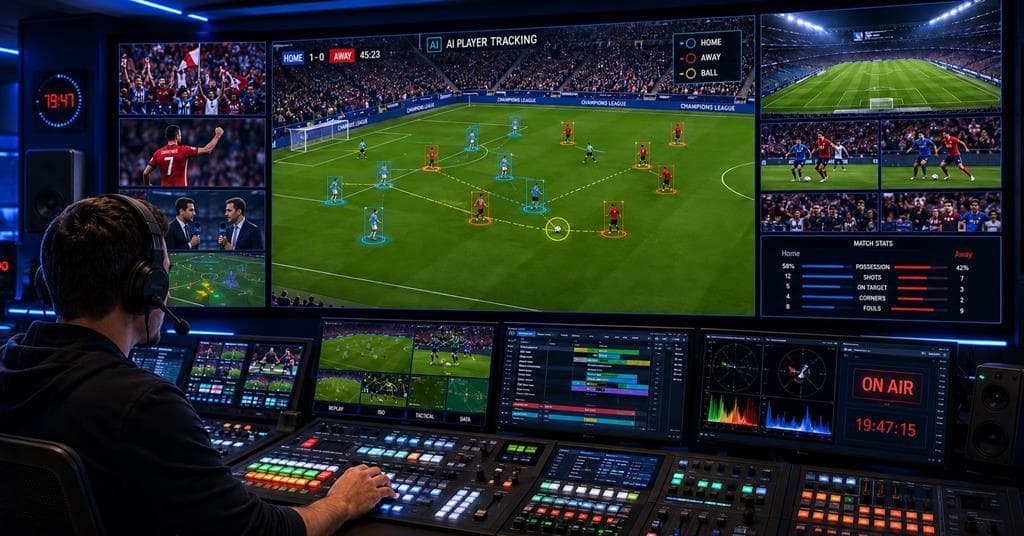
AMD's Robert Green highlights the increasing importance of edge AI for live broadcast workflows, contrasting it with cloud-based AI due to stricter requirements for latency, determinism, and trust. Edge AI embeds machine learning models directly into production equipment, processing data locally to enhance efficiency and reliability in live environments. The article details applications such as natural language interaction with broadcast systems via LLMs/VLMs and improved audio experiences through 'sound bubbles' using embedded AI.
Key Takeaways
- Edge AI embeds machine learning models into production equipment, processing data locally to ensure low latency and determinism for live broadcasts.
- Applications include natural language interaction with broadcast systems via LLMs/VLMs for system control and diagnostics.
- Edge AI improves audio by creating "sound bubbles" (e.g., BdSound) to isolate voices and suppress background noise using embedded MEMS microphones.
- RaiderChip's NPU, built on AMD Versal adaptive SoC, enables offline GenAI for speech enhancement, camera tracking, and chat assistants.
Why It Matters
The shift to edge AI for live broadcast applications directly tackles the critical need for real-time processing and data security. By bringing AI inference on-chip, broadcasters can reduce reliance on cloud services, addressing bandwidth, latency, and governance concerns. This integration makes AI a native capability of broadcast AV equipment rather than an external service, promising more reliable and efficient operations. Watch for increased adoption of vendor-specific edge AI hardware integrated into new broadcast production tools.
Read full article at broadcastnow.co.uk
Enjoy our coverage?
Add StreamingMeme as a preferred source on Google to see more of our streaming news at the top of your Search results.
Add as preferred source