

AMD challenges NVIDIA's AI workstation with $3,999 Ryzen AI Halo
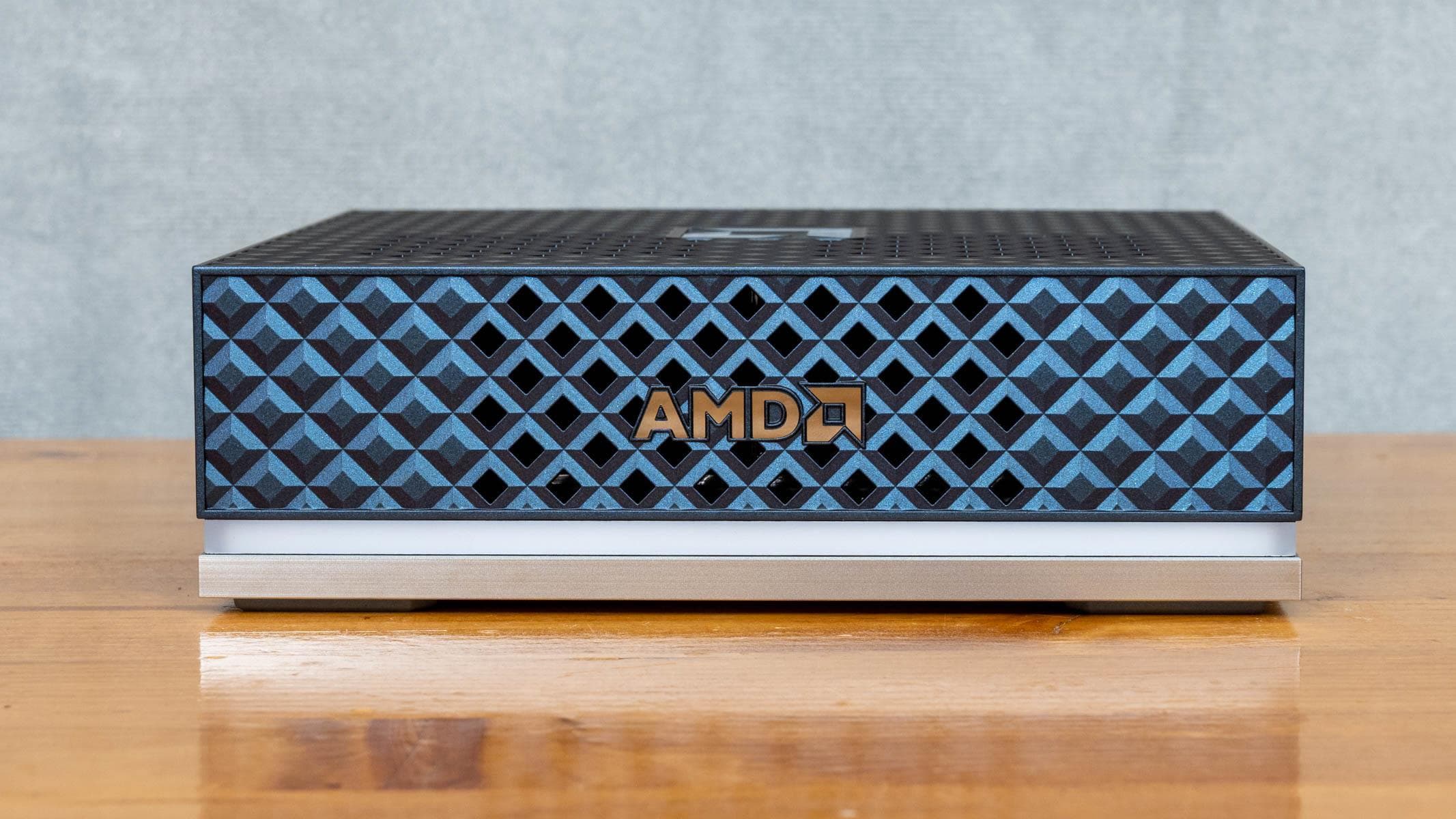
AMD has released its Ryzen AI Halo developer platform to compete with NVIDIA's DGX Spark for local generative AI and synthetic media development. The workstation features the Ryzen AI Max+ 395 processor with 128GB of LPDDR5x memory tailored for compute-intensive tasks.
Key Takeaways
- Ryzen AI Max+ 395 integrates 16 Zen 5 cores, 40 RDNA 3.5 graphics cores, and a 50 TOPS NPU.
- Hardware features 128GB of LPDDR5x-8000 memory with a 256-bit interface yielding 256 GB/sec throughput.
- Variable Graphics Memory allows users to partition up to 96GB of the system RAM to the GPU.
- Dual-OS support enables native development on Windows 11 Pro or Linux, distinguishing it from NVIDIA’s Linux-only DGX Spark.
- AMD targets a $3,999 retail price, positioning it between the $4,300 Mac Studio M4 Max and $4,700 DGX Spark.
Why It Matters
This launch establishes a high-performance x86 alternative in the 'personal supercomputer' category, breaking the unified memory monopoly held by Apple and NVIDIA. For video engineers and synthetic media developers, the ability to run high-parameter models locally on Windows simplifies cross-platform production pipelines. While it lacks the high-speed multi-system interconnects found in NVIDIA's stack, the 96GB addressable VRAM provides a massive local sandbox for fine-tuning open-source models without cloud token costs. Watching the performance of x86 developers migrating from macOS will signal if AMD's price-to-performance lead can erode Apple’s workstation dominance in creative sectors.
Additional Context
The local AI workstation market has shifted rapidly following NVIDIA’s introduction of the DGX Spark and its GB10 Grace Blackwell Superchip. Per Medium, June 2026, the DGX Spark is often marketed as the 'world's smallest AI supercomputer,' delivering up to 1 petaFLOP of FP4 performance using a co-designed ARM CPU from MediaTek. While NVIDIA maintains a raw performance lead in AI compute specifically optimized for Blackwell architecture, AMD’s entry focuses on the x86 ecosystem's versatility and lower entry costs. AMD’s strategy also extends to 'Agent Computers,' a branding effort highlighted at Microsoft Build in June 2026 to position Strix Halo as the primary hardware for autonomous local agents.
At the same time, Apple’s dominance in unified memory workstations faces new headwinds. Per MacRumors, July 2026, Apple increased prices across the Mac Studio line in June due to component shortages, pushing the M4 Max starting price to $2,499. However, Mac configurations equivalent to the Ryzen AI Halo’s memory capacity remain significantly more expensive, with M3 Ultra models maxing out at 96GB for over $5,000. While Apple still leads in memory bandwidth—hitting 546 GB/s on the M4 Max versus AMD’s 256 GB/s—users are increasingly choosing between raw bandwidth speed and the sheer memory capacity required to load 70B+ parameter models entirely on-device.
Industry supply chain constraints are further defining this hardware race. Per TechInsights, June 2026, a global memory shortage is keeping LPDDR5X and HBM prices elevated, which has forced manufacturers like NVIDIA and Apple to adjust MSRPs and extend lead times. AMD’s use of the established 4nm TSMC process for Strix Halo chips potentially offers a more stable supply chain path. As third-party vendors like GMKtec and HP bring similar Strix Halo configurations to market, the availability of these high-RAM mini-PCs is expected to drive a surge in on-premises AI prototyping throughout the second half of 2026.
Read full article at hothardware.com
Enjoy our coverage?
Add StreamingMeme as a preferred source on Google to see more of our streaming news at the top of your Search results.
Add as preferred source