

AI upscaling models replace traditional interpolation to revive low-resolution assets
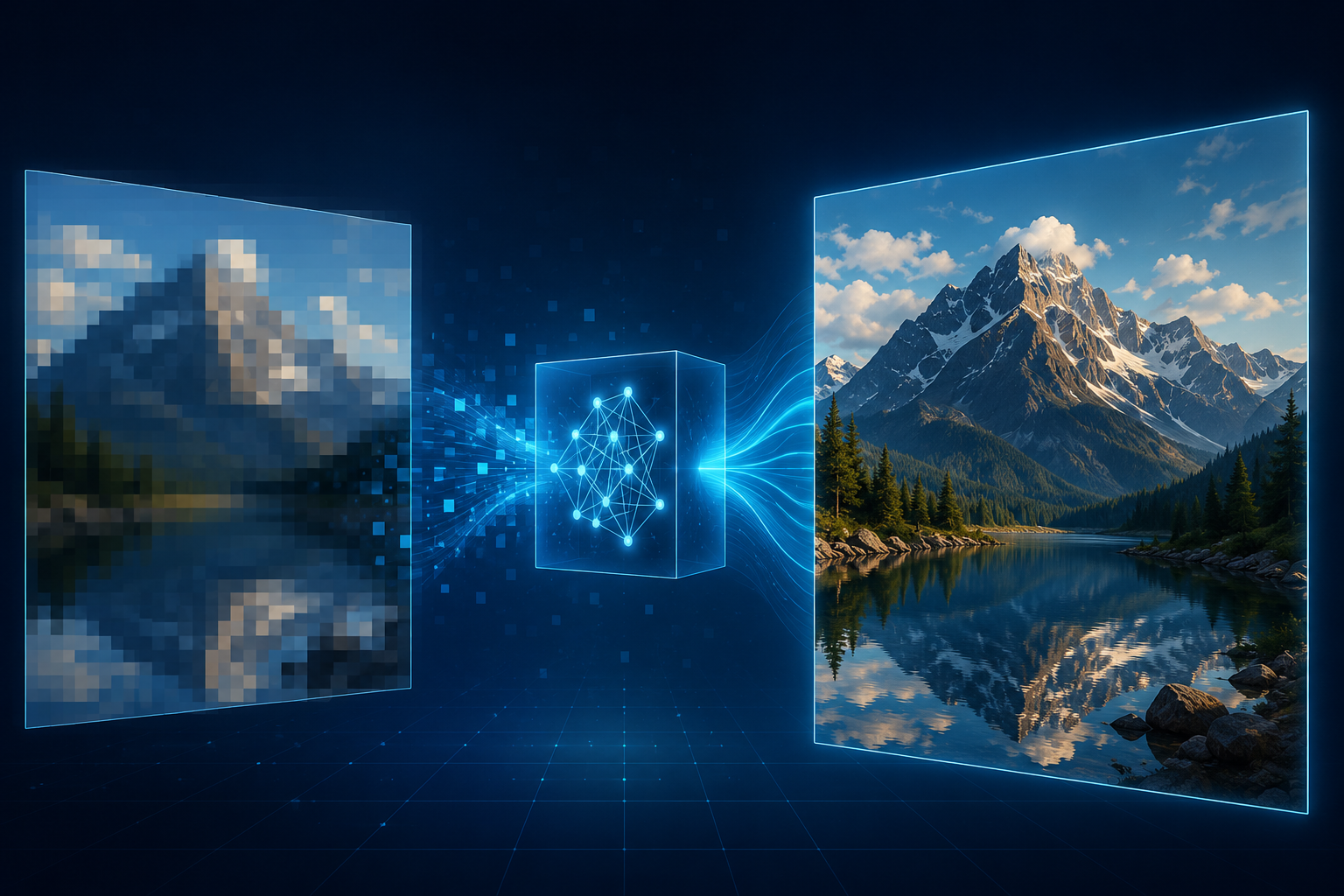
AI-based upscaling models are increasingly replacing traditional interpolation methods to reconstruct high-quality image details. This shift allows for scalable asset restoration, with tools like Upscalepro.ai making the technology more accessible for diverse professional and creative use cases.
Key Takeaways
- AI models reconstruct plausible detail in skin texture and fabric weave by recognizing learned patterns rather than averaging neighboring pixels.
- Web-based tools like Upscalepro.ai eliminate the need for specialized local software or high-end retouching expertise for asset restoration.
- Reconstructed details now hold up under close inspection in areas like foliage and fine linework where traditional interpolation historically failed.
- The technology enables the repurposing of old family photos, newspaper archives, and low-resolution screenshots for modern high-definition displays.
Why It Matters
The shift from pixel-guessing to detail-reconstruction fundamentally changes the value of legacy content catalogs. For streaming services and digital marketers, this provides a scalable way to upcycle massive archives of substandard visual assets into usable high-resolution formats without the prohibitive costs of manual retouching. By moving high-fidelity upscaling into the browser, the technical floor for professional-grade imaging has dropped, making it a standard expectation for even small creative teams. As 4K and 8K displays become market defaults, watch for how these reconstruction models integrate directly into real-time streaming pipelines to lower original capture and transmission costs.
Additional Context
The trend toward integrated AI reconstruction has accelerated in 2026 as major creative software players consolidate specialized upscaling technology. Per PetaPixel and DPReview in June 2026, Adobe entered a definitive agreement to acquire Topaz Labs, a dominant developer of image and video enhancement models. This acquisition officially integrates Topaz Gigapixel and Video AI tools directly into the Creative Cloud ecosystem. This move follows a surge in real-time processing capabilities, such as Google Flow, which launched in early 2026 to enable 1080p to 4K upscaling for live broadcasts with a latency of just 200ms. Simultaneously, traditional video post-production tools are pivoting to AI-first workflows. Blackmagic Design announced DaVinci Resolve 21 in April 2026, introducing 'AI UltraSharpen' and 'AI Motion Deblur' to reconstruct unusable footage at higher resolutions. In the hardware layer, NVIDIA released DLSS 4.5 at CES 2026, utilizing a second-generation transformer-based architecture that targets 'shimmering' and temporal artifacts specifically for real-time upscaling. According to the Bitmovin Video Developer Report 2025/26, video quality optimization is now a top-five AI application for 29% of industry professionals, signaling that these tools are moving from experimental niches to core streaming infrastructure.
Read full article at aijourn.com
Get this in your inbox → Subscribe
Enjoy our coverage?
Add StreamingMeme as a preferred source on Google to see more of our streaming news at the top of your Search results.
Add as preferred source