
ESPN is producing the 2026 NBA Finals with an almost entirely 1080p HDR workflow built on a complete ST 2110 IP signal flow, delivering HDR feeds to ESPN streaming platforms while ABC remains in 1080p SDR. The New York leg uses Game Creek Video's Flagship A, B, C, and D units, plus a 52-camera complement that includes 14 1080p HDR high-frame-rate cameras and four native 4K 240-fps HFR cameras. EVS 4K PMX replay servers, four EVS PAM 4K processing units, and 120 1080p HDR EVS VIA channels support zoomable 4K source replays. Calrec audio and Viz Gen 5 graphics round out the chain. Watch for whether this becomes the template for future marquee streaming events.
Your mezzanine workflow wasn't built for AI. Every new model means another proxy encode, more bandwidth, more latency. VC-6's hierarchical format lets each model pull only the resolution and region it needs from a single multicast stream. No fan-out, no redundant decodes. Benchmarks show 93% less bandwidth and 80% lower end-to-end latency versus ST 2110. Learn how VC-6 is reshaping the economics of live production for sports.

NETINT Technologies highlights that the deployable performance of Video Processing Units (VPUs) in video infrastructure is critically dependent on system architecture, not just silicon efficiency. The article, authored by Mark Donnigan from NETINT, emphasizes that factors like PCIe topology, power delivery, thermal management, and mechanical design are crucial for sustaining real-world video workloads. It partners with Advantech for purpose-built platforms to ensure NETINT VPUs operate at full capacity under continuous 24/7 workloads.
LinkedInEditorsAMD's rocDecode documentation details the codecs and hardware decode capabilities for various AMD GPU architectures, including H.265, H.264, AV1, and VP9. This information is crucial for developers and integrators building video processing solutions on AMD platforms, offering insight into maximum resolutions and supported bit depths per codec and GPU series.
AmdDelta Digital Video has released a whitepaper titled "JPEG-XS for Tactical ISR" that compares the ultra-low-latency codec to H.264 and H.265 for tactical ISR workflows. The whitepaper helps streaming professionals understand the optimal application of codecs in systems where low latency, deterministic behavior, and image quality are critical. It also highlights how DDV's products like the 5480E, VEC500, and 9600/9610 support JPEG-XS.
Delta Digital VideoNETINT's 2026 State of Video Encoding Survey reveals where 286 encoding professionals are placing their bets and where they're stalling. You'll learn how the GPU monoculture is cracking, why cost and quality are no longer a tradeoff, what codec has a 231% planned implementation growth rate, which organizational types are most likely to adopt key technologies, who TCO is a blind spot for 30% of the market, the small segment of the market that is overwhelmingly influential and tech forward leaning, and more.
Stats Perform has introduced "Realtime Streaming," a solution designed to deliver sub-second latency for live sports and iGaming at scale. This technology aims to enhance synchronized viewer interaction, improve engagement, and enable better monetization for in-play betting by eliminating lag and drift. It has been proven in production with over 500,000 concurrent viewers and is offered as part of their Bet LiveStreams product.
Stats PerformDaniela Miao, CTO of Momento, discusses how their serverless and managed caching solutions, built on Valkey, address the need for predictable performance during high-scale, bursty traffic typical of live events. Momento offers both SaaS serverless caching and VPC-deployed managed Valkey, highlighting Valkey's efficiency in memory usage and its capability to handle millions of users in real-time environments. Miao also expresses interest in Valkey's future native AI support for efficient KV caching in AI workloads.
ValkeyAgileTV emphasizes the critical importance of low-latency streaming for live sports events like the FIFA World Cup to meet modern viewer expectations and prevent spoilers. The article details the challenges of achieving low latency across the video delivery chain and highlights solutions such as optimized CDNs, multi-CDN strategies, and modern streaming protocols like LL-HLS and LL-DASH. AgileTV positions its Multi-CDN Optimization platform as a key solution for operators to ensure real-time viewing experiences during peak demand.
AgileTVAkamai Accelerated Compute instances, powered by NETINT Quadra Video Processing Units (VPUs), provide specialized, high-density cloud transcoding for AV1, HEVC, and H.264 up to 8Kp60. These instances offer 15–30x better encoding performance than traditional CPUs, with pricing starting at $0.42/hr ($280/mo).
NVIDIA has released Nemotron 3.5 ASR, a 600M-parameter speech-to-text model that supports 40 languages in real time, offering low latency and high accuracy with built-in punctuation and capitalization. The model is open-weights, fine-tunable, and addresses common challenges in multilingual speech recognition for streaming video applications. It provides a detailed guide on how to fine-tune the model for specific languages or domains.
huggingfaceSpotify has partnered with Universal Music Group to introduce paid generative AI tools enabling fans to remix and create covers of songs, aiming to generate new revenue streams. Concurrently, YouTube is expanding its content creation capabilities with new Gemini Omni features for AI-driven video prompts and enhancing its likeness detection technology to manage creator identities and prevent unauthorized use of faces in AI-generated content.
New York MagazineThe rising demand for memory chips, especially HBM, driven by AI systems, is causing "chipflation" or significant price increases and supply shortages across the technology industry. This shift is leading to a dual-track market where large AI and cloud buyers secure long-term contracts, while other industries face higher costs, longer lead times, and potential product specification reductions. The increased cost of memory components is expected to impact hardware pricing, cloud service bills, and IT budgets, with upstream suppliers gaining pricing power over downstream equipment manufacturers.
BitgetYour mezzanine workflow wasn't built for AI. Every new model means another proxy encode, more bandwidth, more latency. VC-6's hierarchical format lets each model pull only the resolution and region it needs from a single multicast stream. No fan-out, no redundant decodes. Benchmarks show 93% less bandwidth and 80% lower end-to-end latency versus ST 2110. Learn how VC-6 is reshaping the economics of live production for sports.
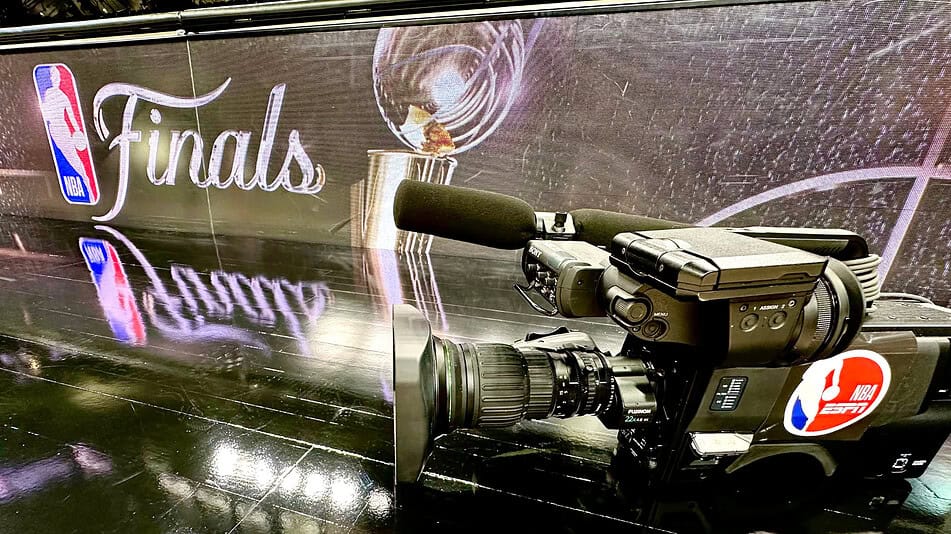
ESPN is utilizing a near end-to-end 1080p HDR production workflow and complete ST 2110 signal flow for its coverage of the 2026 NBA Finals. This advanced setup involves mobile production units from Game Creek Video, including their Flagship unit, and features specialized cameras, EVS replay servers, Calrec audio consoles, and Viz Gen 5 graphics units. The production chain will deliver 1080p HDR signals to ESPN's streaming platforms, while linear ABC transmission remains in 1080p SDR.
SportsvideoLenovo has been named the Official Technology Partner for the 2026 FIFA World Cup, where it will supply hardware and AI-powered infrastructure for worldwide broadcast operations. The agreement includes servers, storage, PCs, and laptops, aimed at managing high-definition streams and providing real-time data processing for enhanced broadcast experiences. This partnership emphasizes the growing integration of advanced technology, including AI, in large-scale sports production and broadcasting.
TV TechSwiss broadcaster Canal Alpha has selected Harmonic's software-based XOS Advanced Media Processor to integrate playout and delivery across various networks, including DTT, IPTV, CTV, and OTT. The solution uses AI-powered EyeQ content-aware encoding to reduce bitrates by up to 50% while supporting UHD delivery. This deployment streamlines Canal Alpha's 24/7 channel origination and direct-to-consumer delivery.
InBroadcastWith the NETINT Quadra Mini Server, you can bypass expensive cloud transcoding services and cellular uplinks from the stadium. This compact powerhouse sips power while encoding 20 Full HD AV1, HEVC, and H.264 streams or 5 4K streams. Drawing just 138 watts, the Quadra Mini Server is perfect for live sports streaming services looking to reduce latency and cut OPEX.
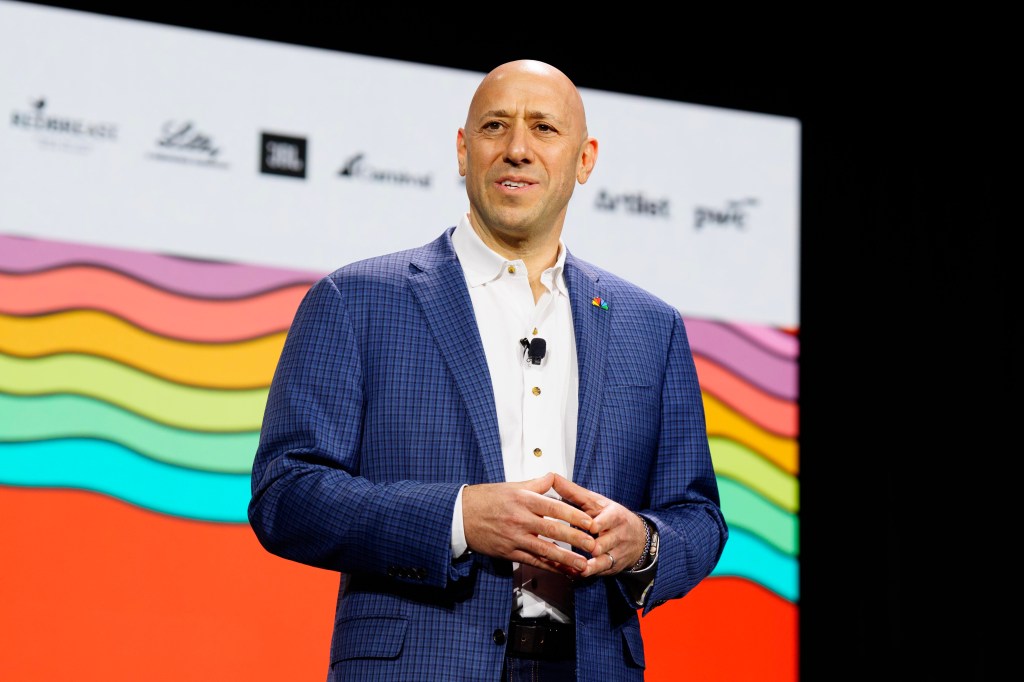
NBCUniversal Chairman Matt Strauss announced that Peacock is projected to achieve profitability in Q2 2026, marking a significant milestone for the streaming service. Strauss emphasized Peacock's continued focus on the domestic U.S. market to maximize ARPU and advertising revenue, along with integrating interactive features like vertical video and games. This profitability follows previous delays due to the pandemic and distinguishes Peacock's domestic-focused strategy from competitors.
DeadlineNvidia has acquired Kumo AI, a four-year-old predictive AI startup known for its highly accurate business prediction models that can be plugged into existing data warehouses. Kumo AI's Graph Neural Networks can assist streaming companies with challenges like customer retention and content recommendations, a use case highlighted by customer Black Entertainment Television. The acquisition further solidifies Nvidia's position in the AI market, following several other startup acquisitions.
SiliconANGLELiftoff, a mobile app marketing and performance platform, completed its Nasdaq IPO, raising $437 million at $23 per share after an earlier delay. The company's COO emphasized the immediate profit delivery of AI in ad tech, contrasting its Cortex platform with competitors. This IPO marks the first for an ad tech company since MNTN's IPO last May.
AdExchangerWe are experts in the video streaming ecosystem, having built iconic VOD streaming services and driven market development and GTM strategies for codec, encoding, and infrastructure companies. We've seen the same pattern: brilliant technology, underpowered marketing. The Marketing Pod gives you a full B2B marketing engine: strategist, content creators, designers, and product marketing experts led by someone who actually understands your buyers. No ramp-up. No translation layer. Just execution.

Major media companies at the 2026 Upfronts, including NBCUniversal, FOX, Amazon, TelevisaUnivision, Disney, Netflix, and Warner Bros. Discovery, highlighted advancements in AI-powered ad technology, cross-platform measurement, and unified advertising platforms. They showcased new ad products, data tools, and strategies for connecting brand storytelling with performance outcomes across linear and streaming video, with a strong focus on authenticated audiences and enhanced targeting capabilities.
RainThe article critiques the W3C's proposed "Attribution Level 1" standard, arguing it mistakenly equates attribution with advertising effectiveness, which could misallocate ad spend and harm the open web. It highlights that attribution systems primarily observe rather than causally measure incremental business impact, potentially overcrediting lower-funnel channels. The author urges the W3C to revise its language to clearly distinguish attribution inputs from causal effectiveness measurement.
AdExchangerWurl's latest CTV Trends Report advocates for advertisers to re-evaluate their brand safety strategies on FAST news channels, suggesting that broad exclusions lead to missed valuable audiences. The report highlights how scene-level contextual targeting, which evaluates content moments before ad breaks, provides advertisers with more precise control to unlock premium inventory. Wurl's CEO Dave Bernath noted that this technology allows for a more nuanced approach to brand safety compared to traditional genre-level exclusions.
Demand Gen Report
At its 154th meeting, MPEG advanced multiple standards including AVC 12th edition, AES-256 encryption for ISOBMFF, and the AAC Immersive Interchange Format (IIF), alongside new developments in AI-based media coding and 3D graphics. These updates enhance capabilities in video coding, content protection, immersive audio, and AI applications for streaming media. The meeting also featured demonstrations highlighting the readiness of MPEG-I immersive audio technology for deployment across various devices.
MpegThe Advanced Television Broadcasting Alliance (ATBA) urges the FCC to reject a petition for standalone 5G Broadcast on LPTV spectrum, warning it risks spectrum reallocation to wireless carriers. ATBA argues that 5G Broadcast should be integrated within the ATSC 3.0 standard rather than authorized as a separate cellular-based transmission option for LPTV stations. This dispute highlights a broader conflict over broadcast spectrum control and the future direction of ATSC 3.0 adoption in the US.
NewscastStudioThis report compares royalty calculations between Access Advance's VDP Pool and Avanci Video across eight streaming service templates, including Netflix. Avanci's royalties run 1.9× to 30.3× higher than Access Advance's with current discounts applied. Key drivers include Avanci's inclusion of ad revenue in its royalty base, higher flat rates than Access Advance's tiered structure, and the absence of a fee cap. The Access Advance–sponsored study was independently researched and calculated by Jan Ozer, with full transparency for verification.

