
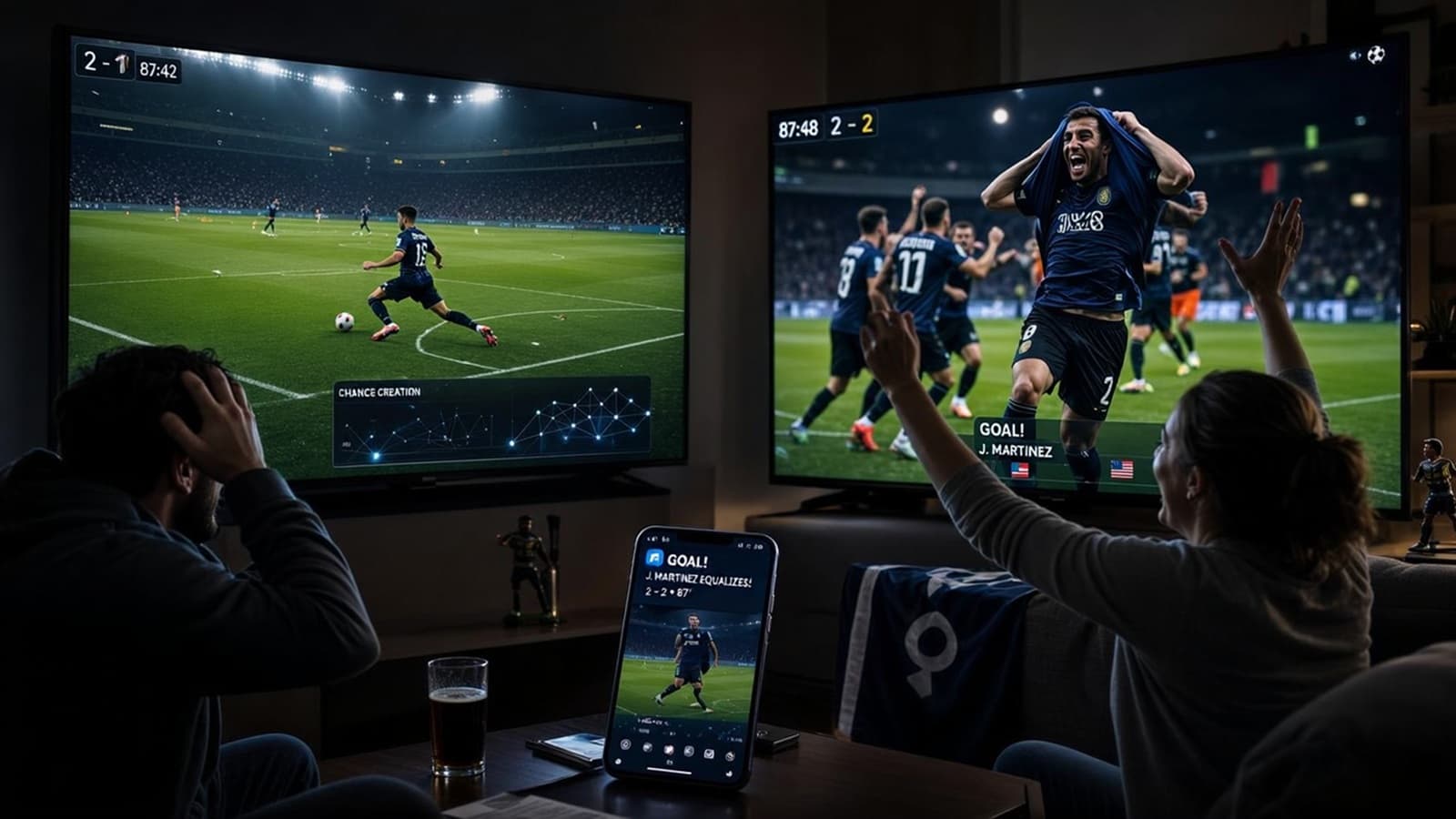
Latency variations for the 2026 FIFA World Cup are significant, with traditional broadcast TV showing 2.5-8 second delays, standard streaming between 15-25 seconds, and FAST TV up to 60 seconds. Different video processing and delivery chains are cited as the cause, with efforts to reduce latency through technologies like LL-HLS and LL-DASH, and initiatives by companies like Vodafone Deutschland and Israel's Partner to implement low-latency systems.
Live sports are the last line of defense for real-time synchronization in a fragmented video market. When FAST TV lags a full minute behind cable, social media spoilers destroy the premium value of live rights. This latency gap creates a tiered class of viewership where sub-five-second performance is now a competitive mandate rather than a technical luxury. For infrastructure providers, the 2026 World Cup serves as a massive stress test for LL-HLS and LL-DASH at scale. Watch for whether these AI-driven infrastructure upgrades become the permanent baseline for sports-heavy streaming services post-tournament or remain temporary event-based patches.
The push for lower latency in 2026 follows years of industry friction during major sports events. Per the Digital TV Group (DTG) in November 2024, the average lag for BBC iPlayer improved from 56 seconds in 2023 to 40 seconds during the 2024 Olympics, yet premium smart TVs continued to exhibit delays exceeding one minute. This inconsistency across hardware remains a primary hurdle; DTG noted that console-based streaming achieved the most significant year-over-year latency reduction, cutting nearly 34 seconds from previous benchmarks.
Broadcasters are increasingly bypassing standard delivery routes to close this gap. Per Broadband TV News in May 2026, Vodafone Deutschland’s World Cup optimization involves feeding an accelerated signal directly into the cable network, specifically for public broadcasters ARD and ZDF. Similarly, Sky UK launched 'Real Time' low-latency versions of BBC and ITV channels on its Sky Glass and Sky Stream platforms in June 2026. These dedicated channels, located at specific guide positions, reportedly reduce lag by up to 20 seconds for IP-based viewers.
Technologically, the shift toward Common Media Application Format (CMAF) and HTTP/2 push continues to drive improvements. However, per industry reports from late 2025 and 2026, achieving sub-second 'ultra-low' latency remains restricted to interactive betting applications using WebRTC. Mass-market broadcasters are instead converging on a 5-to-10 second 'near real-time' target, which balances the high-velocity requirements of live sports with the buffering stability needed to prevent outages across millions of concurrent global connections.
Add StreamingMeme as a preferred source on Google to see more of our streaming news at the top of your Search results.
Add as preferred source