

USask researchers reduce video AI compute needs via motion-focused tokenization
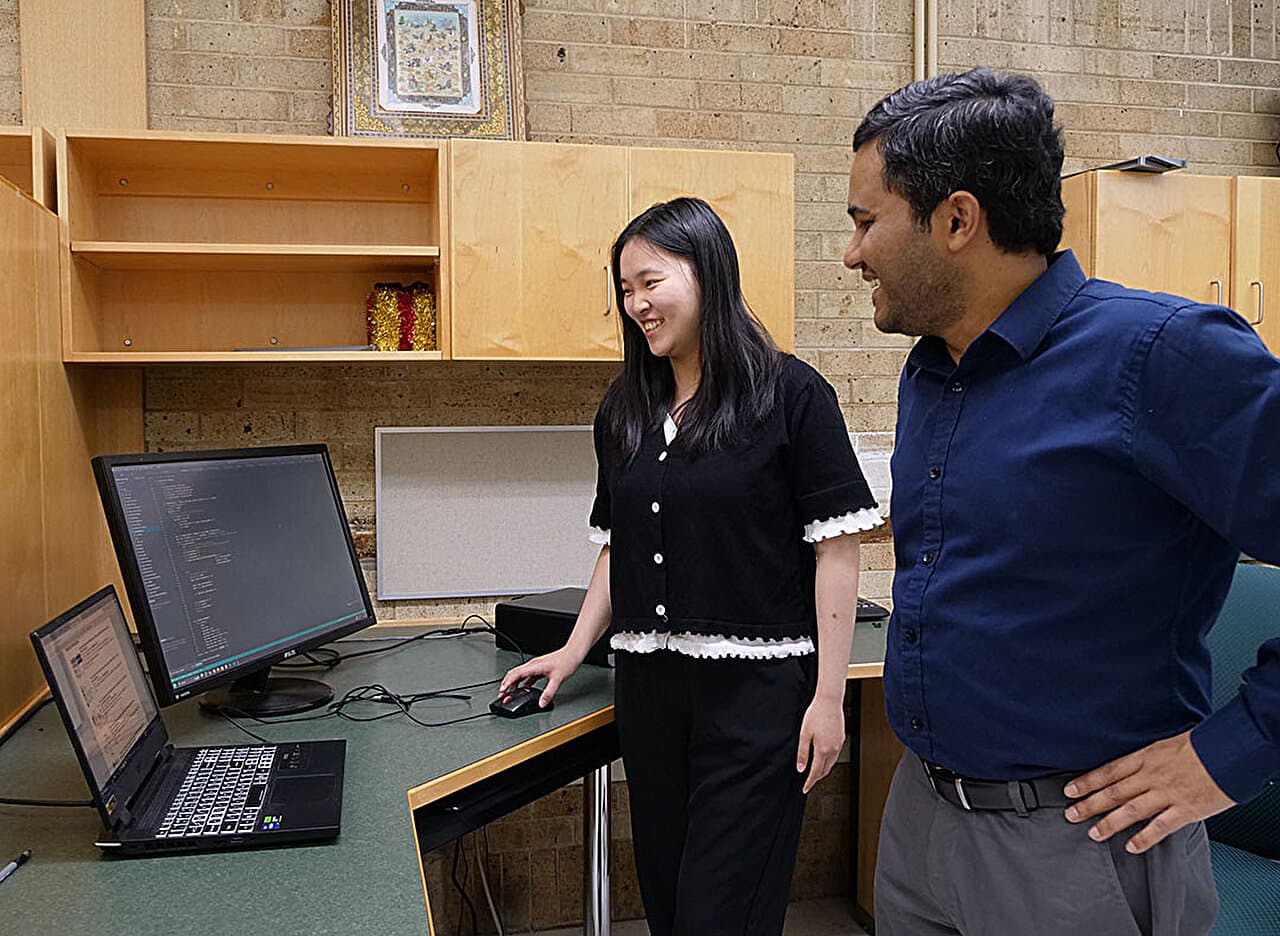
University of Saskatchewan researchers have developed Learnable Motion-Focused Tokenization (LMFT), a method to increase video AI efficiency by filtering out background noise. Presented at CVPR 2026, the technique reduces the required computing power for video analysis, potentially enabling local deployment on more modest infrastructure.
Key Takeaways
- LMFT strips uninformative background patches to focus model training on primary action-relevant tokens.
- The system addresses 'domain shift' issues where AI models struggle to recognize actions in environments different from their training data.
- Presented at CVPR 2026, the research received the Gold Star Award for efficiency, one of only 18 selected from 16,000 submissions.
- Reduced computational overhead from LMFT may enable local hosting of high-end AI models without massive data center reliance.
Why It Matters
The immediate implication is a drop in the compute-per-analysis metric, potentially moving advanced video analytics from the cloud to edge devices and consumer infrastructure. Within the broader ecosystem, this efficiency gains allow smaller organizations to deploy sophisticated action-recognition tools without the prohibitive costs of high-end GPU clusters. For the streaming industry, this suggests a shift toward more robust, on-device content moderation and automated metadata generation. Watch for whether major hardware providers integrate similar motion-tokenization filters directly into silicon to accelerate mobile-side AI inference.
Additional Context
The University of Saskatchewan's focus on efficiency reflects a broader industry movement toward 'small language models' and on-device processing. Per Forbes (May 2026), nearly 60% of new AI video deployments now prioritize on-device inference to circumvent the latency and privacy risks of cloud-based analysis. This trend is driven by the rising cost of visual tokens; a single minute of high-resolution video can generate over 350,000 visual tokens, a volume that traditional context windows struggle to absorb without extreme compression.
Further technical context from CVPR 2026 (June 2026) shows that efficiency was a central theme of the conference, with the Best Paper Award going to D4RT, a network designed by Google DeepMind and Oxford researchers for lightweight 4D scene reconstruction. Similar to LMFT, these winning projects aim to simplify what were once computationally intensive tasks into unified, scalable feedforward predictions. Industry benchmarks from April 2026, cited by GitHub's research community, note that hierarchical token compression can now achieve up to 50x reductions in data volume with minimal performance loss.
Simultaneously, the generative video market is maturing from isolated clip generation to production-ready infrastructure. Per reports from Magic Hour (March 2026), newer models like Seedance 2.0 and Kling 3.0 have begun incorporating advanced motion-physics and temporal-coherence layers to solve the 'visual consistency' problem. By focusing the model's attention on the subject’s motion rather than static background elements, researchers are successfully reducing the 'hallucinations' that previously caused objects to shift unrealistically during movement.
Read full article at techxplore.com
Enjoy our coverage?
Add StreamingMeme as a preferred source on Google to see more of our streaming news at the top of your Search results.
Add as preferred source