

UK Supreme Court rules Tesla can challenge Avanci's 5G royalty rates
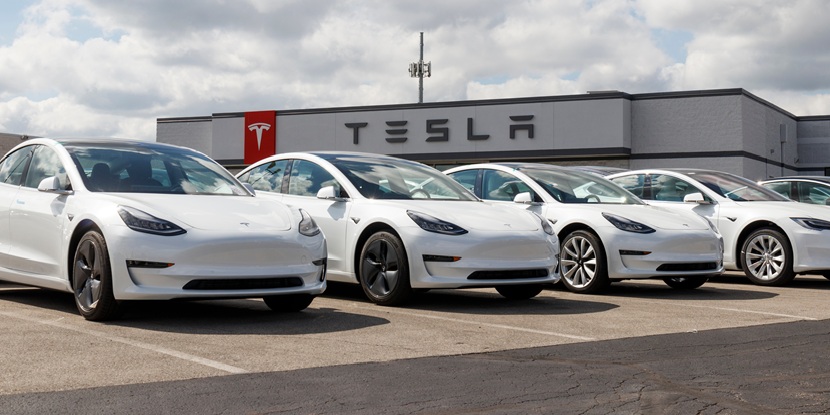
The UK Supreme Court has ruled that English courts hold jurisdiction to determine FRAND licensing rates for global patent pools, specifically in a dispute between Tesla and patent pool operator Avanci. By clarifying that FRAND obligations persist within licensing pools, the decision sets a significant precedent for how telecommunications and media technology companies negotiate intellectual property terms.
Key Takeaways
- UK Supreme Court held that FRAND obligations on standard-essential patents (SEPs) persist even when licensed collectively through a patent pool.
- Tesla's claim argues the $32-per-vehicle flat rate for 5G connectivity is non-FRAND and significantly exceeds rates for prior standards.
- The ruling marks the first instance of a non-Chinese court claiming jurisdiction to set global rates for an entire patent pool.
- The High Court will now examine the merits of Avanci's pricing model, which covers over 7,500 bilateral licenses across 89 SEP owners.
Why It Matters
This decision transforms the negotiation landscape for streaming and IoT hardware by stripping patent pools of their immunity from judicial rate-setting. By ruling that UK courts can adjudicate global terms, the Supreme Court has positioned London as a primary forum for implementers seeking to bypass non-negotiable platform rates. For the broader ecosystem, this signals a shift from 'take-it-or-leave-it' pool models toward court-supervised valuations that could lower integration costs for connected devices. Industry observers should watch for the High Court's upcoming MERITS trial, which will set the specific financial benchmark for 5G automotive licensing.
Additional Context
The UK Supreme Court’s decision arrives as global regulators struggle to harmonize standard-essential patent (SEP) licensing. In October 2025, the European Commission officially withdrew its proposed SEP Regulation after Member States failed to reach a consensus, per Eversheds Sutherland (May 2026). The aborted EU framework had sought to establish a central SEP register at the EUIPO and mandatory FRAND conciliation, but faced heavy opposition from patent holders like Nokia and Ericsson who argued it added unnecessary bureaucracy. The withdrawal has left the Unified Patent Court and national courts to resolve disputes in a fragmented regulatory environment. Simultaneously, jurisdictional tensions between Europe and China have intensified. In January 2025, the EU initiated a World Trade Organization (WTO) dispute, DS632, challenging China’s authority to unilaterally set global royalty rates for non-Chinese patents without party consent, per the European Commission (February 2026). This followed a landmark 2023 ruling in China where the Chongqing court set worldwide rates for Nokia’s portfolio in a dispute with OPPO. By confirming its own jurisdiction to set global rates, the UK court is effectively competing with Chinese courts to become the definitive arbiter of SEP value, a trend that directly impacts any hardware manufacturer in the streaming and telecommunications sectors.
Read full article at juve-patent.com
Get this in your inbox → Subscribe
Enjoy our coverage?
Add StreamingMeme as a preferred source on Google to see more of our streaming news at the top of your Search results.
Add as preferred source