

Treble and Hugging Face launch benchmark for far-field voice AI
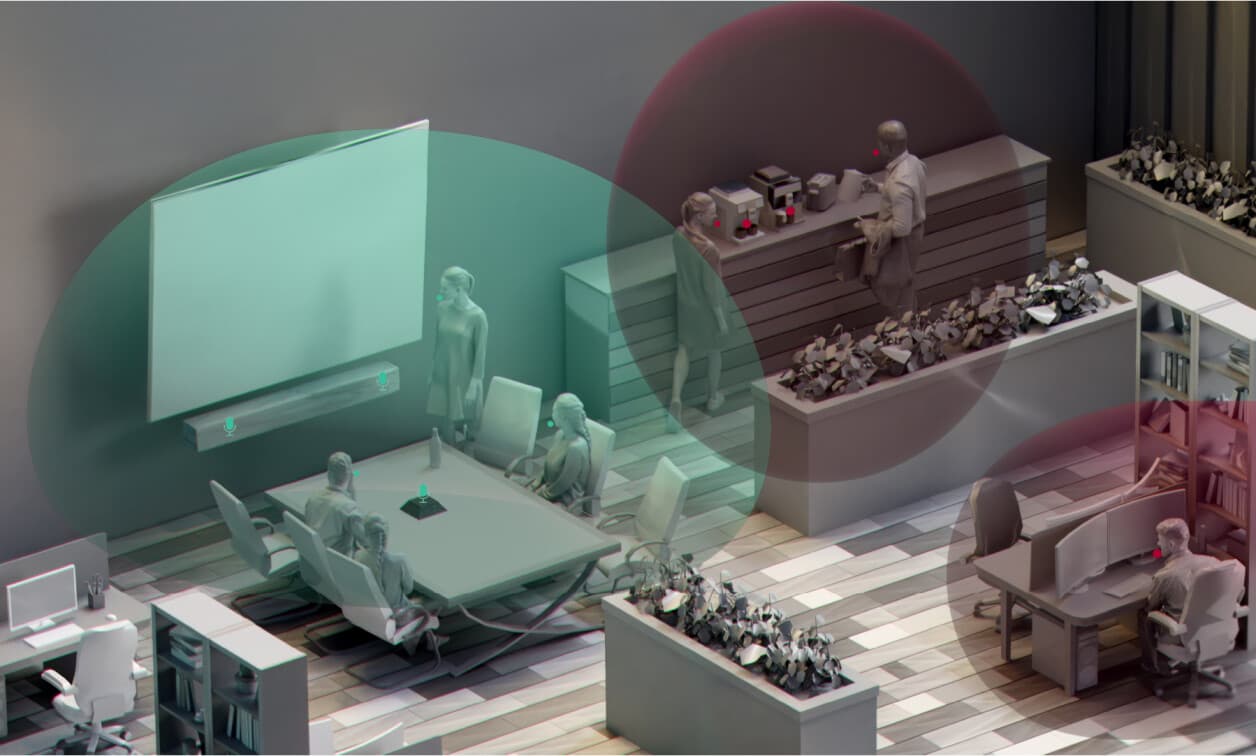
Treble Technologies and Hugging Face have launched the Far-Field ASR Leaderboard to benchmark voice AI performance in realistic, noisy acoustic environments. This initiative provides a standardized framework for developers to evaluate speech recognition pipelines using synthetic, wave-based acoustic simulations.
Key Takeaways
- Word error rates for systems like IBM’s AMI meeting transcription increase by 2.5 to 4 times when moving from near-field to distant microphones.
- The benchmark uses synthetic wave-based simulations to model physical phenomena like diffraction, scattering, and modal behavior across homes, classrooms, and offices.
- Performance is ranked across four primary scoring categories: Near-field (dry), and Far-field at High, Mid, and Low signal-to-noise ratios (SNR).
- Participating entities including NVIDIA, IBM Research, and Cohere are using the framework to test end-to-end pipelines, including denoising and beamforming front-ends.
Why It Matters
This launch addresses a critical bottleneck as streaming hardware and smart home ecosystems move beyond simple phone-based commands. While current ASR models achieve nearly 95% accuracy in clean conditions, they often fail in the reverberant, multi-speaker environments typical of living rooms or connected cars. By standardizing evaluation for far-field audio, Treble and Hugging Face are forcing developers to optimize for high-noise robustness rather than just raw transcription speed. For the streaming industry, this is the first step toward reliable voice-based content discovery in uncontrolled settings. Watch for whether dominant models like OpenAI Whisper or Google Chirp 2 see significant ranking shifts under the benchmark's low-SNR (below 6 dB) conditions.
Additional Context
The push for realistic benchmarking coincides with a massive projected expansion in the voice interface market. Per Data Bridge Market Research, the global far-field speech and voice recognition market is expected to grow from $4.61 billion in 2024 to nearly $22.8 billion by 2032. This growth is increasingly driven by the automotive and smart home segments, where hands-free operation in noisy acoustic environments has become a core product differentiator. In response, hardware manufacturers like Synaptics have begun launching AI-native IoT processors, such as the Astra SL-Series in April 2024, capable of performing multi-modal voice processing directly at the edge to reduce latency and improve privacy.
Major cloud providers are also shifting their focus toward conversational robustness in non-ideal conditions. According to Gladia reporting in April 2026, Google’s Chirp 3 model now includes built-in denoisers to handle noisy audio, while Amazon Transcribe has introduced specialized evaluations for overlapping speech and multi-speaker diarization in conference settings. Despite these advances, real-world word error rates (WER) for even the most accurate models, such as OpenAI's Whisper Large-v3, continue to degrade significantly—often jumping from 2.7% on clean audio to over 12% in practical enterprise applications, according to testing by NovaScribe in 2026. This data underscores the critical need for Treble and Hugging Face's initiative to bridge the performance gap between controlled laboratory benchmarks and actual deployment environments.
Read full article at embeddedcomputing.com
Enjoy our coverage?
Add StreamingMeme as a preferred source on Google to see more of our streaming news at the top of your Search results.
Add as preferred source