

Telestream embeds 'Practical AI' across Vantage to automate broadcast bottlenecks
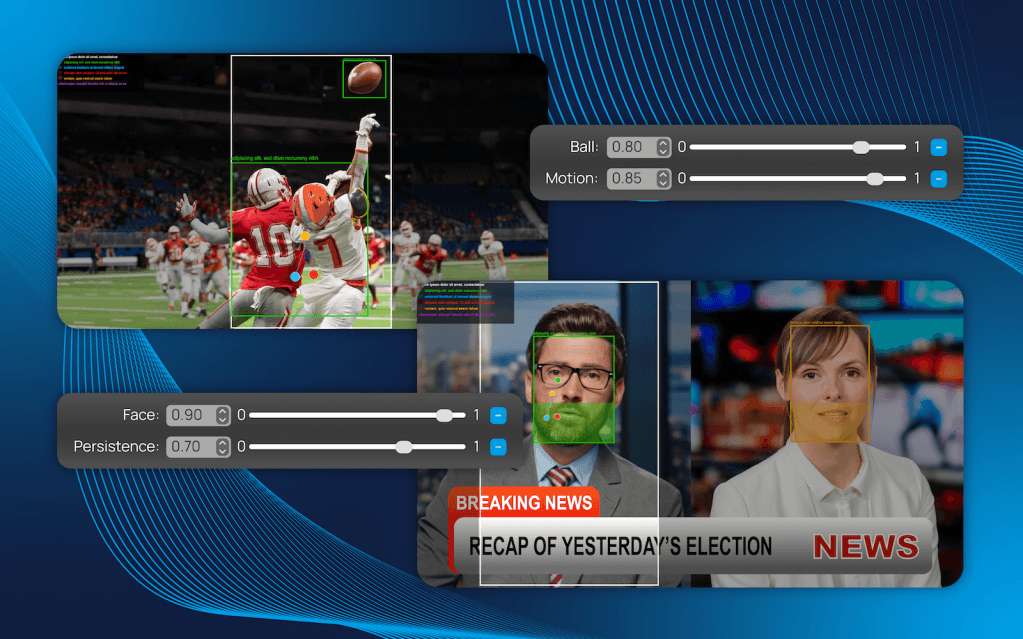
Telestream is integrating practical AI capabilities across its Vantage, Vantage Cloud, EDC, Stanza, and Qualify products to enhance broadcast workflow efficiency. This approach automates tasks such as content preparation, localization, QC, and distribution, addressing budget pressures and increased demand for multi-platform content. The company emphasizes AI as a workflow multiplier rather than a human replacement, focusing on seamless integration, controlled environments, and cost predictability.
Key Takeaways
- AI Autoframe automates the conversion of 16:9 content for social platforms like TikTok and YouTube Shorts while maintaining focus on speakers.
- Integrated AI Caption and AI Qualify tools now support automated speech-to-text and multilingual translation across 128 languages.
- Technical QC is moving toward 'content-aware automation' by using AI Vision to identify logos, slates, and ad-break opportunities.
- A concurrent-session pricing model replaces per-minute media processing fees to provide more predictable operational costs for large-scale adoption.
Why It Matters
The shift toward 'Practical AI' signals a transition from experimental pilots to core infrastructure within the B2B video stack. By embedding AI into the orchestration layer, Telestream addresses the manual friction that remains the primary bottleneck for FAST and social distribution. This moves AI beyond simple transcription into an automated decision-maker capable of triggering specific QC or metadata actions. For the ecosystem, this indicates that the competitive advantage is shifting from possessing AI models to having the best orchestration around them. Investors and operators should watch if this deep integration successfully improves ROI enough to offset flat broadcast engineering budgets in 2026.
Additional Context
The emphasis on operationalizing AI comes as the industry faces a significant 'readiness gap.' Per NewscastStudio, January 2026, while 94% of broadcasters believe AI will have the largest operational impact this year, only 14.6% describe their organizations as fully prepared to implement these workflows. This discrepancy is driving demand for vendor-provided integrations that do not require building custom pipelines. Simultaneously, the market for AI in media is expanding rapidly, with Grand View Research estimating a valuation of $33.68 billion in 2025, a 30% year-over-year increase, as companies automate high-leverage tasks like short-form video generation.
Telestream’s 2026 strategy follows its major 'Vantage AI' foundation launch in 2025, which introduced the initial framework for context-aware metadata. According to TV Technology, August 2024, the company began moving toward this 'connective tissue' model at IBC 2024 to solve real-world problems such as manual handoffs and media proliferation across fragmented platforms. Competition in the space has intensified as rival vendors like Synamedia and Grass Valley also spotlighted analytical AI capabilities at NAB 2026. This broader trend confirms that the industry is moving toward 'Agentic AI' — semi-autonomous systems that can perform complex localization and technical auditing tasks with minimal supervisor oversight, as reported by CGI, June 2026.
Read full article at thebroadcastbridge.com
Enjoy our coverage?
Add StreamingMeme as a preferred source on Google to see more of our streaming news at the top of your Search results.
Add as preferred source