
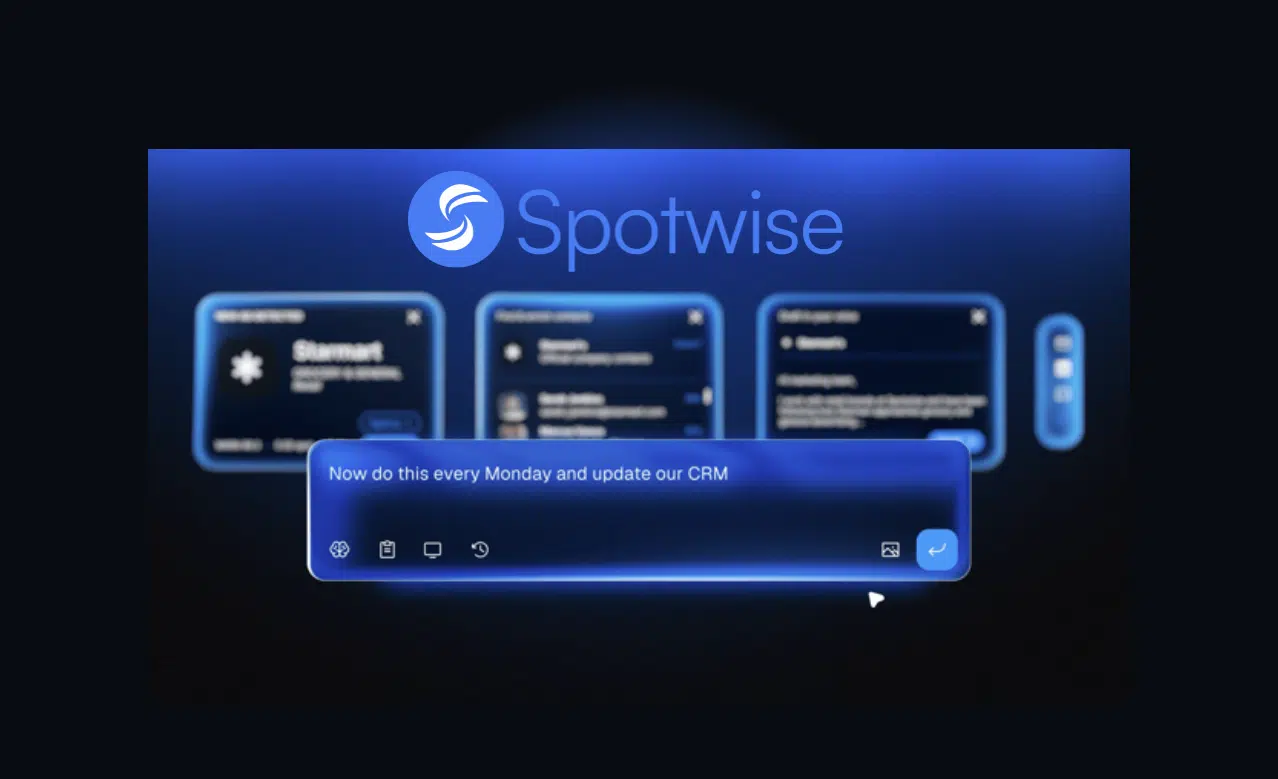
Spotwise has launched aOS, an AI-powered operating system designed to automate advertising workflows for broadcasters and agencies. The platform uses real-time intelligence to integrate with CRM systems, allowing users to automate tasks like lead enrichment, competitor tracking, and sales outreach.
This shift from passive monitoring to 'agentic' execution addresses the operational gap in broadcast sales where data overload often outpaces staff capacity. By automating the transition from detecting a competitor's ad to drafting an outreach email, Spotwise moves AI from a dashboard utility to a direct revenue driver. For the streaming and broadcast ecosystem, the adoption of the Model Context Protocol (MCP) is the key technical signal, indicating a move toward interoperable AI agents that can act across fragmented tech stacks without custom middleware. Watch for whether major CRM providers adopt reciprocal MCP servers to facilitate deeper autonomous sales integrations.
The launch of aOS coincides with a significant industry shift toward the Model Context Protocol (MCP), an open standard designed to solve the 'AI bottleneck' by allowing models to communicate directly with business data. Per Anthropic and the Linux Foundation’s Agentic AI Foundation, the MCP ecosystem reached a critical mass in early 2026, with over 10,000 active public servers and native support from major platforms like OpenAI, Google, and Microsoft. This standardization is intended to replace expensive custom APIs with a universal connector, allowing AI assistants to act on data rather than just summarizing it.
Broadcasters are under increasing pressure to modernize as streaming viewership continues to erode traditional margins. Per Nielsen, global streaming outpaced combined broadcast and cable share for the first time in May 2025, reaching nearly 45% of total viewership. In response, 94% of media respondents in a January 2026 survey by NewscastStudio identified AI as the technology with the highest operational impact for the year. However, readiness remains a barrier; only 14.6% of organizations reported being fully prepared to implement AI-driven workflows, creating a market for 'turnkey' autonomous systems like aOS.
Further market data suggests the broadcast automation sector is pivoting toward cloud-based, virtualized operations to reduce capital expenditures. According to TechSci Research, the U.S. broadcast automation market is projected to reach $2.3 billion by 2031, growing at an 18.2% CAGR. Recent developments, such as the June 2026 repeal of Latvia's consumer credit ad ban—reported by Spotwise—demonstrate the speed at which ad intelligence platforms must now operate to help sales teams capture sudden shifts in regulatory and competitive landscapes.
Add StreamingMeme as a preferred source on Google to see more of our streaming news at the top of your Search results.
Add as preferred source