
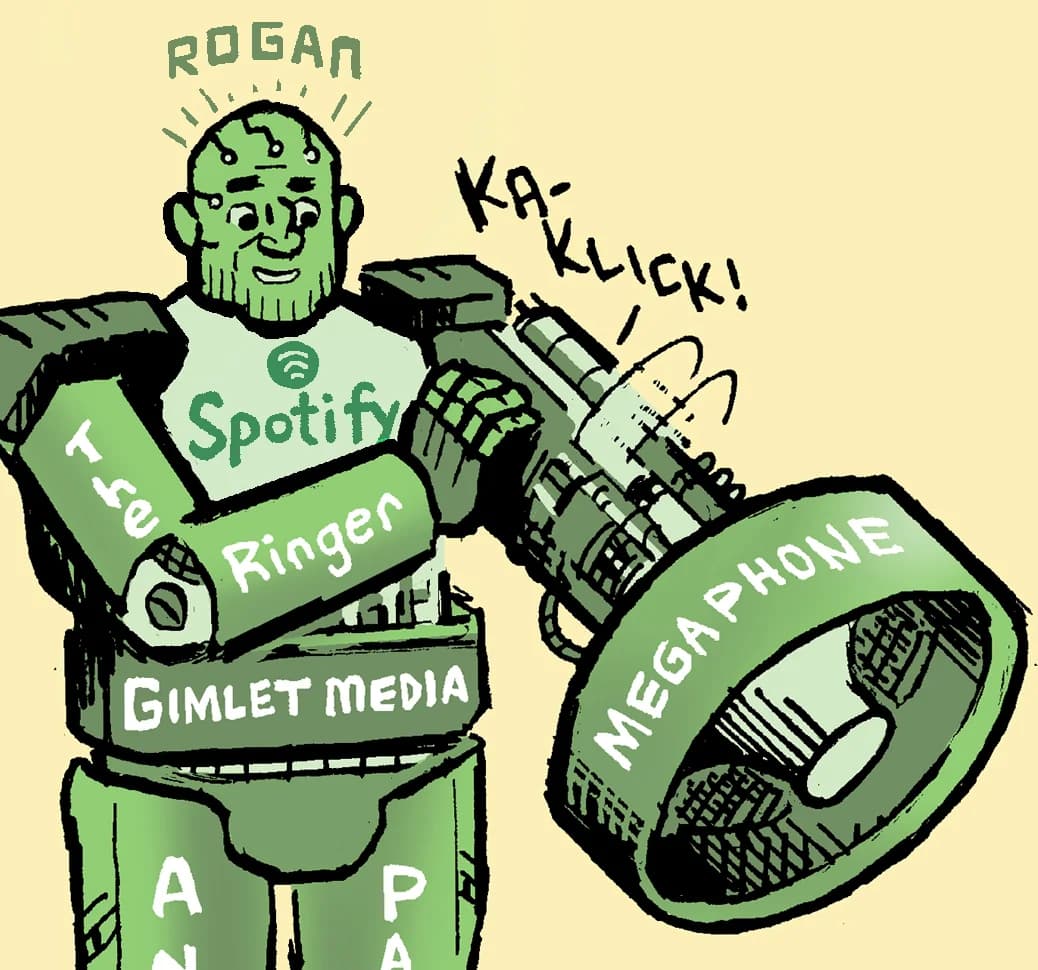
Spotify has integrated its Megaphone podcast platform into the Spotify Ad Server, mandating new technical specifications and shifting to first-party data for audience targeting. The article also highlights industry-wide concerns regarding CTV ad supply quality and notes ongoing viewer criticism of Netflix's live sports production and ad-insertion strategies.
Spotify’s consolidation of Megaphone into its proprietary ad server marks a aggressive shift toward first-party data control, forcing publishers into a closed ecosystem to maintain targeting precision. Across the broader market, the IAB’s findings on CTV trust erosion suggest that without improved transparency into impression origins, the premium pricing of streaming video may become difficult for agencies to justify. This pressure is hitting streamers like Netflix directly; they must scale ad loads to reach revenue targets of $3 billion by 2026 while managing subscriber churn from poor ad-insertion experiences. Watch for whether Spotify's shift to 1P data improves reach metrics in upcoming Q3 performance reports.
The distrust in CTV inventory comes as U.S. digital video ad spend is projected to surpass $80 billion in 2026, per the IAB in July 2026. While spending is increasing by roughly 11% year-over-year, the 'maturity correction' is driving buyers to demand the same transparency found in traditional linear TV. Digiday reported in July 2026 that media buyers are particularly concerned with supply chain fragmentation, often finding it impossible to verify which content their ads actually ran against. This lack of transparency has led some buyers to lower their classification of CTV from a 'must-buy' to a 'performance-only' channel.
In the live sports segment, Netflix’s execution continues to face scrutiny following its $50 million deal with MLB. Per Forbes in July 2026, the streamer's Opening Night broadcast in March reached 3 million viewers but was panned for technical errors and excessive self-promotion. Similar issues surfaced during the July 2026 Home Run Derby, where camera angles failed to track ball flight and ad breaks interrupted the broadcast for premium, ad-free tier subscribers. Despite these production hurdles, Netflix remains focused on doubling its ad revenue to $3 billion this year to satisfy investor expectations for higher-margin growth.
Spotify's technical overhaul of Megaphone also introduces restrictive ad duration caps at 90 seconds, a move that has drawn internal criticism from podcast creators who rely on longer, host-read spots. According to industry discussions cited on Reddit in June 2026, some mid-sized networks are considering migrating to alternative hosts like Podigee to maintain creative flexibility. These infrastructure shifts coincide with Spotify’s strategy to increase ad revenue by approximately 4.5% to 9% through 2026 by prioritizing high-margin performance formats over traditional volume-based growth.
Add StreamingMeme as a preferred source on Google to see more of our streaming news at the top of your Search results.
Add as preferred source