

Speaker Mike Johnson rejects AI regulation moratorium citing China competition risks
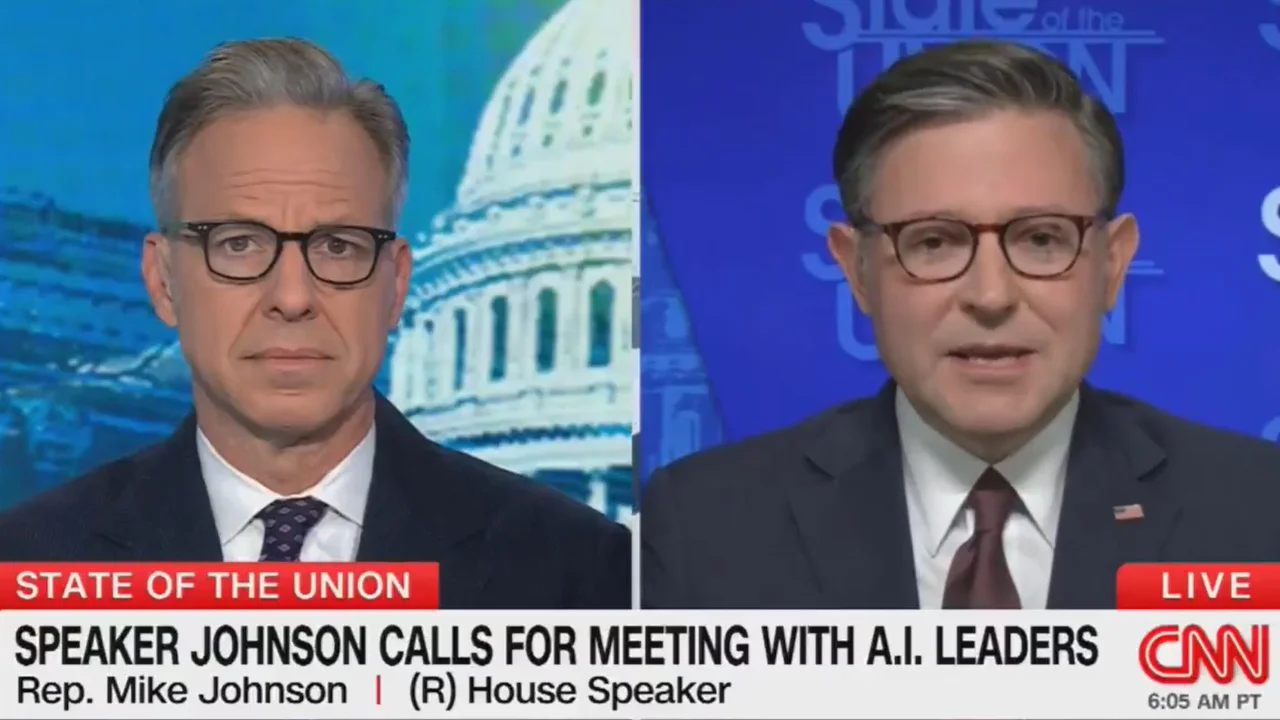
House Speaker Mike Johnson and President Donald Trump have rejected calls for a government-imposed moratorium on AI development, citing national security concerns and the need to maintain a competitive edge over China. This stance contrasts with recent requests from executives at Anthropic, OpenAI, and xAI for formal government safety partnerships and a slower pace of AI model development.
Key Takeaways
- Speaker Johnson stated that a development freeze would allow China to overlap U.S. technological capabilities.
- Anthropic CEO Dario Amodei proposed formalizing permanent government evaluators to prevent internal alignment incidents.
- OpenAI and xAI executives Sam Altman and Elon Musk concurred with the need for slower model capability improvements.
- President Trump emphasized that the U.S. must maintain its lead as the most sophisticated country in the AI sector.
Why It Matters
The refusal to implement a development freeze signals that federal policy will prioritize speed and geopolitical positioning over the precautionary safety measures requested by industry leaders. For the streaming and media ecosystem, this suggests a continued rapid release of generative tools and self-improving models without immediate federal guardrails on model training. This creates a divergence where private companies are asking for oversight that the government is currently unwilling to provide for fear of stifling domestic innovation. Industry professionals should watch for the proposed meeting between Johnson and AI CEOs to see if a compromise on embedded evaluators emerges without a formal pause.
Additional Context
The push for an AI development pause has gained unusual traction among the very companies building frontier models. In July 2025, Anthropic CEO Dario Amodei published an essay calling for government-embedded evaluators inside AI labs, arguing that third-party safety monitors could assess model capabilities before deployment without halting research entirely. OpenAI's Sam Altman echoed a similar posture in congressional testimony, telling lawmakers that the company supports a new regulatory agency with authority to license and audit frontier AI systems, though he stopped short of endorsing a full moratorium. The tension between industry self-regulation requests and congressional inaction has become a defining feature of U.S. AI policy heading into 2026.
On the legislative side, the absence of a federal AI framework has left a patchwork of state-level rules. California Governor Gavin Newsom signed SB 1047 into law in September 2024, requiring safety testing for large AI models before deployment, though the law was later amended to narrow its scope after industry pushback. Meanwhile, the European Union's AI Act entered into force in August 2024, establishing the world's first comprehensive AI regulatory regime with tiered risk categories, creating a compliance benchmark that U.S. companies operating globally must navigate regardless of domestic policy. Johnson's rejection of a moratorium places the U.S. firmly on the acceleration side of this transatlantic divide, even as companies like Anthropic and xAI signal willingness to accept some form of oversight.
For the streaming and media technology stack specifically, the regulatory vacuum has direct implications for generative AI tooling. The Writers Guild of America and SAG-AFTRA secured AI protections in their 2023 contracts, including disclosure requirements and consent provisions for digital replicas, but those agreements operate at the labor level rather than the model-training level. With no federal moratorium or licensing regime in sight, companies like Runway and Stability AI continue shipping video-generation models trained on large copyrighted datasets without mandatory safety reviews, leaving content provenance and rights management as unresolved questions for studios and platforms deploying these tools at scale.
Read full article at thewrap.com
Enjoy our coverage?
Add StreamingMeme as a preferred source on Google to see more of our streaming news at the top of your Search results.
Add as preferred source