

South Korea launches joint AI policy council for broadcast and streaming
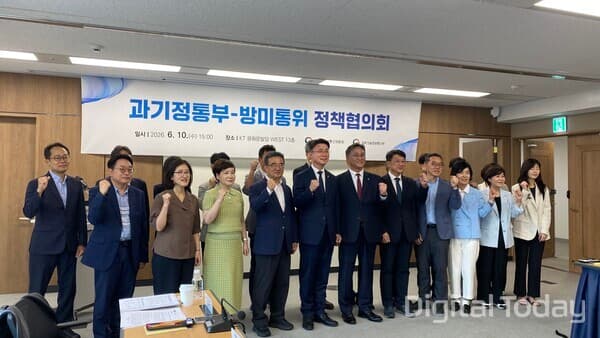
South Korea's Ministry of Science and ICT (MSIT) and the Broadcast Media Communications Commission have formed a joint policy council to coordinate on AI, media, and digital regulation. This council aims to link broadcast data to train AI models and collaborate on OTT/FAST policies, despite their separate regulatory domains, to reduce policy gaps in the "big blur" era. They will also standardize approaches to digital regulation and user protection, preventing overlapping rules and jointly addressing AI-related challenges like misinformation.
Key Takeaways
- The council will integrate broadcast data into MSIT's AI Hub for research and education purposes.
- The Broadcast Media Communications Commission will join the Global K-FAST Alliance to coordinate OTT and FAST strategies.
- A permanent pre-coordination channel will be established to prevent overlapping digital and telecommunications regulations.
- Approximately 20% of the commission's total broadcast video AI training dataset will be released first in a secure zone.
Why It Matters
The formalization of this council marks a critical shift toward data-driven AI innovation in South Korea’s media sector. By breaking down regulatory silos between legacy broadcasting and modern OTT platforms, the government is facilitating the access to high-quality training data necessary for domestic LLMs to compete globally. This move reduces administrative friction for streaming providers navigating telecommunications and content rules simultaneously. For the ecosystem, it signals a transition where metadata and archival video assets are treated as strategic R&D infrastructure. Industry participants should monitor the implementation of the Global K-FAST Alliance for specific changes in FAST channel distribution requirements and incentives.
Additional Context
The formation of the joint council occurs as the South Korean government aggressively expands its domestic AI infrastructure. According to Seoul Economic Daily in June 2026, the Ministry of Science and ICT (MSIT) recently selected Naver Cloud, Samsung SDS, and Elice Group to lead a 2.08 trillion won project to secure nearly 10,000 advanced GPUs. This initiative aims to build an 'AI expressway' specifically designed to support the development of independent foundation models and high-performance computing for the private and public sectors.
Simultaneously, the Ministry has launched an 'AI training data upcycling' project. Per DigitalToday in May 2026, this effort allocates 3 billion won to reprocess 30 existing datasets into generative-AI-ready formats. The project prioritizes large language models and 'physical AI' by integrating visual information with language commands to improve object interaction. These efforts align with the broader national goal of becoming a top three global AI power, as discussed in the June 2026 Korea Institute of Communications and Information Sciences forum.
On the content and event front, the Korea International Streaming Festival (KISF) remains a central pillar of this strategy. According to festival organizers in June 2026, the event features a bolstered scale for its Global OTT Awards and dedicated summits for both OTT and FAST sectors. The newly launched policy council intends to use KISF as a primary venue for showcasing the results of its inter-agency cooperation, including investment showcases and programs aimed at promoting K-content to international investors.
Read full article at digitaltoday.co.kr
Enjoy our coverage?
Add StreamingMeme as a preferred source on Google to see more of our streaming news at the top of your Search results.
Add as preferred source