
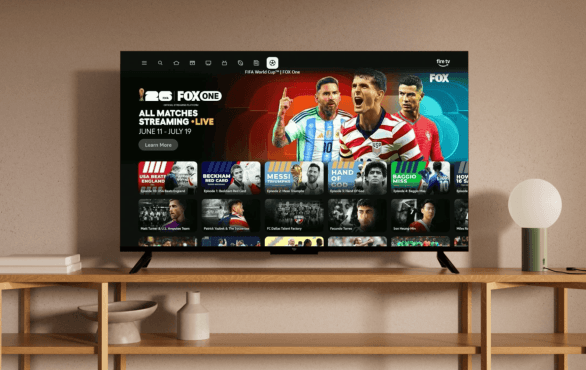
SES and Intelsat are leveraging a hybrid distribution model of satellite, fiber, and IP to deliver live World Cup coverage globally to broadcasters. This highlights the ongoing critical role of satellite in large-scale live sports broadcasting, including in-flight connectivity for passengers. The capability ensures resilience and reach for global events, working in conjunction with fibre and IP networks.
The World Cup's logistical complexity—spanning 16 cities and 48 teams—is forcing a shift to a 'hybrid-first' delivery standard where satellite provides the global scale that fiber alone cannot reach. This deployment demonstrates that while IP-based distributed production is becoming the preferred operational core, satellite remains the essential distribution layer for massive concurrent audiences. For the market, this reinforces the dominance of multi-orbit solutions in high-value sports rights, particularly as airlines integrate live streaming into the passenger experience. Watch for performance metrics on the ESA antenna tech during peak tournament traffic as a indicator for future inflight broadband adoption.
The 2026 World Cup represents the most geographically ambitious live sports production to date, requiring an 'IP-first' shift to manage 104 matches across Canada, Mexico, and the U.S. per LiveU, June 2026. This technical pressure follows the July 2025 closure of the SES-Intelsat merger, a deal designed to create a European rival to Starlink. Despite reporting a net loss of €95 million for 2025 due to acquisition costs, SES secured €1.8 billion in new business and contract renewals that year, signaling strong demand for its expanded satellite fleet per Broadband TV News, March 2026.
Simultaneously, the tournament serves as a proving ground for 5G-Advanced and private network architectures. Verizon has deployed private 5G networks and over 140 temporary cell sites across host stadiums to handle projected spectator data demands of 50 terabytes per match, according to Telecom Drive, June 2026. This secondary infrastructure layer supports mission-critical broadcast feeds, such as the Lenovo Referee View body cameras, through dedicated network slices to ensure real-time delivery without interference from public fan traffic.
Add StreamingMeme as a preferred source on Google to see more of our streaming news at the top of your Search results.
Add as preferred source