StreamingMemeStreamingMemeBuyers Guide
AboutLeaderboardsEventsSubmit News
Subscribe

Daily Brief

The streaming industry in your inbox every morning.

Daily Brief

The streaming industry in your inbox every morning.

StreamingMemeStreamingMeme

The independent buyers guide and news aggregator for the streaming technology industry.

Explore

Buyers GuideLeaderboardsEventsSubmit News

Stay updated

Weekly digest of new companies and streaming news.

Categories

Encoding & SoftwareVideo Delivery & CDNStreaming PlatformsAI for VideoProduction HardwareBusiness NewsMonetization & Ad TechRegulatory & Policy

© 2026 StreamingMeme. All rights reserved.

AboutPrivacy PolicyTermsContact
EncodingCDNPlatformsAI & VideoHardwareBusinessAd TechPolicy
← Regulatory & Policy
PolicyRegulatory ActionJune 10, 2026

Seattle enacts one-year moratorium on new AI data center construction
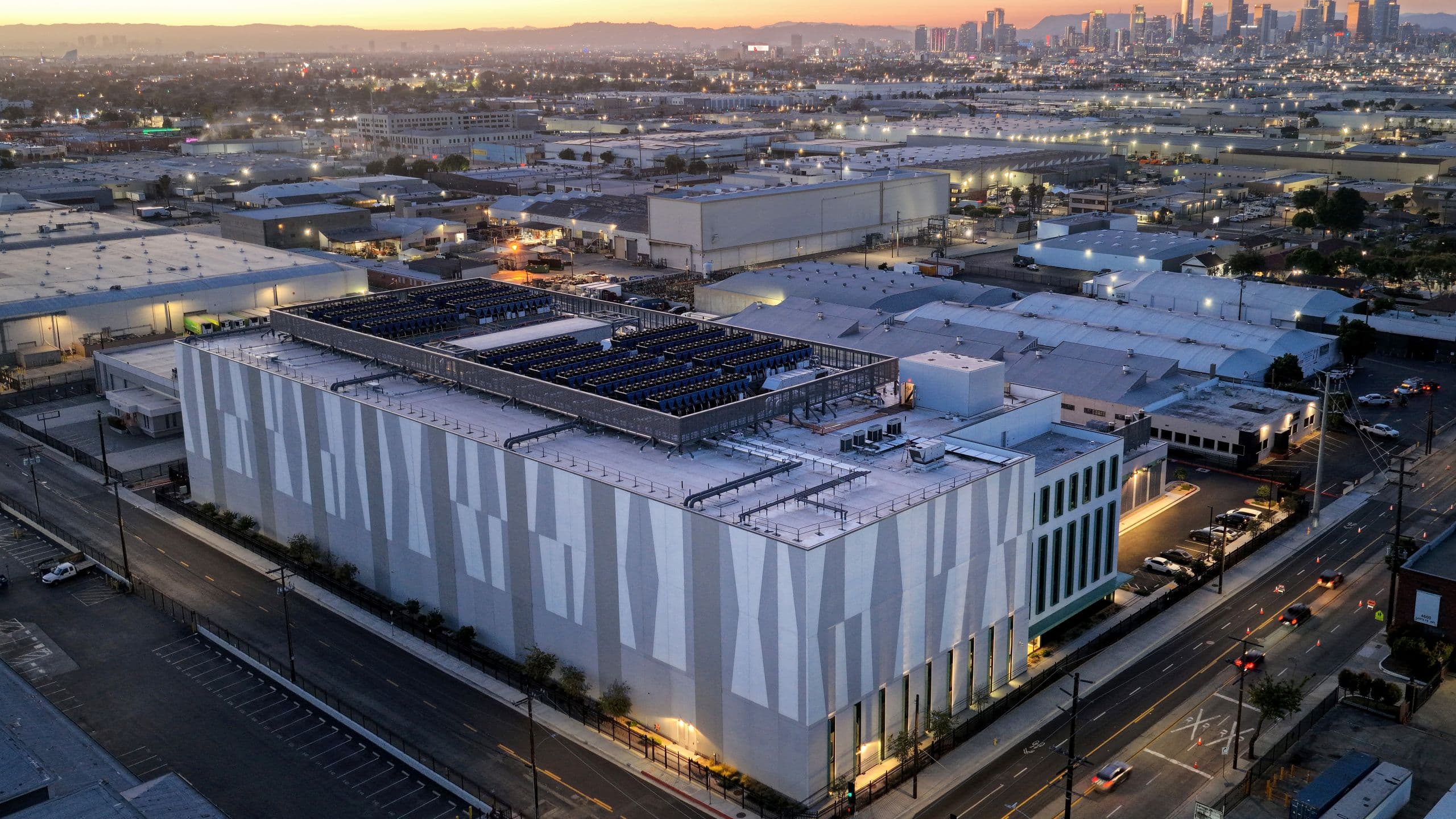
Seattle enacts one-year moratorium on new AI data center construction
TechRadar

The Seattle City Council has passed a one-year moratorium on new data center construction within the city limits. This decision stems from concerns regarding the high power and water consumption of AI infrastructure, which city officials believe offers limited local benefits. The moratorium aims to allow time for studies on future regulations, including land-use and zoning requirements.

Key Takeaways

  • Moratorium targets new 'hyperscale' data centers with over 20 megavolt-amperes of consumption capacity.
  • City officials cited five current proposals that would collectively consume one-third of Seattle's average daily power.
  • The one-year pause allows the city to study land-use requirements, utility rates, and public health impacts before 2027.
  • Existing data centers are exempt from the ban and may expand by up to 20 megavolt-amperes during the study period.

Why It Matters

Seattle’s move marks the most significant urban pushback against generative AI's physical footprint, signaling a shift where even tech-centric hubs prioritize grid stability over infrastructure expansion. For the streaming industry, which increasingly relies on low-latency inference for personalized content and ad-insertion, these local bans create a bottleneck for edge-computing deployments in densely populated markets. As municipalities like Seattle and Denver reassess zoning and water rights, video providers must anticipate higher operational costs and potential regional capacity constraints. Watch for Seattle’s early 2027 zoning proposals, which could set a national precedent for 'impact fees' and renewable energy mandates specifically targeting AI-scale facilities.

Additional Context

The Seattle moratorium reflects a intensifying national tension between local resource preservation and federal efforts to accelerate AI infrastructure. Per The Guardian, June 2026, Seattle is now the largest U.S. city to enact such a ban, joining roughly 77 other active local moratoria across the country. This local resistance contrasts sharply with federal policy; according to Perkins Coie, in May 2026, the Environmental Protection Agency (EPA) proposed redefining 'begin actual construction' to allow developers to build foundations and shells for data centers before final air permits are issued. This federal push aims to prevent air permitting from becoming a bottleneck for the 'America's AI Action Plan' introduced in July 2025. Simultaneously, major tech companies are grappling with internal and external pressure regarding their infrastructure spending. Per CNBC and TheStreet, June 2026, Amazon and Microsoft employees, including members of Amazon Employees for Climate Justice, testified in support of the Seattle pause, explicitly linking the billions spent on data centers to recent workforce reductions. Amazon, Microsoft, and Meta have collectively projected approximately $390 billion in AI capital expenditures for 2026, even as the trio has laid off tens of thousands of workers over the preceding year. Regional grid stress is also driving legislative changes in high-density areas. In Virginia, home to the world's largest data center concentration, the state legislature passed a series of bills in March 2026 that shift the costs of increasing electric capacity to facilities using 25 MW or more. Per MultiState, March 2026, these new laws prevent data center energy costs from being passed on to residential customers and require facilities to provide annual water consumption estimates, highlighting a broader shift toward 'ratepayer protection' and higher industrial transparency.


Read full article at techradar.com

Get this in your inbox → Subscribe

Enjoy our coverage?

Add StreamingMeme as a preferred source on Google to see more of our streaming news at the top of your Search results.

Add as preferred source

Related Articles

YouTube: EU AI Act high-risk obligations trigger severe revenue-based penalties for AI agents
TechCrunch: OpenAI and Anthropic lobby Washington to restrict Chinese open-source AI
SatNews: FCC proposes unlicensed 2.4 GHz spectrum for direct-to-satellite IoT links

Newest

1 day ago
Barchart: Cerebras and AMD partner on low-latency AI inference architecture
1 day ago
Light Reading: Charter sidesteps Starlink partnership rumors as Q2 broadband losses widen
1 day ago
GuruFocus: Fastly joins Experian to secure autonomous commerce at the edge
1 day ago
The BIG Newsletter: Nexstar and TEGNA Accused of Violating Judicial Order in $6.2 Billion Merger
1 day ago
AI Rights Brief: Google and Disney integrate AI provenance directly into programmatic ad workflows
1 day ago
Front Office Sports: World Cup afternoon ratings spark shift toward earlier U.S. game windows
1 day ago
Futurism: Meta and TikTok face backlash over deceptive AI-generated health ads
1 day ago
Wccftech: Qualcomm Adreno 850 GPU to debut AI Frame Fusion technology
1 day ago
Beet.TV: Brands must re-describe catalogs for AI agents to maintain discoverability
1 day ago
daily.dev: AVIF achieves universal browser support as Edge and Safari close gaps
1 day ago
Los Angeles Times: Disney, Netflix, and Amazon recruit AI talent to automate production workflows
1 day ago
Callaba: Callaba standardizes remote production workflows via SRT and NDI integration
1 day ago
Lib.rs: New zero-dependency Rust decoder vp9dec achieves bit-exact VP9 conformance
1 day ago
IT Brief UK: Fetch.ai and RedSquid TV launch first agentic AI television platform
1 day ago
Vocal: TeqBlaze challenges Epom with modular full-stack white-label ad tech suite
1 day ago
Euronews: EU Expert Panel Backs Age Restrictions and Addictive Feature Bans
1 day ago
Cord Cutters News: FCC chair signals scrutiny for potential streaming-exclusive 2030 World Cup rights
1 day ago
Audio Chocolate: Merging Technologies debuts Anubis Premium SPS for mission-critical broadcast audio
1 day ago
Cord Cutters News: Linear contraction accelerates as 14 cable networks vanish in five years
1 day ago
IPWatchdog: EC mandates Google share search data and Android features under DMA

Upcoming Events

Jul
29–30
Buffer-Free VideoSeattle
Aug
17–20
SET EXPOSao Paulo
Sep
11–14
IBCAmsterdam
Sep
13
SportsPro Streamtime Sports LiveAmsterdam
Sep
16–18
RTC.ONKrakow
View all events →

Top Sources

  1. 1.Sports Video Group104
  2. 2.SiliconANGLE91
  3. 3.YouTube63
  4. 4.Tech Times60
  5. 5.AdExchanger57
  6. 6.TechCrunch55
  7. 7.arXiv50
  8. 8.PPC Land48
Full leaderboards →

Newest

1 day ago
Barchart: Cerebras and AMD partner on low-latency AI inference architecture
1 day ago
Light Reading: Charter sidesteps Starlink partnership rumors as Q2 broadband losses widen
1 day ago
GuruFocus: Fastly joins Experian to secure autonomous commerce at the edge
1 day ago
The BIG Newsletter: Nexstar and TEGNA Accused of Violating Judicial Order in $6.2 Billion Merger
1 day ago
AI Rights Brief: Google and Disney integrate AI provenance directly into programmatic ad workflows
1 day ago
Front Office Sports: World Cup afternoon ratings spark shift toward earlier U.S. game windows
1 day ago
Futurism: Meta and TikTok face backlash over deceptive AI-generated health ads
1 day ago
Wccftech: Qualcomm Adreno 850 GPU to debut AI Frame Fusion technology
1 day ago
Beet.TV: Brands must re-describe catalogs for AI agents to maintain discoverability
1 day ago
daily.dev: AVIF achieves universal browser support as Edge and Safari close gaps
1 day ago
Los Angeles Times: Disney, Netflix, and Amazon recruit AI talent to automate production workflows
1 day ago
Callaba: Callaba standardizes remote production workflows via SRT and NDI integration
1 day ago
Lib.rs: New zero-dependency Rust decoder vp9dec achieves bit-exact VP9 conformance
1 day ago
IT Brief UK: Fetch.ai and RedSquid TV launch first agentic AI television platform
1 day ago
Vocal: TeqBlaze challenges Epom with modular full-stack white-label ad tech suite
1 day ago
Euronews: EU Expert Panel Backs Age Restrictions and Addictive Feature Bans
1 day ago
Cord Cutters News: FCC chair signals scrutiny for potential streaming-exclusive 2030 World Cup rights
1 day ago
Audio Chocolate: Merging Technologies debuts Anubis Premium SPS for mission-critical broadcast audio
1 day ago
Cord Cutters News: Linear contraction accelerates as 14 cable networks vanish in five years
1 day ago
IPWatchdog: EC mandates Google share search data and Android features under DMA

Upcoming Events

Jul
29–30
Buffer-Free VideoSeattle
Aug
17–20
SET EXPOSao Paulo
Sep
11–14
IBCAmsterdam
Sep
13
SportsPro Streamtime Sports LiveAmsterdam
Sep
16–18
RTC.ONKrakow
View all events →

Top Sources

  1. 1.Sports Video Group104
  2. 2.SiliconANGLE91
  3. 3.YouTube63
  4. 4.Tech Times60
  5. 5.AdExchanger57
  6. 6.TechCrunch55
  7. 7.arXiv50
  8. 8.PPC Land48
Full leaderboards →