

RWS M-GATE AI benchmark evaluates 70 models across 30 languages
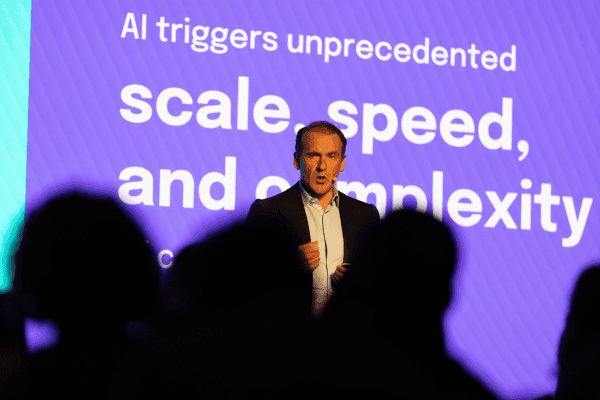
RWS's TrainAI division has launched M-GATE, a benchmark evaluating 70 large language models across 30 languages for grammar, translation accuracy, and speed. The tool aims to provide organizations with objective performance data for localization tasks, revealing that high translation scores do not always correlate with grammatical accuracy.
Key Takeaways
- Google’s Gemini 3.1 Pro Preview currently leads the grammar ranking, while OpenAI’s GPT-5.5 ranks highest for round-trip translation.
- Testing revealed that high translation scores do not always correlate with grammatical accuracy, particularly in GPT-5 models.
- Response speeds varied significantly between models, with the slowest taking 100 times longer to respond than the fastest.
- Cohere was excluded from the initial leaderboard to maintain independence following a recent partnership with RWS.
Why It Matters
This benchmark provides streaming localization teams with a data-driven method to select models based on specific linguistic accuracy rather than general marketing claims. As streaming platforms expand into fragmented global markets, the finding that reasoning capabilities do not guarantee grammatical correctness suggests that a multi-model approach may be necessary for high-quality subtitling and dubbing. The significant variance in tokenizer efficiency and response speed also indicates that cost-per-token and latency will remain critical bottlenecks for real-time translation features. Watch for whether future updates to models from Anthropic and DeepSeek can close the gap between translation fluency and technical grammatical precision.
Additional Context
RWS enters a crowded field of AI evaluation frameworks that target multilingual and translation-specific performance. The company's TrainAI division, which developed M-GATE, has been building its AI-powered localization platform since acquiring Moravia in 2021 and integrating machine translation workflows into its broader language services offering. RWS reported revenue of £714.5 million for fiscal year 2024, with its AI and technology segment growing 12% year over year, signaling continued investment in machine translation infrastructure. The M-GATE launch positions RWS not just as a service provider but as a neutral evaluator, a role that could attract streaming platforms seeking vendor-agnostic model selection tools for subtitling and dubbing pipelines. The competitive landscape for AI model evaluation in translation has intensified. Meta released its Flores-200 benchmark covering 200 languages in early 2025, establishing a widely cited baseline for multilingual translation quality, while Google's Gemini models have been evaluated on the WMT (Workshop on Machine Translation) shared tasks that remain the academic standard. OpenAI published GPT-4o's multilingual performance data in August 2024, showing significant improvements in low-resource language pairs compared to GPT-4. For streaming companies, the proliferation of benchmarks means no single evaluation captures production readiness, making RWS's focus on grammar-translation correlation particularly relevant for quality assurance teams managing subtitle workflows across dozens of markets. On the technical side, tokenizer efficiency and latency remain critical bottlenecks for real-time streaming applications. DeepSeek-V3, released in December 2024, achieved inference costs of $0.27 per million input tokens, roughly one-seventh the cost of comparable models from OpenAI, raising questions about whether cost advantages will drive adoption in high-volume localization pipelines even when grammatical precision lags. Anthropic's Claude 3.5 Sonnet scored highest on multilingual reasoning tasks in the Artificial Analysis leaderboard as of mid-2025, yet its tokenizer efficiency for non-Latin scripts remains below models optimized for Asian languages. For streaming platforms deploying AI dubbing engagement or automated dubbing, the M-GATE finding that translation fluency and grammatical accuracy diverge suggests that combining a fast, cheap model for initial translation with a grammar-focused model for post-editing may become the dominant production pattern.
Read full article at slator.com
Enjoy our coverage?
Add StreamingMeme as a preferred source on Google to see more of our streaming news at the top of your Search results.
Add as preferred source