
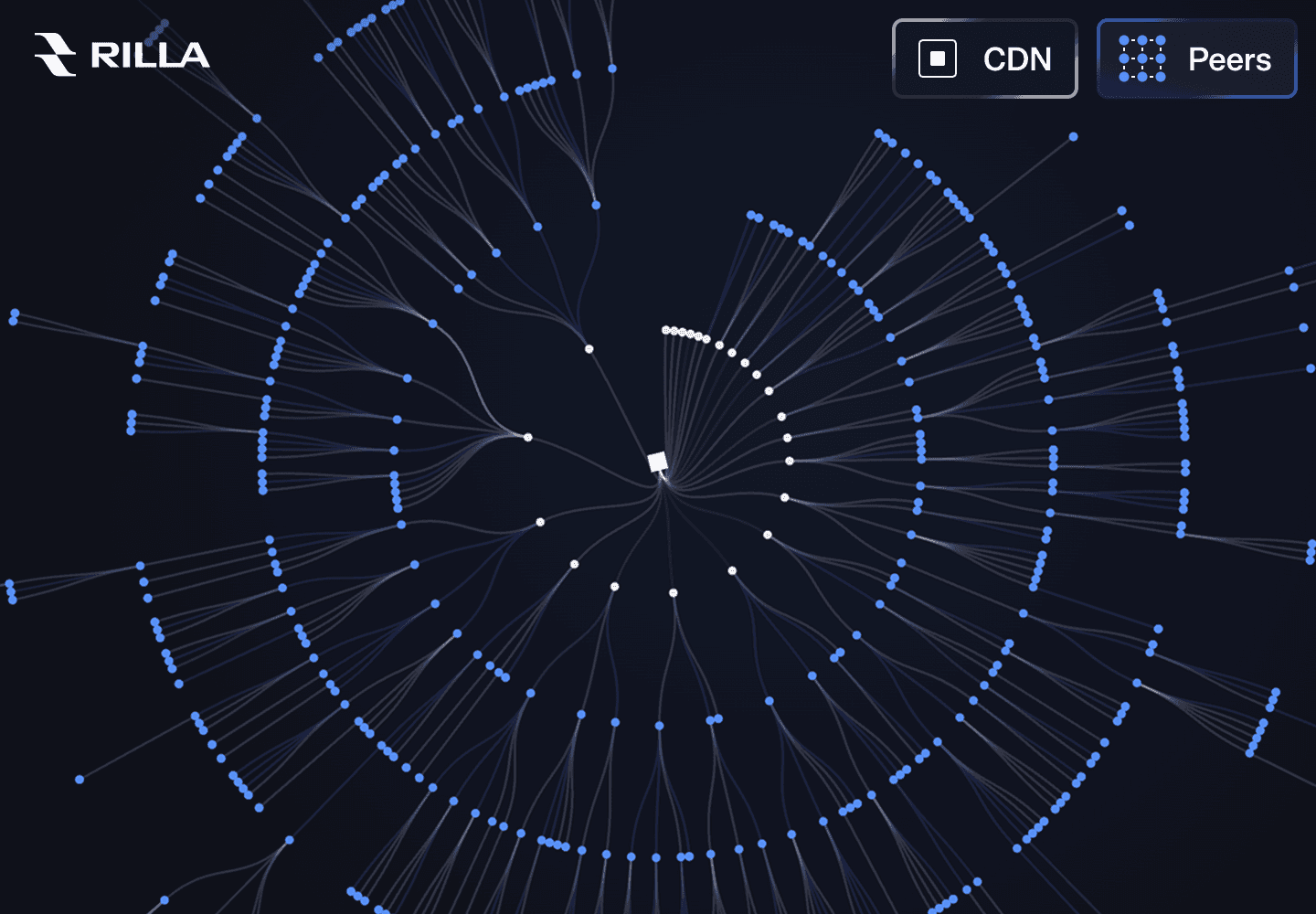
Rilla details its live P2P CDN demonstration, which showcases real-time orchestration of user graph networks, measurable CDN deflection, and maintenance of Quality of Experience (QoE) with low latency. The company emphasizes its approach of demonstrating working software to prove its claims of efficiently handling millions of concurrent users without compromising live feeds, even under extreme volatile scenarios. This demonstration aims to validate Rilla's P2P technology's cost-efficiency and performance for major broadcasters and streaming platforms.
Rilla is using a working live demo to make its P2P CDN claims concrete: low latency, measurable CDN deflection, and QoE are shown in software rather than a sales deck. That matters because the target buyers are broadcasters and streaming platforms that care about cost, latency, and content protection, not abstract positioning. The article also frames the demo as proof of engineering discipline, including continuous delivery and customer-specific adaptation. The next signal to watch is whether Rilla can continue showing the same metrics — especially the 20% failure scenario and re-buffering counts — across different customer network profiles.
Add StreamingMeme as a preferred source on Google to see more of our streaming news at the top of your Search results.
Add as preferred source