

NVIDIA workflow uses synthetic audio to accelerate clinical speech AI benchmarks
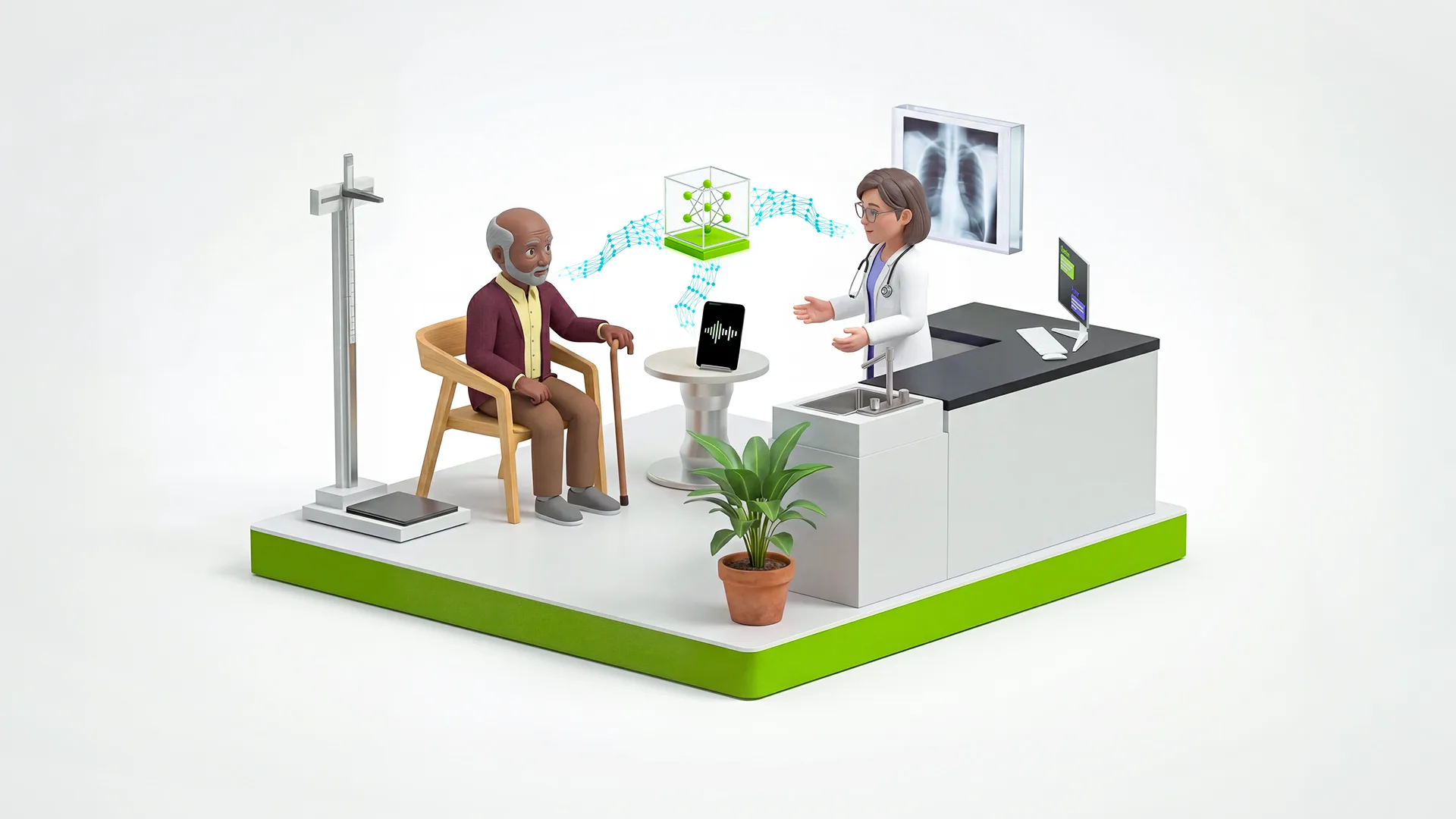
NVIDIA details a new workflow for evaluating clinical Automatic Speech Recognition (ASR) models faster, leveraging agent skills, NeMo Data Designer, and Nemotron Speech. This process enables the rapid, repeatable creation of pronunciation-aware synthetic audio for ASR benchmarks without requiring real patient data. It focuses on creating a repeatable feedback loop to improve clinical speech AI by addressing issues like rare terminology and pronunciation challenges.
Key Takeaways
- Workflow utilizes Magpie TTS Multilingual to inject International Phonetic Alphabet (IPA) tags into synthetic speech, ensuring accurate pronunciation of rare drug and procedure names.
- The system replaces the need for HIPAA-protected HIPAA recordings with shareable, version-controlled synthetic audio manifests in JSONL format.
- Manual review gates are built into the agent skills to flag and correct low-confidence pronunciations before full dataset generation.
- Evaluation metrics shift focus from standard Word Error Rate (WER) to Keyword Error Rate (KER) to measure accuracy on workflow-critical clinical entities.
Why It Matters
This approach addresses the data scarcity bottleneck in specialized AI applications by substituting high-risk clinical recordings with high-fidelity synthetic data. For the streaming and voice interface ecosystem, this signifies a shift toward agent-led 'flywheel' workflows where AI manages its own data enrichment and quality assurance cycles. It moves the needle from general-purpose ASR toward highly verticalized, reliable speech interfaces. As voice-driven documentation becomes a standard requirement in professional B2B services, the ability to rapidly iterate on niche vocabularies without manual annotation is a significant competitive advantage. Watch for NVIDIA to expand these 'agent skills' into other high-stakes domains like technical support and legal transcription.
Additional Context
The healthcare AI sector has seen a surge in specialized voice applications as providers seek to reduce administrative burden. Per CNBC in April 2024, Microsoft-owned Nuance Communications reported that its Dax Copilot tool, which automates clinical note-taking, had reached adoption across more than 200 healthcare organizations. This expansion underscores the technical pressure on ASR systems to maintain accuracy across diverse medical specialties, a challenge NVIDIA's new synthetic workflow directly targets by automating the generation of rare terminology training sets.
Beyond clinical applications, the push for high-fidelity synthetic audio reflects a broader trend in AI development. According to a Gartner report from late 2023, synthetic data is projected to outpace real data in AI models by 2030 to avoid 'data exhaustion.' NVIDIA’s integration of Magpie TTS Multilingual aligns with recent industry moves toward more granular control over speech synthesis. For instance, per TechCrunch in May 2024, OpenAI and ElevenLabs have both faced increased scrutiny over the phonetic realism and ethical sourcing of voice data, leading to a market-wide emphasis on transparent, controllable synthetic pipelines like NVIDIA’s SSML-based approach.
Furthermore, the focus on 'agent skills' matches recent hardware-software shifts. During its GTC 2024 keynote, NVIDIA emphasized that AI agents would become the primary interface for complex enterprise workflows. By applying this to ASR benchmarking, the company is bridging the gap between raw compute power and usable B2B software tools. This development occurs as competitors like AWS and Google Cloud also ramp up healthcare-specific AI offerings, such as AWS HealthScribe, which utilizes generative AI to transcribe and summarize patient visits, as reported by Reuters in July 2023.
Read full article at developer.nvidia.com
Enjoy our coverage?
Add StreamingMeme as a preferred source on Google to see more of our streaming news at the top of your Search results.
Add as preferred source