

NVIDIA Vera CPU targets agentic AI bottlenecks with custom Olympus cores
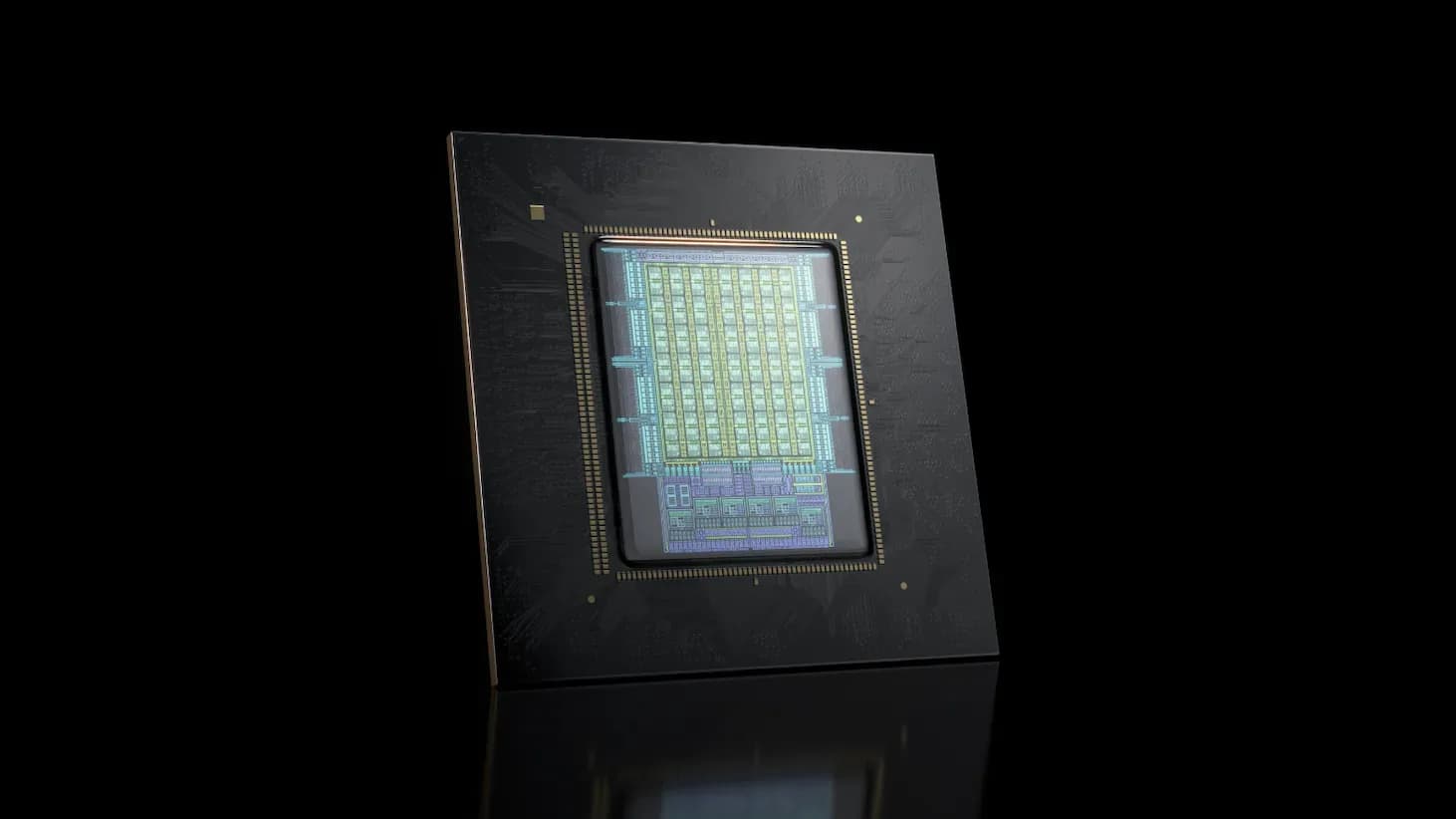
NVIDIA has announced the Vera CPU, a processor designed to handle complex agentic AI and reinforcement learning workloads by improving sequential processing and GPU utilization. The hardware features 88 Olympus cores and high memory bandwidth, aimed at reducing compute gaps and cache eviction pressure within data center environments.
Key Takeaways
- Vera CPU delivers 1.8x faster per-core performance under load compared to baseline x86 processors.
- Integrated LPDDR5x subsystem provides 1.2 TB/s total memory bandwidth, or roughly 14 GB/s per core.
- Monolithic compute die and Scalable Coherency Fabric reduce peak loaded latency by 40% over chiplet designs.
- Custom Olympus cores feature a 10-wide decode front end and neural branch prediction to handle complex Python orchestration.
Why It Matters
The Vera CPU represents a shift away from over-provisioning GPU cores by addressing the 'critical path' of CPU-bound logic in multi-step agentic workflows. By accelerating sandbox evaluations and tool calls, NVIDIA aims to prevent KV-cache eviction and costly GPU recompute cycles during context-heavy tasks. This moves the industry toward 'AI Factory' economics where the CPU serves as the high-speed controller rather than passive infrastructure. For the streaming sector, this implies more efficient real-time video metadata generation and automated content processing pipelines. Watch for third-party throughput benchmarks on the Vera Rubin NVL72 systems, which couple 36 Vera CPUs with 72 GPUs, expected in late 2026.
Additional Context
The Vera CPU is a core component of the broader Vera Rubin platform, which NVIDIA officially transitioned to full production in mid-2026. Per reports from GTC Taipei in June 2026, the architecture is specifically designed to facilitate the 'Industrialization of Intelligence,' pivoting the market from individual chip sales to integrated 'AI Factories.' Leading AI labs, including OpenAI and Anthropic, have already been named as early adopters, while major hyperscalers like Oracle Cloud Infrastructure and CoreWeave are planning H2 2026 deployments to support autonomous digital agents.
Industry competition in this sub-sector is intensifying as NVIDIA encroaches on traditional CPU territory. In May 2026, Phoronix published independent benchmarks showing the Vera CPU outperforming AMD’s EPYC 9575F by approximately 10% in general data center workloads and reaching 2x faster performance per core in Linux kernel compilation. In response, per an AMD technical blog in June 2026, the company projected its upcoming 6th-generation 'Venice' CPUs would deliver 3.3 times the rack-level performance of Vera by 2027, though these internal figures remain unverified by third-party hardware tests.
Looking beyond the current cycle, NVIDIA has already signaled its long-term roadmap. According to company technical briefings in July 2026, the successor to the Vera CPU will be named Rosa, featuring next-generation 'Rigel' cores. This next iteration will be part of the Feynman family slated for 2028, underscoring NVIDIA's aggressive two-year cadence for custom CPU development. This rapid iteration cycle aimed at agentic reasoning suggests that high-performance, single-threaded CPU speed is becoming as prioritized as parallel GPU throughput for the next generation of AI infrastructure.
Read full article at developer.nvidia.com
Enjoy our coverage?
Add StreamingMeme as a preferred source on Google to see more of our streaming news at the top of your Search results.
Add as preferred source