

Nvidia pivots to 45°C hot water cooling for AI data centers
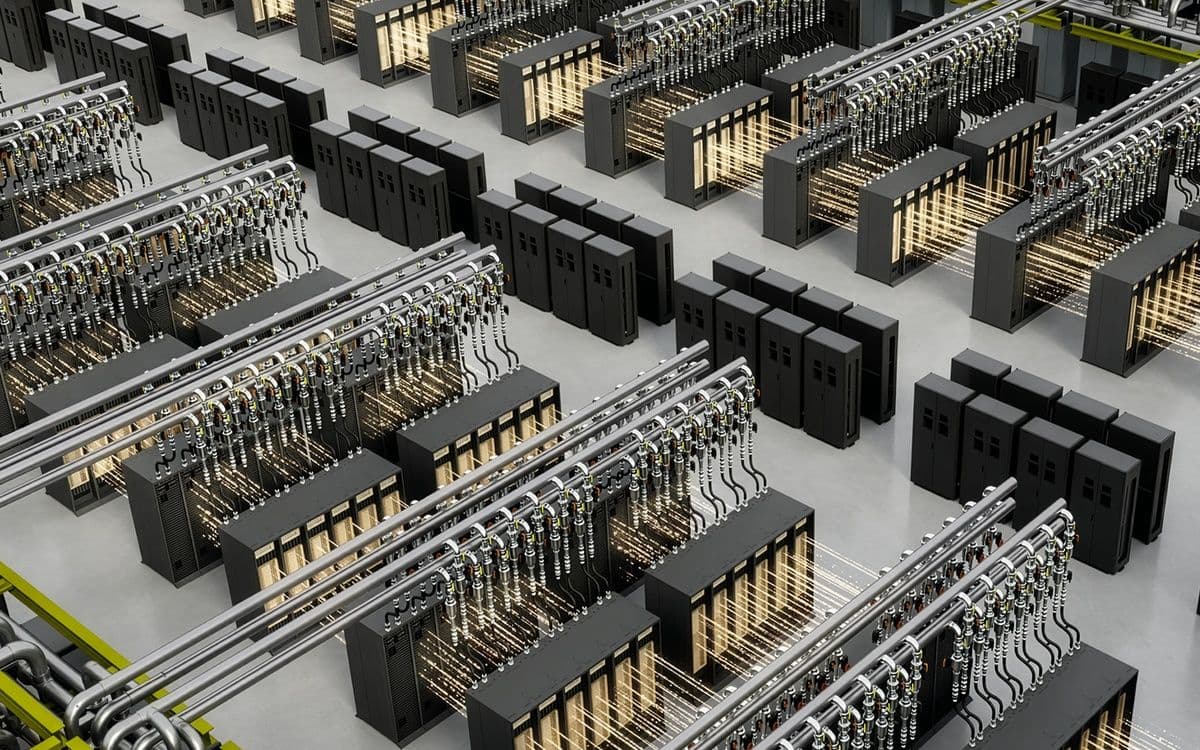
Nvidia is transitioning its H100 and GB200 data center infrastructure toward hot liquid cooling, utilizing water temperatures between 35°C and 45°C. This shift to higher temperature fluids enables 'free cooling' methods, effectively reducing Power Usage Effectiveness (PUE) by eliminating the need for energy-intensive refrigeration chillers.
Key Takeaways
- Input water temperatures of 45°C (113°F) effectively cool GPUs that operate at 80°C or higher.
- The approach enables "free cooling" via outdoor heat exchange, significantly lowering Power Usage Effectiveness (PUE) metrics.
- Removing refrigeration chillers can save a 50MW facility approximately $4 million in annual energy and water costs.
- The system uses a closed-loop design that can reduce data center water consumption to near zero.
Why It Matters
This shift marks a critical transition from traditional air-conditioned environments to high-density liquid-cooled architecture. For streaming and AI platforms, this solves the dual crisis of rising rack power density and cooling-related electricity overhead, which typically accounts for 40% of data center costs. By proving that warmer fluids do not degrade performance, Nvidia provides a blueprint for sustainable global scale-out without overwhelming local power grids or water supplies. Watch for widespread adoption of the NVIDIA DSX reference design as hyperscalers like AWS and Microsoft mandate 100% liquid cooling for next-generation GPU deployments.
Additional Context
The transition to liquid cooling is accelerating as rack densities hit unprecedented levels. Per Towards AI (April 2026), single racks of Nvidia's Blackwell GPUs can exceed 120kW, with future configurations pushing past 200kW — far beyond the 15-20kW limit of traditional air cooling. To meet this demand, the liquid cooling market is projected to grow from $6.77 billion in 2026 to $18.79 billion by 2031, according to Mordor Intelligence (January 2026). This growth is largely driven by hyperscalers like Microsoft, which reported deploying hundreds of thousands of liquid-cooled Grace Blackwell GPUs across Azure by early 2026.
Sustainability mandates are also forcing this architectural shift. Per Mordor Intelligence (January 2026), the EU Energy Efficiency Directive now mandates waste-heat recovery for facilities above 1MW, a task significantly easier with liquid-based systems. In North America, Amazon Web Services (AWS) moved its custom direct-to-chip cooling into full production in 2025, claiming a 12% increase in compute power and a 46% reduction in energy use compared to air-cooled designs. These efficiency gains are vital as Gartner expects global data center electricity demand to exceed 1,000 TWh by 2026, surpassing the total annual consumption of Japan.
Infrastructure providers are rapidly retrofitting to accommodate these "hot" loops. Equinix and Digital Realty are currently redesigning facilities to support direct liquid cooling (DLC) densities up to 150kW per rack. Per Evolvance Market Research (May 2026), North America remains the largest regional market for this technology, maintaining a 38.6% share as operators move from experimental pilots to fleet-wide liquid-cooled deployments for AI and high-throughput streaming workloads.
Read full article at techradar.com
Enjoy our coverage?
Add StreamingMeme as a preferred source on Google to see more of our streaming news at the top of your Search results.
Add as preferred source