

Nvidia guides model co-design to optimize LLM performance on GPUs
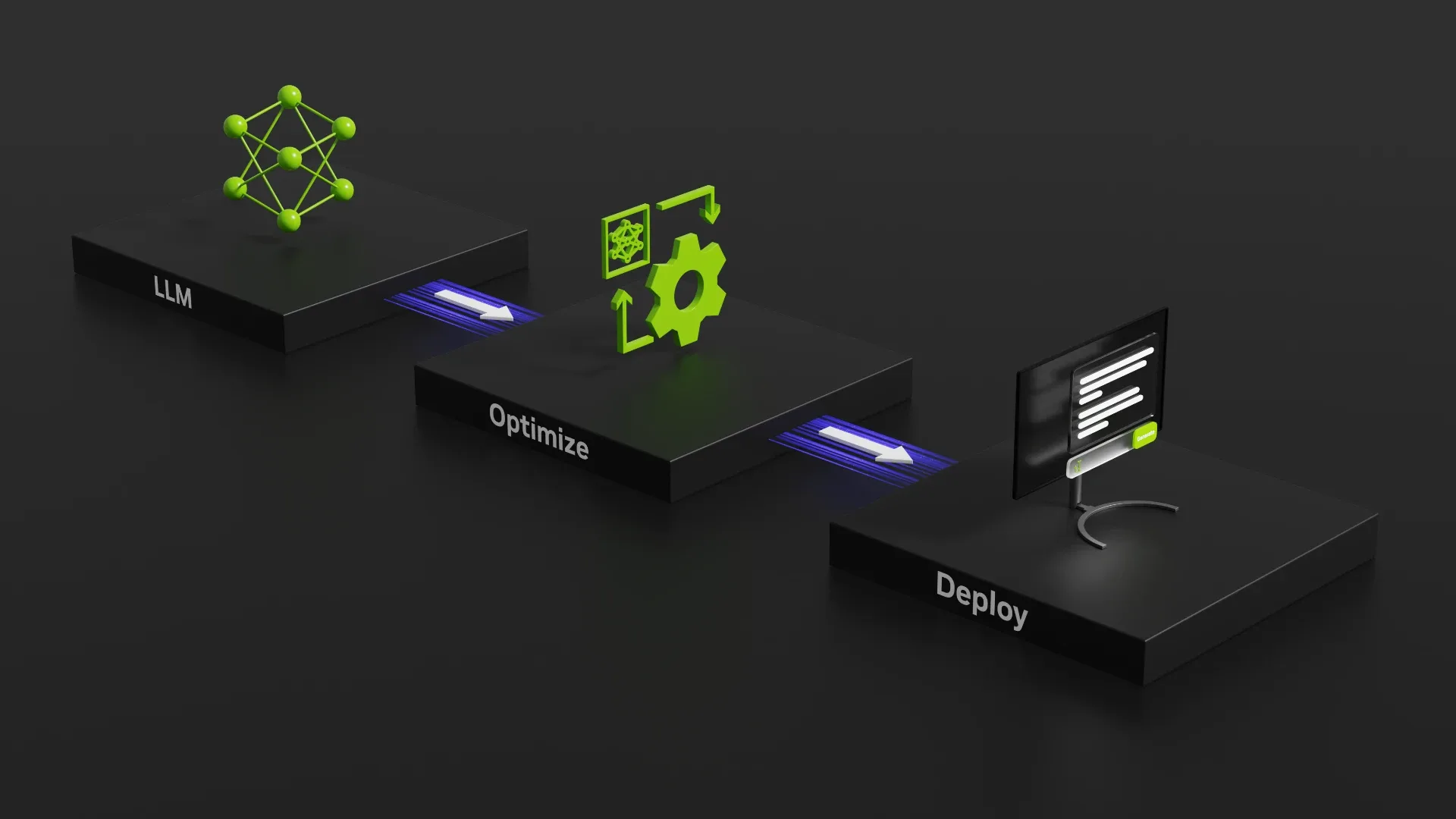
Nvidia has published a technical guide detailing how developers can optimize large language model (LLM) architectures to improve throughput, latency, and hardware utilization on modern GPUs. The framework focuses on the co-design of model dimensions and arithmetic intensity to minimize compute bottlenecks in data centers.
Key Takeaways
- Targeting the compute-bound region above the ridge point on the roofline model is essential for maximizing tokens-per-second throughput.
- Hardware-aware design requires aligning linear layer dimensions to GPU tile sizes, typically multiples of 128 and ideally 256 or 512.
- The attention path accounts for roughly 77% of runtime in long-context, throughput-oriented serving, making it the primary target for optimization.
- Interactive decoding at low concurrency remains memory-bound, requiring reduced memory-access time to lower response latency.
Why It Matters
As streaming platforms integrate generative AI for real-time metadata tagging, personalized recommendation engines, and automated video recaps, the economics of inference become critical. Optimizing the 'Pareto frontier' allows operators to increase user concurrency without sacrificing the responsiveness required for live media environments. This shift moves AI from a costly experimental overhead to a scalable backend component that fits within standard data center power and thermal envelopes. Expect streaming engineering teams to prioritize low-precision formats like NVFP4 to maintain the high throughput necessary for processing massive video-related token volumes.
Additional Context
The push for hardware-software co-design is accelerating as companies like Meta and Sarvam AI scale production-grade models. Per Nvidia, February 2026, a collaboration with Sarvam AI used kernel and scheduling optimizations to achieve a 4x inference speedup for sovereign Indian language models on Blackwell architecture. This performance boost is increasingly vital for media and entertainment, where the AI video processing and generation market is projected to grow from $4 billion in 2024 to over $40 billion by the next decade, according to Nvidia’s September 2025 AI Infra Summit data. This surge in data volume requires specialized processors, such as the recently announced Rubin CPX GPU, which is specifically built to handle long-context processing.
In the streaming sector, AI is moving from background experimentation to core operations. During NAB Show 2025, vendors demonstrated AI-driven tools for high-frequency DRM key rotation and forensic watermarking to combat AI-generated deepfakes and digital piracy. Furthermore, per vLLM reports from February 2026, deep integration with FlashInfer and kernel fusion on Blackwell GPUs has already yielded a 38% increase in maximum throughput for large scale Mixture-of-Experts models. As pay-TV subscriber losses continue to break records—with 4 million cancellations in early 2024 per MoffettNathanson—streaming leaders are viewing these hardware-aligned AI efficiencies as a primary lever for returning to profitability through hyper-personalized advertising and automated content highlighting.
Read full article at developer.nvidia.com
Enjoy our coverage?
Add StreamingMeme as a preferred source on Google to see more of our streaming news at the top of your Search results.
Add as preferred source