
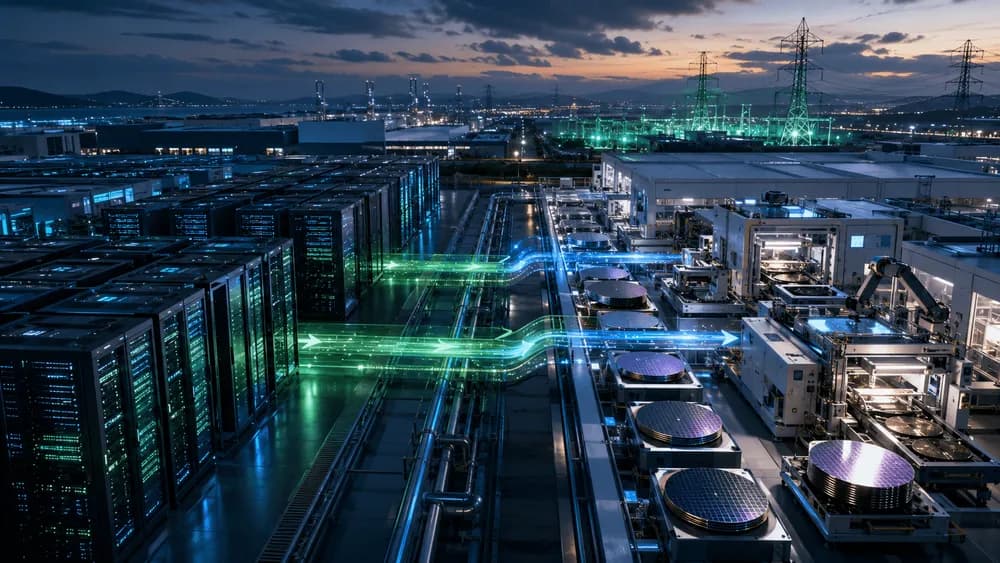
NVIDIA and SK Group have signed a letter of intent for a $500 billion partnership to develop AI factory infrastructure and secure long-term HBM4 memory supply. The collaboration focuses on integrating NVIDIA's Vera Rubin systems with next-generation memory for sovereign and enterprise AI, with target operations for the first AI factory scheduled for 2027.
This partnership formalizes the symbiotic relationship between compute silicon and memory bandwidth, which has become the primary bottleneck in large-scale AI inference and video processing. By securing a 2GW power footprint and HBM4 supply, NVIDIA ensures its next-generation Vera Rubin architecture has the physical infrastructure and specialized components required to maintain market dominance. For the streaming ecosystem, this provides a massive domestic compute base for localized sovereign AI applications in the Asia-Pacific region. Success hinges on SK Hyper’s ability to secure grid power and land by 2027, a timeline that will signal whether infrastructure can keep pace with chip roadmaps.
The massive scale of the SK-NVIDIA framework aligns with a broader industry trend toward multi-billion dollar 'AI factories' that prioritize power density over traditional data center footprints. Per Reuters in June 2026, tech giants have increasingly turned to specialized infrastructure partnerships to bypass power grid congestion, which has delayed standard data center projects by up to 24 months in key hubs. This LOI specifically targets the HBM4 transition, which is critical because NVIDIA’s upcoming Rubin platform requires significantly higher memory density to manage the trillions of parameters used in real-time generative video and agentic AI models.
Market competition for high-bandwidth memory remains a central volatility point for the semiconductor supply chain. According to Bloomberg reporting in May 2026, Samsung Electronics has also been aggressively sampling its own HBM4 modules to NVIDIA in a bid to break SK hynix’s perceived lock on the premium supply tier. While the SK Group LOI signals a deep technical integration, it does not grant exclusivity, leaving room for NVIDIA to diversify its sourcing if SK’s production yields lag. Furthermore, the 2GW power target in Korea mirrors massive infrastructure bets seen elsewhere, such as Microsoft and OpenAI’s 'Stargate' initiative, which The Information reported in early 2026 could eventually require 5GW of power to support future-generation model training clusters.
Add StreamingMeme as a preferred source on Google to see more of our streaming news at the top of your Search results.
Add as preferred source