
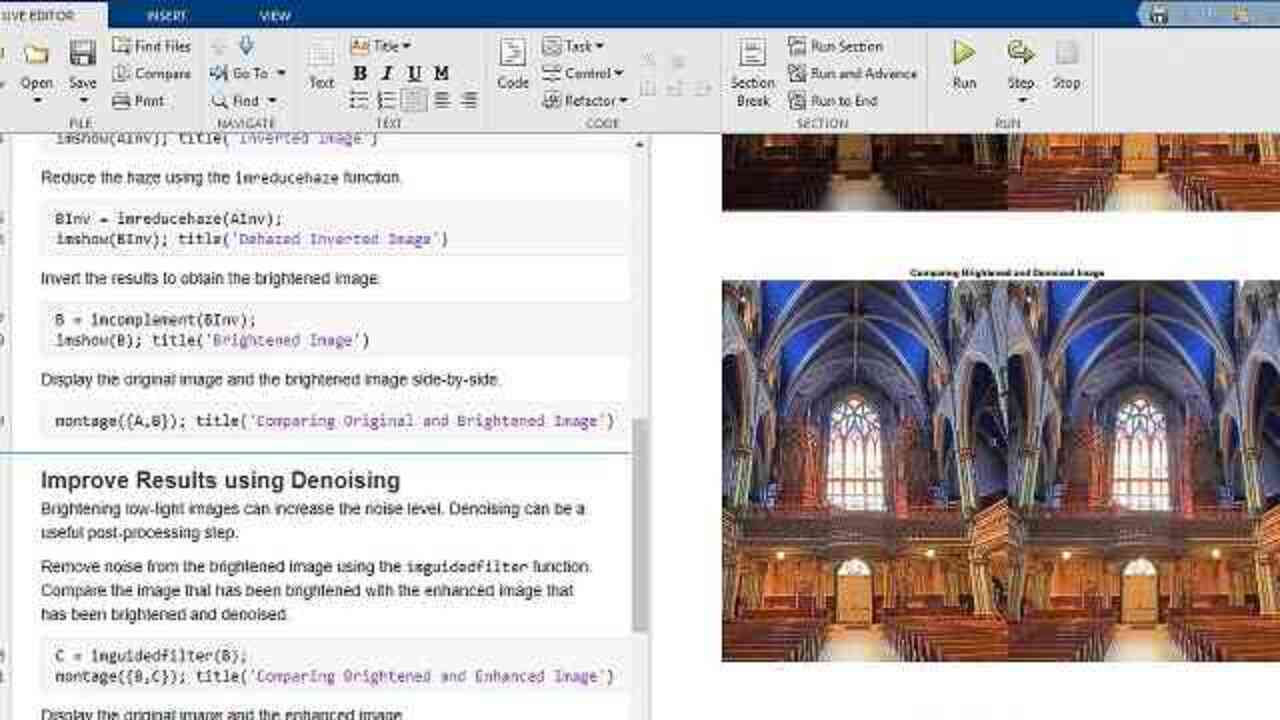
MathWorks' Image Processing Toolbox provides algorithms and apps for image processing, analysis, and visualization, supporting both deep learning and traditional techniques. It can process 2D, 3D, and large images, with capabilities such as image segmentation, enhancement, noise reduction, and geometric transformations. The toolbox also supports C/C++ code generation for embedded vision systems and GPU/multicore acceleration.
The integration of SAM 2 into a standard engineering environment like MATLAB signals the transition of foundation models from research experiments to production-grade streaming infrastructure. For video specialists, this provides a verified path to deploy AI-driven segmentation and object tracking directly onto hardware via CUDA and HDL. As the industry moves toward "content-aware" encoding ladders and real-time metadata generation, having these tools in a unified ecosystem reduces the friction of managing disparate Python-based AI stacks. It concretely enables faster prototyping of edge-computing applications where frame-by-frame precision is required. Watch for whether this shifts the 2026 encoding market away from generic GPU-only clusters toward more specialized VPU and ASIC-based AI pipelines.
MathWorks has been steadily expanding its deep learning and computer vision capabilities within MATLAB, positioning the platform as an alternative to Python-centric AI workflows for video and image processing engineers. The company's Image Processing Toolbox now offers SAM 2 in multiple model sizes, ranging from sam2-tiny for CPU-only and mobile inference up to sam2-large, which requires a GPU with 40 to 80 GB of VRAM for high-accuracy applications such as medical imaging and video post-production, according to MathWorks documentation for the imsegsam function. This tiered approach lets engineers select a model variant matched to their deployment target, from edge devices to workstation-class GPUs, without leaving the MATLAB environment.
The SAM 2 integration also connects to MathWorks' broader automated labeling and ground-truth workflows. MathWorks' Computer Vision Toolbox documentation describes using SAM 2 alongside Grounding DINO for automated polygon labeling in the Video Labeler app, enabling engineers to combine text-prompted object detection with segmentation masks in a single pipeline. This Grounded SAM workflow reduces manual annotation effort for training data preparation, a step that typically consumes significant engineering time in video AI projects.
For video processing teams evaluating segmentation tools, the SAM 2 models in MATLAB span a wide compute range. The sam2-small variant is documented as suitable for real-time or near-real-time video frame analysis on mid-range GPUs or edge devices, while the base SAM model remains available for legacy system compatibility and hardware-constrained environments. This matters for streaming engineers who need to prototype content-aware processing at different fidelity levels before committing to a production hardware configuration.
Add StreamingMeme as a preferred source on Google to see more of our streaming news at the top of your Search results.
Add as preferred source