

Livepeer proposes 2.0 pivot toward AI-agentic video infrastructure
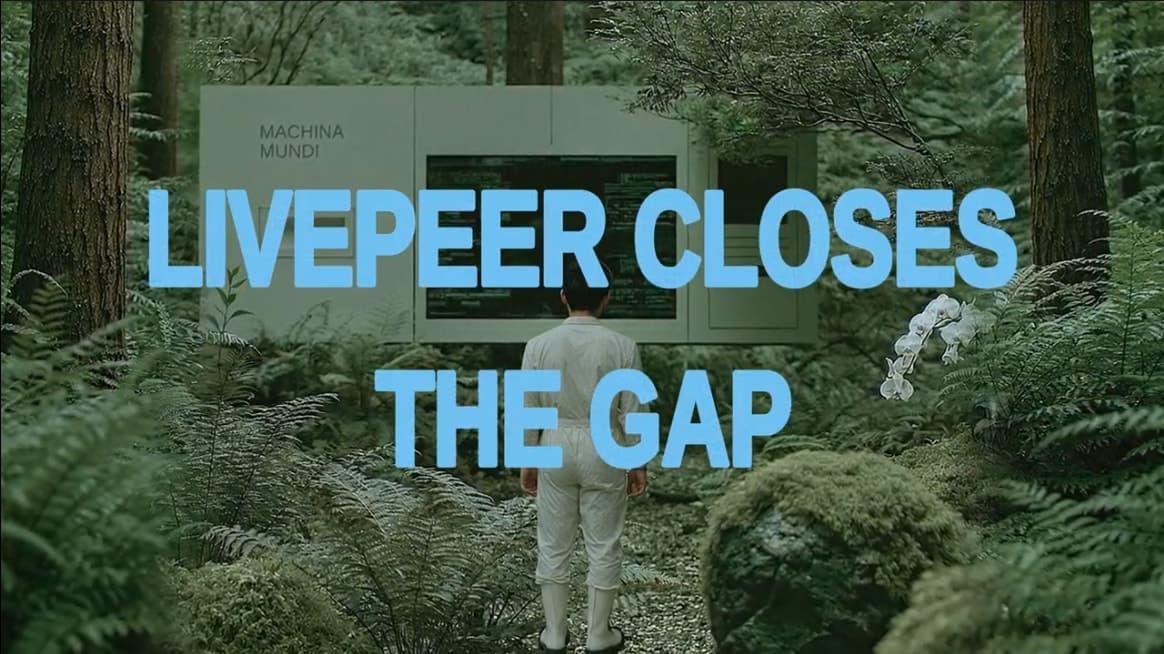
Livepeer has introduced a plan for 'Livepeer 2.0', proposing a transition toward an agentic-first open video platform to support generative AI workflows. The proposed update aims to expand network infrastructure to include remote API-based services and provide open-source alternatives to proprietary media agents.
Key Takeaways
- Introduction of the 'Livepeer Agent' to allow high-quality media creation via Claude, ChatGPT, and other LLM frameworks.
- Network expansion to include remote API-based services and CPU-only nodes, moving beyond historical GPU-centric constraints.
- Proposed shift in protocol roles to support multimodal workflows involving audio generation, storyboarding, and video stitching.
- Strategic focus on providing open-source alternatives to proprietary media agents from companies like Higgsfield and Runway.
Why It Matters
The pivot signals a fundamental shift in the decentralized physical infrastructure (DePIN) sector, moving from passive resource provisioning to active workflow orchestration. By enabling nodes to call third-party APIs rather than just running local GPUs, Livepeer is positioning itself as a flexible middleware layer for specialized media agents. This approach addresses the economic bottleneck of keeping diverse AI models 'warm' in GPU memory for low-demand tasks. Success would transition Livepeer from a niche transcoding tool into a core infrastructure layer for the generative video economy, directly challenging centralized media suites. Watch for specific protocol updates that link LPT token value accrual to these new agent-driven fee streams.
Additional Context
The 2.0 roadmap follows a period of rapid growth for the network's AI capabilities. Per Messari (May 2026), AI inference became Livepeer's largest monetization driver in Q1 2026, accounting for approximately 60% of protocol revenue. During that quarter, network usage surged 71.9% to 134.4 million minutes, signaling a clear market transition away from traditional video transcoding toward generative workloads. This momentum was supported by the earlier launch of the Livepeer AI subnet in late 2024, which introduced specialized pipelines for text-to-video, image-to-video, and speech recognition.
Livepeer’s shift toward an agentic framework aligns with a broader trend in the decentralized compute space. According to CoinMarketCap (March 2026), the network is also preparing for the launch of 'Punch Compute,' a marketplace designed to extend utility beyond video to general compute tasks. This diversification Strategy is intended to capture a share of the expanding AI agent ecosystem, which some industry projections from the Livepeer Agent SPE (January 2025) estimate could reach a $25 billion market size by 2025. By integrating with high-traffic frameworks like Eliza, Livepeer aims to lower the barrier for developers to embed decentralized video inference into existing AI workflows.
Competitively, the move to include API passthrough for nodes allows Livepeer to scale faster by incorporating proprietary models alongside open-source ones. This mirrors activity in the broader AI sector where companies like OpenAI have aggressively pursued media partnerships. Per Reuters and multiple trade reports (July 2026), OpenAI has secured content deals with over 20 global publishers, including News Corp and Time, to fuel its generative models. Livepeer’s 2.0 vision seeks to offer a community-powered alternative to this concentrated model of media creation, emphasizing censorship resistance and lower costs relative to hyperscale cloud providers.
Read full article at forum.livepeer.org
Enjoy our coverage?
Add StreamingMeme as a preferred source on Google to see more of our streaming news at the top of your Search results.
Add as preferred source