
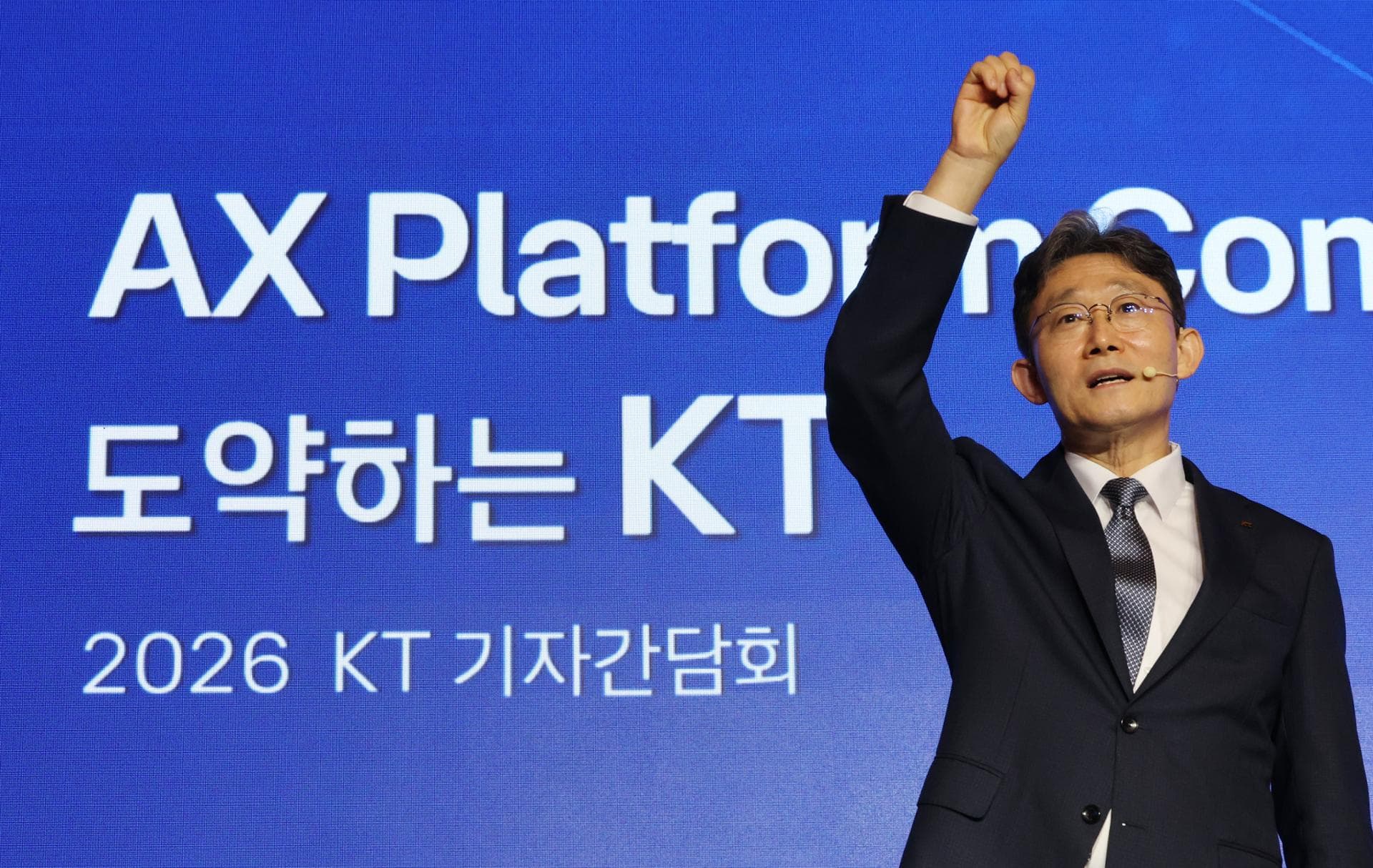
South Korean carrier KT Corp. has announced an 18 trillion won investment program focused on building AI data centers, submarine cable networks, and Zero Trust security infrastructure over the next three years. The initiative aims to support low-latency inference for physical AI and industrial applications by integrating network connectivity with carrier-grade compute resources.
KT's commitment shifts the telecom carrier's role from a connectivity provider to a vertically integrated AI infrastructure platform. By bundling massive compute capacity with dedicated submarine backhaul and Zero Trust security, KT is positioning itself to capture high-margin enterprise inference workloads that require localized data gravity and ultra-low latency. This move places KT in direct competition with hyperscalers for regional AI dominance and reflects a broader industry trend where carriers leverage their physical edge locations and network control. Success will depend on converting these capacity targets into deployable GPU resources for industrial and mobility applications. Watch for specific technical partnerships with Big Tech firms like Google or Palantir to augment their primary collaboration with Microsoft.
The 18 trillion won investment by KT Corp. aligns with the South Korean government’s 'triple axis' national strategy announced in June 2026. This broader initiative aims to build 18.4GW of AI data center capacity nationwide by 2035 at an estimated cost of 1,000 trillion won. Per Light Reading, the government is partnering with SK Group, GS Group, and Naver to decentralize infrastructure away from Seoul toward regional hubs like Ulsan and Sejong to alleviate grid congestion and foster industrial 'physical AI' applications in manufacturing.
KT’s strategy follows a five-year multibillion-dollar partnership with Microsoft finalized in late 2024. According to Microsoft, that deal involves migrating KT’s internal workloads to Azure and co-developing 'Sovereign AI' models, including a localized version of GPT-4o tailored for the Korean market. While the Microsoft deal focused largely on software and cloud expertise, the new July 2026 announcement emphasizes the physical infrastructure Layer—specifically hardware capacity and subsea connectivity—necessary to host those services domestically.
Competitive pressure in the region is intensifying as rival SK Telecom revealed plans in early 2026 to scale its own AI data center targets to 15GW by 2035. Per Fierce Network, SK Telecom is collaborating with Arm and the startup Rebellions to design custom AI chips to improve power efficiency. Meanwhile, LG Uplus recently amended its corporate charter to include data center construction and operation, confirming that all three major South Korean carriers are now pivotally focused on competing for the capacity required by large-scale generative AI and autonomous systems.
Add StreamingMeme as a preferred source on Google to see more of our streaming news at the top of your Search results.
Add as preferred source