
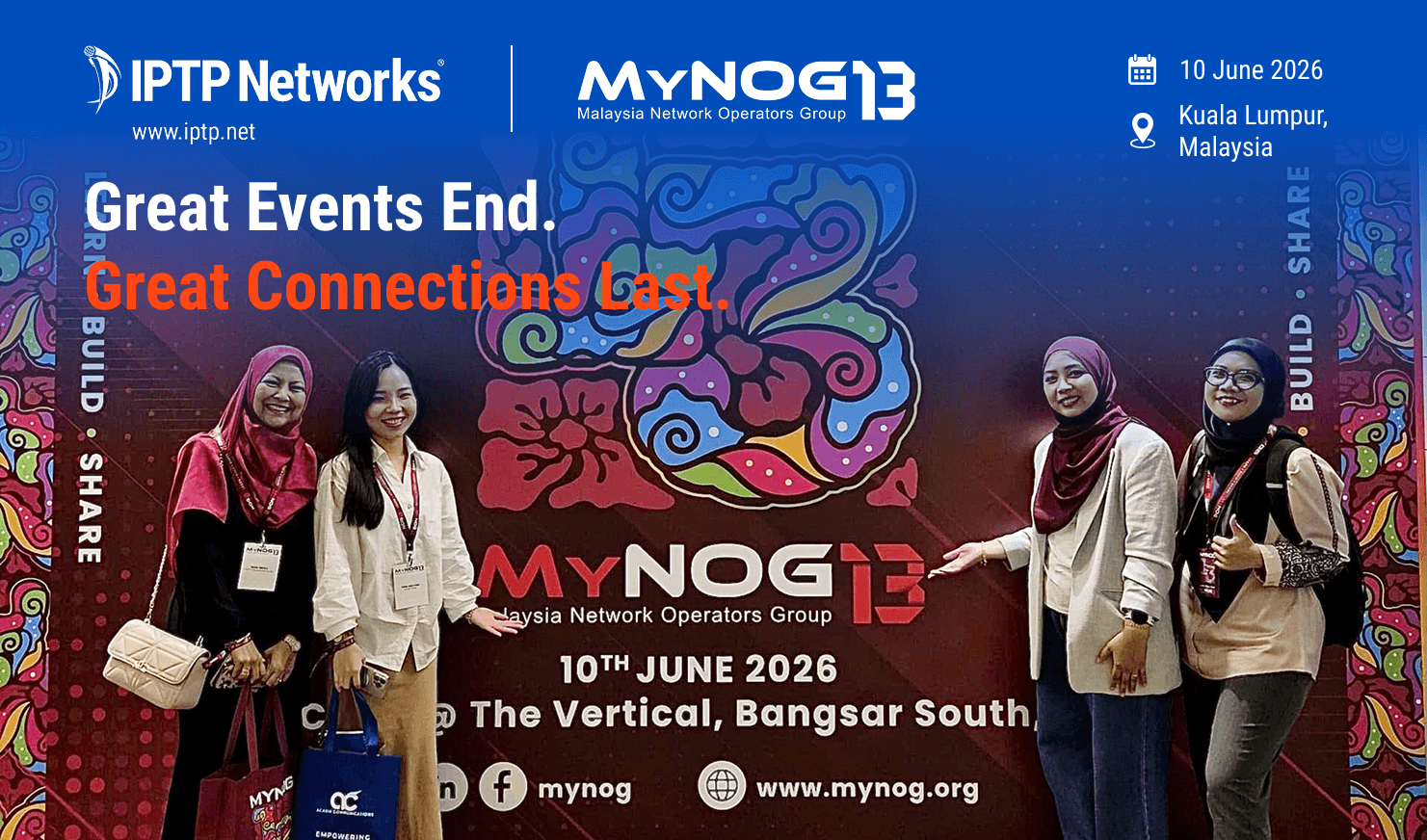
IPTP Networks attended MYNOG 13, a conference for network operators and service providers in Southeast Asia, where they discussed traffic exchange optimization, network automation, and AI-driven networking. The company highlighted its strong presence and ability to offer ultra-low-latency connectivity and robust network infrastructure solutions to enterprises expanding into Southeast Asian markets, as well as major global hubs. Their participation aimed to strengthen partnerships and explore new collaborative opportunities in the region.
Southeast Asia is witnessing a surge in data-heavy video consumption, making low-latency infrastructure a competitive necessity for streaming platforms. By integrating AI-driven automation into its backbone, IPTP Networks aims to reduce the operational complexity of managing fragmented regional routes. For the broader ecosystem, this reflects a shift where connectivity providers must move beyond basic transit to provide specialized, ultra-fast pathways for OTT and gaming services. Investors should track IPTP’s ability to secure peering partnerships in Vietnam and Thailand, where data localization laws and rising internet penetration are driving demand for localized infrastructure and decentralized traffic management.
IPTP Networks operates as a Tier-1 IP transit and CDN provider with points of presence across Europe, Asia, and North America, positioning itself as an alternative to hyperscale CDN providers for latency-sensitive workloads. The company's participation at MYNOG 13 aligns with a broader push by mid-tier network operators to capture streaming and gaming traffic in Southeast Asia, where internet penetration continues to climb. IPTP Networks has expanded its Malaysian infrastructure to serve as a regional hub for traffic exchange and peering, targeting enterprises that need sub-50ms latency for real-time video and interactive applications across ASEAN markets.
The Southeast Asian streaming market is attracting significant infrastructure investment as data localization regulations in Indonesia and Vietnam push content delivery closer to end users. IPTP's strategy of building peering relationships at regional internet exchanges addresses a gap that larger CDN providers have been slower to fill in secondary markets like Myanmar, Cambodia, and Laos. The company's emphasis on AI-driven network automation for route optimization reflects a competitive differentiator against traditional transit providers that rely on static BGP policies for traffic engineering in the region.
In the broader CDN and video delivery space, providers are increasingly competing on latency guarantees and regional coverage depth rather than raw bandwidth capacity. IPTP's positioning at MYNOG 13 signals its intent to capture a share of the growing OTT and live-event streaming traffic that requires deterministic low-latency paths through Southeast Asia's fragmented interconnection landscape, where multiple submarine cable systems and diverse routing policies create optimization challenges that favor providers with specialized regional expertise.
Add StreamingMeme as a preferred source on Google to see more of our streaming news at the top of your Search results.
Add as preferred source