

Human-created video ads outperform AI counterparts in brand health
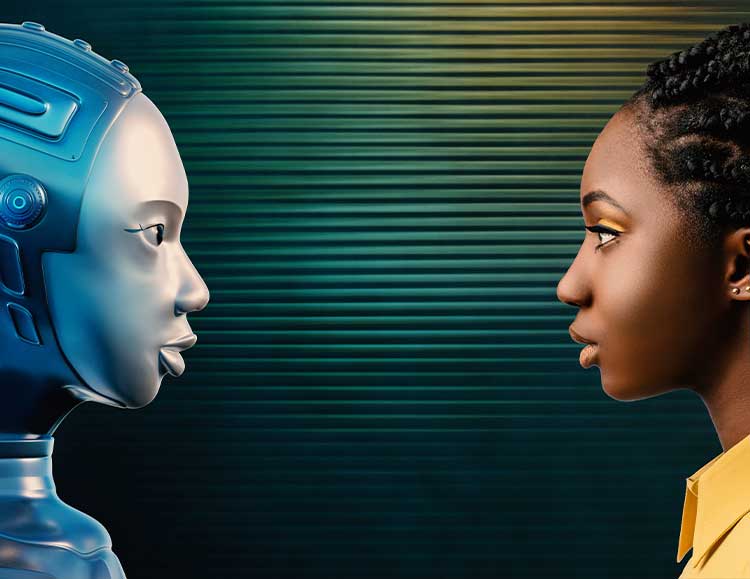
Research from Ipsos and Syracuse University indicates that human-made video ads outperformed AI-generated creative by 14% in short-term effectiveness and 17% in long-term brand health. The study utilized Google Gemini and OpenAI's Sora 2 to produce AI versions of 10 existing brand ads, measuring performance across 3,000 U.S. consumers to assess emotional resonance and business impact.
Key Takeaways
- Human-made ads achieved 17% higher long-term brand effectiveness and 14% stronger short-term impact scores.
- Only 25% of the 3,000 U.S. consumers surveyed were confident they could even identify the AI-generated advertisements.
- The study utilized Google Gemini to reverse-engineer briefs and OpenAI's Sora 2 to generate the AI video counterparts.
- Human creative scored significantly higher for being unique, entertaining, eye-catching, and imaginative.
- AI ads proved most effective in functional, product-driven categories like problem/solution structures for household brands.
Why It Matters
The findings suggest that while AI significantly lowers production barriers, "good enough" creative carries a measurable performance penalty. For streaming platforms and advertisers, this confirms that efficiency gains in asset volume do not automatically translate to subscriber growth or brand loyalty. The 17% gap in long-term effectiveness indicates that over-reliance on synthetic creative could erode brand equity over time. As the market reaches a saturation point of polished, AI-assisted content, human-centric storytelling with emotional depth will likely become a premium differentiator. Watch for whether advertisers shift toward a hybrid model that uses AI for versioning but retains human control over strategic and emotional direction.
Additional Context
The performance gap between AI and human creative is becoming a central benchmark for the advertising industry. According to a landmark January 2026 field study conducted by researchers from Columbia and Harvard on the Taboola platform, AI-generated ads actually achieved a higher click-through rate (0.76% vs 0.65%) than human creative across 500 million impressions. However, this efficiency in capturing attention does not always lead to high-value results. Per Digital Applied (March 2026), AI creative underperforms by 14% on high-consideration purchases exceeding $500, suggesting that trust and emotional nuance remain human-led advantages.
Platform-specific data echoes this tension between volume and value. On TikTok, 2025 data from Tubular Labs noted that while AI-generated influencer content saw 23% higher completion rates, it suffered a 47% lower subscriber conversion rate compared to human creators. This suggests that while synthetic video can hold a viewer's gaze, it struggles to build the authentic connection necessary for long-term loyalty. Consequently, many agencies are pivoting toward a hybrid approach. Deloitte Digital reported in late 2025 that hybrid human-AI production models outperformed pure AI campaigns by over 41% in brand equity scores.
Major technology providers are responding by embedding AI deeper into the operational layer rather than just the creative output. At Google Marketing Live 2026, the company positioned Gemini as a connective intelligence layer for autonomous bidding and conversational discovery rather than a replacement for creative agencies. Similarly, TikTok's Symphony suite, launched in mid-2024 and expanded through 2026, focuses on scaling creator-led content through AI-assisted dubbing and versioning. Industry analysts at Forrester noted in June 2026 that while 90% of U.S. agencies now use generative AI, the most successful leaders are those reinvesting the resulting efficiency gains back into high-level human talent to maintain brand differentiation.
Read full article at appdevelopermagazine.com
Enjoy our coverage?
Add StreamingMeme as a preferred source on Google to see more of our streaming news at the top of your Search results.
Add as preferred source