

GMKtec launches $3,600 AI workstation to rival Nvidia DGX Spark
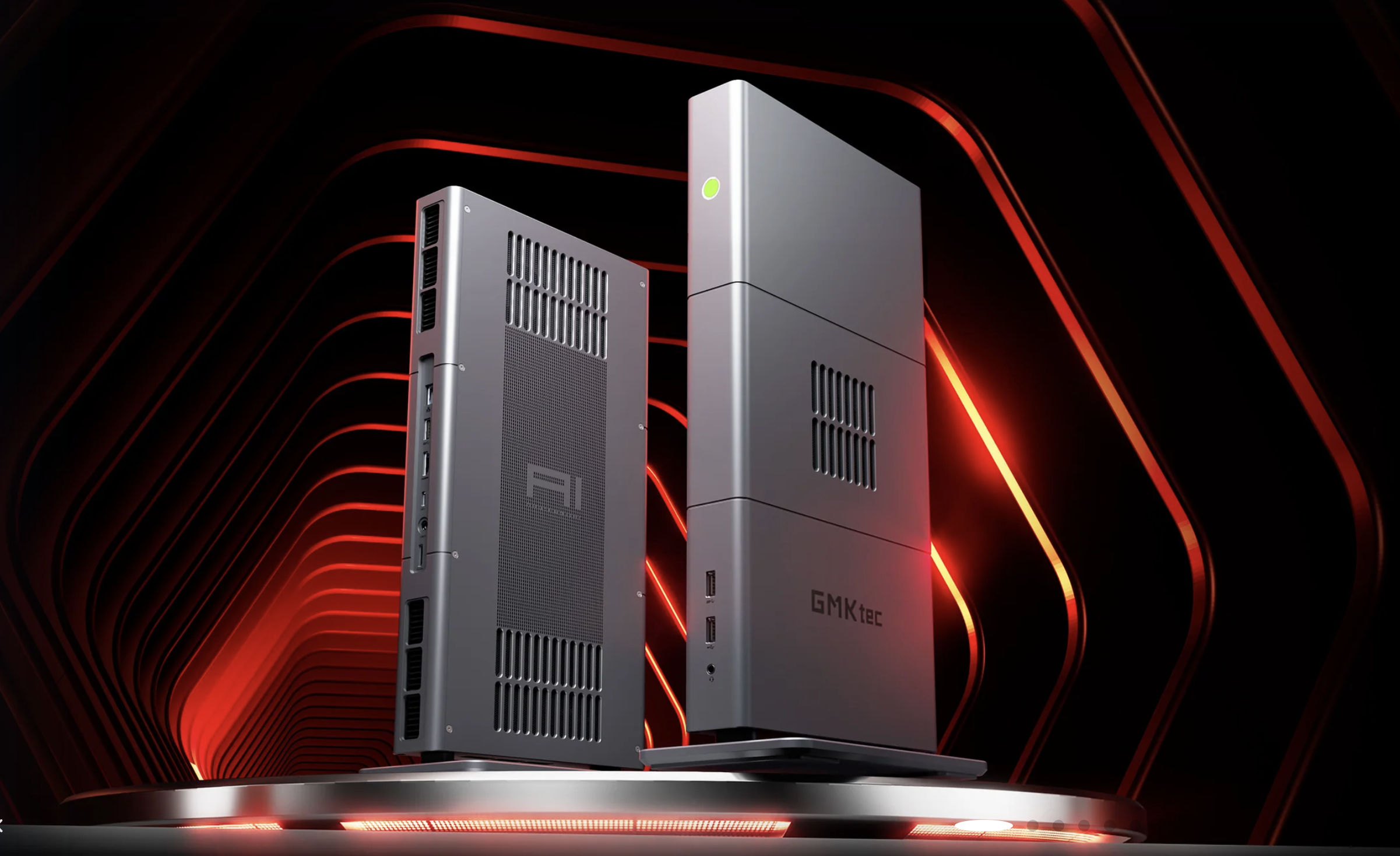
GMKtec has launched the EVO-X3 AI workstation, featuring the AMD Ryzen AI Max+ 395 processor and native OCuLink connectivity for external GPU expansion. The unit is marketed for high-throughput AI inference and workstation-scale workloads, moving the hardware from a consumer focus to a professional competitive tier.
Key Takeaways
- Native OCuLink PCIe Gen4 x4 port provides 64Gbps of raw bandwidth for external GPU expansion, outperforming USB4 connectivity.
- Integrated Radeon 8060S GPU can access up to 96GB of addressable VRAM from the unit's 128GB unified memory pool.
- AMD Ryzen AI Max+ 395 'Strix Halo' architecture delivers a total platform AI throughput of 126 TOPS.
- Redesigned chassis features CNC-machined steel and a triple-fan thermal system supporting a 140W peak performance profile.
Why It Matters
The EVO-X3 represents a strategic shift from consumer-grade hardware to professional-grade workstations, undercutting price points for comparable Nvidia and first-party AMD systems by over $1,000. By integrating OCuLink, GMKtec addresses the technical overhead limitations of USB4, offering local AI developers a direct PCIe path for discrete GPU scaling. This hardware diversification provides researchers an alternative to the supply-constrained Nvidia ecosystem, though it requires navigating the legal framework governing Chinese manufacturers. Watch for independent ROCm performance benchmarks on Linux to verify if the hardware redesign resolves the thermal throttling and noise issues that impacted the prior EVO-X2 generation.
Additional Context
The EVO-X3 enters a market defined by significant volatility in memory supply and rigorous local AI competition. Per TechPowerUp, February 2026, Nvidia was forced to raise the MSRP of its DGX Spark Founders Edition from $3,999 to $4,699, specifically citing worldwide constraints in LPDDR5X supply. GMKtec’s $3,600 price point for the EVO-X3 reflects these identical pressures, representing a sharp increase from the $1,499 launch price of the memory-constrained EVO-X2 earlier in the year. Industry projections from Omdia and IDC in mid-2026 indicate that AI-capable PCs will reach 50% of total shipments this year, driven by similar unified memory architectures that eliminate the VRAM bottlenecks common in traditional discrete graphics cards. Technically, the move to OCuLink addresses a critical gap in the external GPU (eGPU) market. While Thunderbolt 5 also expanded bandwidth to 80Gbps in early 2026, independent laboratory reporting from TechPowerUp and LocalAIMaster in April 2026 suggests that OCuLink maintains a 15-20% performance lead in real-world AI inference due to its lack of protocol translation overhead. This direct PCIe connection is viewed as essential for multi-agent workflows and large model loading, where latency and data integrity are prioritized over the hot-swapping convenience provided by the Intel-led Thunderbolt standard. From a regulatory standpoint, GMKtec’s expansion comes as data sovereignty and cybersecurity laws tighten globally. Per Forbes and the South China Morning Post, May 2026, the Chinese State Council has accelerated 'comprehensive legislation' for AI governance, expanding oversight on data, algorithms, and supply chain security. While no technical vulnerabilities have been documented in GMKtec hardware to date, the U.S. Department of Defense's June 2026 update to its list of Chinese military-affiliated entities underscores the heightened scrutiny on Shenzhen-based technology providers in enterprise AI environments.
Read full article at techtimes.com
Get this in your inbox → Subscribe
Enjoy our coverage?
Add StreamingMeme as a preferred source on Google to see more of our streaming news at the top of your Search results.
Add as preferred source