
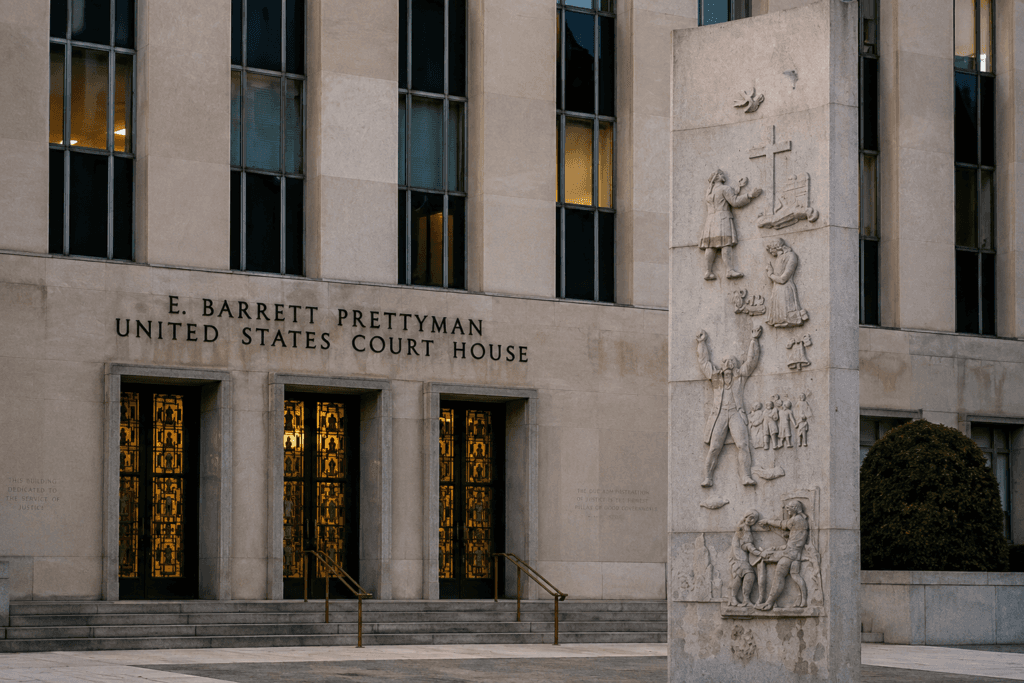
Eight experts have filed an amicus brief in the U.S. v. Google appeal, proposing a 'Pay for Half' framework to limit the tech giant's dominance in default search distribution. The brief argues that current judicial remedies are insufficient to prevent Google from outbidding competitors and emerging AI entrants for market access.
The proposal aims to dismantle the financial barrier that prevents alternative search engines from gaining market share through hardware and browser partnerships. By capping Google's ability to buy exclusivity, the framework creates a structured opening for competitors to bid for the remaining 50% of devices, potentially shifting the economics of the entire search ecosystem. For streaming and media companies, this could diversify the discovery layer, as emerging AI-driven search tools gain the distribution needed to challenge Google's long-standing grip on user traffic. Watch for the DC Circuit's ruling on whether to remand the payment-ban issue to the lower court for stricter enforcement.
The search for effective remedies follows Judge Amit Mehta's August 2024 ruling that Google maintained an illegal monopoly through multi-billion dollar agreements with partners like Apple and Mozilla. While Mehta ordered behavioral changes in September 2025—including data-sharing requirements and a ban on exclusive pre-loading of certain apps—he stopped short of prohibiting the revenue-sharing payments that form the bedrock of Google's distribution strategy. Per Courthouse News (July 2026), the Department of Justice is currently urging the D.C. Circuit to vacate this specific denial, arguing that leaving payments intact allows Google to sustain an "exclusionary cycle" that freezes the market. Recent EU search and app store enforcement actions highlight the global regulatory appetite for curbing these practices.
External pressure for a total payment ban has intensified as competitors claim the existing remedies offer little practical relief. Big Tech market dominance remains a primary barrier to entry because consumers rarely navigate the complex steps required to change them manually. The American Antitrust Institute (AAI) also filed in support of a payment ban, arguing that a monopolist using its own profits to foreclose rivals is the exact conduct antitrust law must prevent. Per Reuters (March 2025), state attorneys general had previously advocated for even more aggressive steps, including the potential divestiture of the Chrome browser if behavioral remedies failed to restore competition.
The debate over search defaults is increasingly overlapping with the nascent generative AI market. The Justice Department and amicus filers argue that Google is already applying its search playbook to AI by pre-loading its Gemini assistant across the Android ecosystem. By securing default status for Gemini, Google could effectively lock in a new generation of users before independent AI startups can achieve meaningful scale. According to DOJ filings from July 2026, failing to address the payment mechanism now will likely result in a permanent competitive disadvantage for AI-first search engines that lack Google's capital reserves.
Add StreamingMeme as a preferred source on Google to see more of our streaming news at the top of your Search results.
Add as preferred source