
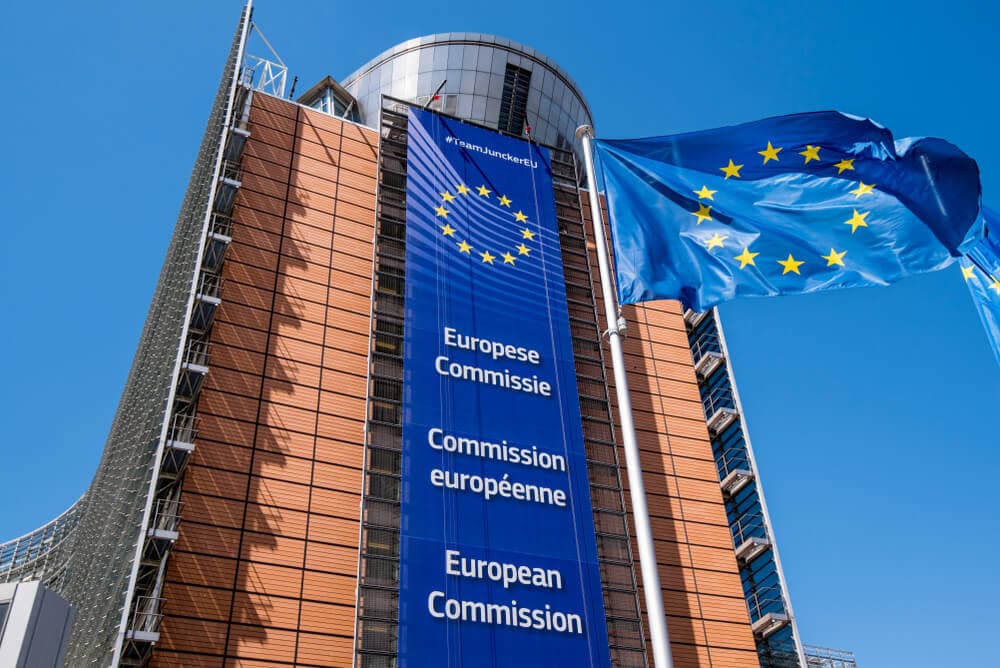
The European Commission has proposed reserving two-thirds of a satellite spectrum band for EU-based operators, a policy expected to take effect in May 2027. This move reflects a growing trend of governments treating spectrum as a finite, strategic national security and economic asset amidst rising demand from satellite-based delivery and direct-to-device services.
The EU's move to restrict satellite spectrum access fundamentally changes the valuation of global digital real estate. By prioritizing sovereign operators, the Commission is signaling that spectrum is no longer just a technical regulatory matter but a scarce strategic asset for economic and national security. This protectionist shift could force non-EU giants like SpaceX and Amazon to reconsider their infrastructure investment strategies within the European market. For the broader ecosystem, this indicates that the race for direct-to-device connectivity will be won or lost based on government-sanctioned access to finite frequencies. Watch for a potential WTO challenge or retaliatory spectrum policies from the U.S. and China as global frequency coordination becomes more fragmented.
The European Commission's focus on spectrum sovereignty coincides with the rapid expansion of the Infrastructure for Resilience, Interconnectivity, and Security by Satellite (IRIS²) program. Per the European Commission and Reuters, August 2026, the EU signed a contract with the SpaceRISE consortium to increase the planned constellation to 348 satellites. This expansion adds 66 low Earth orbit (LEO) satellites to the original design, with a targeted launch date of 2029. The project’s projected cost has reportedly risen to over €15.6 billion, up from initial estimates of €10.6 billion, as the bloc seeks to provide secure government communications that compete with SpaceX’s Starshield project.
Simultaneously, the commercial market for satellite airwaves has seen multi-billion-dollar consolidation. Per Light Reading and Forbes, April 2026, Amazon’s $11.6 billion acquisition of Globalstar was specifically aimed at securing the Band n53 spectrum. This acquisition allows Amazon to support satellite features on Apple devices, including Emergency SOS and messaging, effectively challenging SpaceX's first-mover advantage. SpaceX itself reshaped the market in September 2025 by purchasing AWS-4 and H-block licenses from EchoStar in a $17 billion deal. This purchase was critical for expanding Starlink's direct-to-cell business, which began commercial service with T-Mobile in mid-2025.
These domestic and regional maneuvers follow global regulatory shifts initiated at the 2023 World Radiocommunication Conference (WRC-23). According to the International Telecommunication Union (ITU), December 2023, policymakers agreed to study new allocations for mobile-satellite services to enable direct connectivity between satellites and unmodified smartphones. While companies like SpaceX and Amazon have urged the ITU to update power limit rules to allow for higher capacity, many of these international decisions are not expected to be finalized until WRC-27. This regulatory lag has incentivized governments to pursue regional spectrum reservations to protect local industrial interests.
Add StreamingMeme as a preferred source on Google to see more of our streaming news at the top of your Search results.
Add as preferred source