
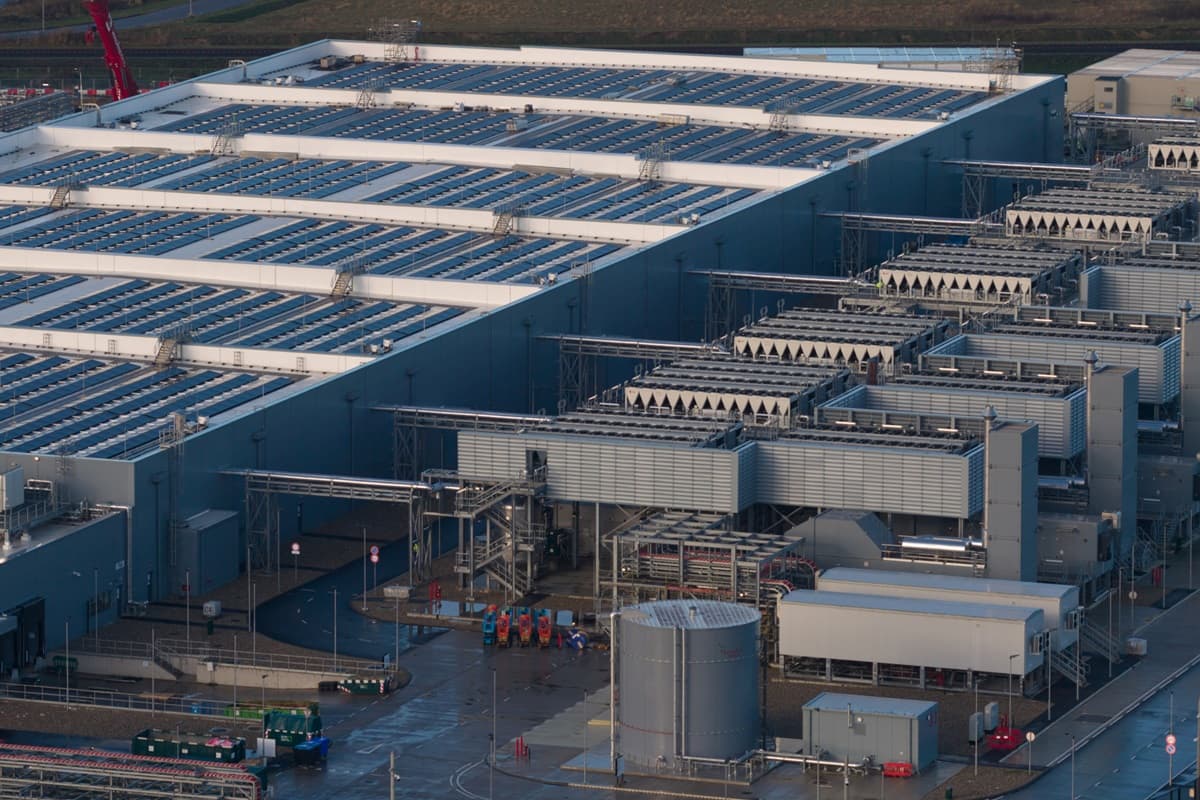
European Commission AI experts are recommending that the EU triple its share of global AI-specialized compute capacity to at least 15% to improve regional competitiveness. The proposal suggests establishing a sovereign-style fund and dedicated data center acceleration zones to meet the infrastructure requirements for heavy AI workloads.
Europe's reliance on non-EU AI infrastructure poses a direct risk to regional technological sovereignty and long-term economic competitiveness. For the streaming and advertising sectors, this compute deficit limits the ability to develop and host next-generation recommendation engines and localized large language models (LLMs) within EU borders, potentially forcing continued dependence on U.S. hyperscalers. The central implication is a massive shift toward state-backed infrastructure that could lower localized compute costs but requires aggressive capital deployment to succeed. Watch for the 2025 EU budget negotiations to see if the proposed European Competitiveness Fund receives the multi-billion euro backing required to trigger these 'data center acceleration zones.'
The push for localized compute follows the September 2024 publication of the Draghi Report, where former ECB President Mario Draghi warned that Europe faces a 'slow agony' if it fails to close the productivity gap with the U.S. and China. Per the European Commission in September 2025, the bloc has already mobilized approximately €200 billion for AI investments, including €20 billion specifically earmarked for 'AI gigafactories.' These efforts include the EuroHPC Joint Undertaking’s pivot toward ‘AI Factories,’ which upgrades existing supercomputers like Leonardo in Italy with AI-optimized partitions to support large-scale model training.
While policy frameworks expand, private capital is already flowing into primary European operators. In June 2026, Paris-based Mistral AI was reported by Bloomberg to be seeking an additional €3 billion in funding at a €20 billion valuation. This follows a September 2025 Series C round led by semiconductor giant ASML, which underscored the convergence of European hardware manufacturing and AI model development. Despite these raises, European firms still trail U.S. rivals in total capitalization; for instance, Mistral’s cumulative funding remains significantly lower than the tens of billions raised by OpenAI or Anthropic as of mid-2026.
Underpinning these infrastructure goals is the phased enforcement of the EU AI Act, which entered into force in August 2024. Per the European Commission’s timeline, the European AI Office is tasked with implementing strict governance for high-risk systems and general-purpose AI models by August 2026. This regulatory pressure adds urgency to the compute tripling goal, as the Commission aims to provide European enterprises with 'sovereign' infrastructure alternatives that natively comply with the bloc’s stringent transparency and safety standards.
Add StreamingMeme as a preferred source on Google to see more of our streaming news at the top of your Search results.
Add as preferred source