
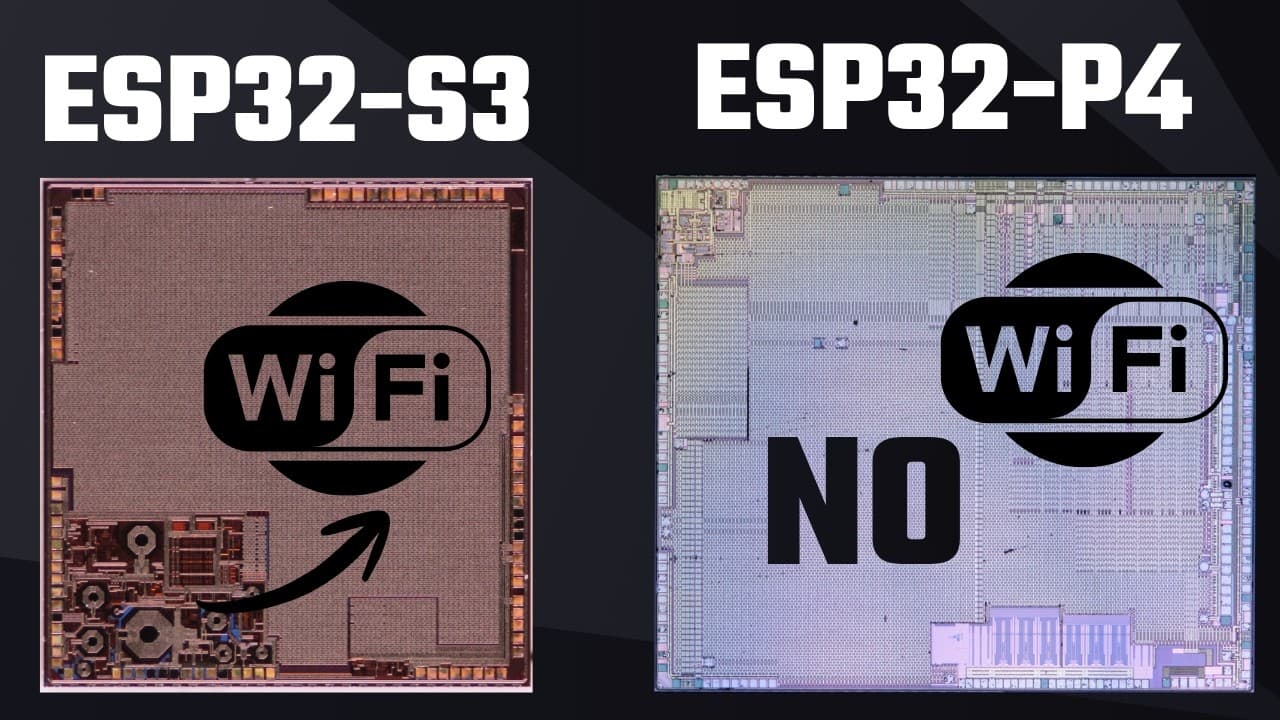
Espressif's new ESP32-P4 application processor, designed for high-performance applications like smart doorbells and edge AI vision, intentionally omits Wi-Fi and Bluetooth to free up silicon for advanced digital logic, including MIPI interfaces, a hardware JPEG codec, and an H.264 encoder.
Espressif's pivot with the ESP32-P4 signals a strategic move from general-purpose IoT connectivity to specialized high-performance application processing for embedded vision and HMI. This approach optimizes silicon for intensive media tasks, potentially creating a new competitive category against chips from NXP and ST in industrial and medical display applications. The modular design for wireless connectivity offers flexibility and simplified certification for professional hardware developers. Keep an eye on adoption rates in enterprise IoT and embedded vision to gauge market reception for this disaggregated chip architecture.
The launch of the ESP32-P4 arrives as Espressif experiences record financial momentum. Per PitchBook data from June 2026, the company reported a trailing 12-month revenue of $374 million, reflecting a steady climb from $270 million in 2024. This growth is increasingly driven by industrial and healthcare sectors that require dedicated processing power rather than simple smart-home connectivity.
Industry analysts at NetInt (April 2026) note a broader strategic shift toward hardware-accelerated video at the edge, even as the industry pivots toward AV1 for server-side delivery. While H.264 remains the workhorse for real-time edge devices due to its near-universal decoder support, the P4's hardware encoder addresses a critical bottleneck where software-only compression previously choked microcontroller CPUs.
Competitive pressure is also intensifying. According to Hackaday (March 2026), Espressif’s release of revised silicon for the P4 v3.x addressed early stability issues and enhanced clock speeds to reach the 400 MHz threshold. This revision allows Espressif to better compete with high-end ARM Cortex-M7 based chips from STMicroelectronics and NXP. Market trackers at Omdia have highlighted that as the global streaming market scales toward a projected $225 billion by 2032, the demand for low-power, dedicated hardware encoders for distributed vision networks is set to outpace general-purpose IoT chip demand.
Add StreamingMeme as a preferred source on Google to see more of our streaming news at the top of your Search results.
Add as preferred source