
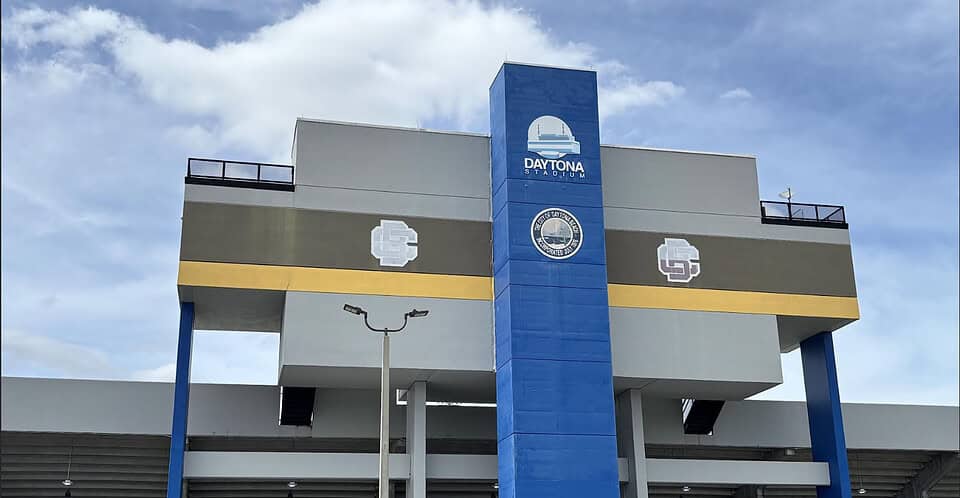
ESPN transitioned its UFL playoff game production from a REMI model to a full on-site setup in Daytona Stadium for a UFL playoff game due to a last-minute venue change. The production team had to build out complete broadcast infrastructure, including scaffolding for cameras, generators, and fiber cabling, in under 72 hours at the 'blank canvas' stadium. This rapid pivot highlighted the logistical and technical challenges of live sports production and the importance of adaptable infrastructure and operational readiness.
This pivot underscores the fragile reliance of REMI workflows on high-spec venue infrastructure; without pre-existing fiber or broadcast-ready stalls, remote models collapse back into expensive on-site requirements. For the broader ecosystem, it highlights a persistent challenge in Tier 2 sports: the lack of standardized 'connected' venues limits the operational savings promised by centralized production. As leagues like the UFL grow, the industry must watch whether stadiums invest in permanent fiber backbones and power distribution to attract high-tier broadcasts or continue to force costly, short-notice technical deployments.
The 2026 UFL postseason comes amid a period of significant viewership growth and structural changes for the league. Per Sports Business Journal (May 2026), UFL regular-season viewership averaged 686,000 viewers across ESPN platforms, an 8% increase year-over-year. This momentum follows the league's 2025 minority stake sale to Impact Capital, led by multibillionaire Mike Repole, who has pushed for aggressive business expansion and market relocations to stabilize the spring football product. The Orlando Storm, in their inaugural season, had anchored their identity to Central Florida, making the venue shift from Orlando's Inter&Co Stadium to Daytona a logistical priority for fan retention.
Technically, ESPN’s reliance on Game Creek Video’s Apollo unit reflects a broader industry trend toward high-density, IP-based production environments. According to TV Technology (February 2026), Game Creek has spent the last two years integrating platforms like the MultiDyne VF-9000 to consolidate fiber transport and copper video conversion. This hardware maturity allowed the team to stand up the Daytona broadcast rapidly despite the 'blank canvas' nature of the facility. Additionally, while ESPN is expanding its hybrid REMI/REMCO (remote controlled) models—recently seen in its 2026 Stanley Cup coverage—the Daytona incident serves as a case study in the tactical necessity of traditional mobile units when edge-based contribution technologies are unavailable.
Add StreamingMeme as a preferred source on Google to see more of our streaming news at the top of your Search results.
Add as preferred source