

Enterprises pivot to agentic AI systems for autonomous task management
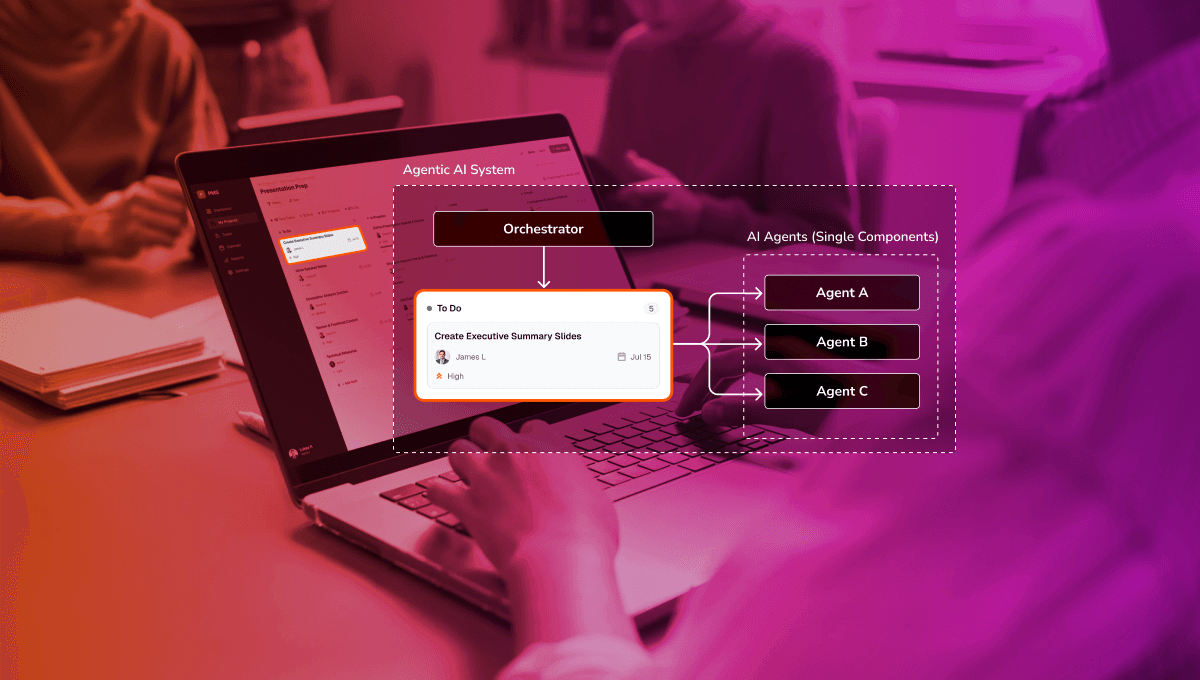
This article defines the architectural distinctions between discrete AI agents and orchestrated agentic AI systems for enterprise deployments. It introduces a four-level capability spectrum to guide architects in evaluating the complexity, governance, and operating costs of AI automation in production environments.
Key Takeaways
- AI agents are defined as discrete software components, while agentic AI is a system property describing the capacity for autonomous planning and adaptation.
- Gartner projects over 40% of enterprise applications will embed task-specific AI agents by 2026, an eightfold increase from 2025 levels.
- A four-level capability spectrum guides deployment: Level 1 focuses on single-function agents, progressing to Level 4 autonomous orchestration where LLMs manage tool chains at runtime.
- Governance for multi-agent systems requires orchestration-layer oversight and audit logging at every worker-agent level to manage complex failure modes.
- Recent shared data from Accenture and Wipro indicates that up to 80% of agentic initiatives fail to scale due to over-engineering before proving single-agent foundations.
Why It Matters
The shift from single-purpose bots to agentic systems allows streaming platforms to automate complex, multi-step operations like dynamic content localization and personalized ad-stitching. Concretely, this means moving beyond simple recommendation rails to architectures that can autonomously re-cut assets for social discovery based on real-time sentiment. As content distribution becomes increasingly fragmented, the ability of these systems to act independently across the tech stack will separate platforms with sustainable EBITDA from those burdened by high operational overhead. Watch for the adoption of centralized orchestration frameworks like Anthropic’s 'workflows' model to standardize how streaming metadata is processed across global regions.
Additional Context
The transition toward agentic AI is accelerating as major vendors release dedicated infrastructure for production-grade orchestration. Per Anthropic (December 2024), developers are encouraged to differentiate between hard-coded workflows and true agents that use LLMs to dynamically direct their own processes. This push is supported by the release of specialized development kits, such as Anthropic’s Claude Agent SDK and OpenAI’s AgentKit in late 2025, which provide built-in tool connectors and safety guardrails. These tools address the primary bottleneck for deployment: nearly 88% of agent pilots have historically failed to reach production due to governance friction and variable operating costs, according to 2026 research from Forrester and Anaconda.
In the streaming and media sector, agentic AI is moving from background experimentation to core UI/UX integration. Per Forbes (January 2026), Amazon Fire TV and Roku have introduced advanced AI assistants that allow viewers to direct content discovery through natural, two-way dialogue, reducing average search times that previously peaked at 14 minutes. Furthermore, Austrian broadcaster ORF has deployed 'AiDitor,' an autonomous research agent used by thousands of employees to repurpose radio and TV content into localized social media assets. This real-world application illustrates the trend identified by Gartner that 40% of enterprise apps will feature these autonomous agents by Year-End 2026.
Simultaneously, the foundational hardware and physics layers for agentic intelligence are expanding. Per NVIDIA (March 2026), the company’s Nemotron-3 series and Project GR00T N1.7 are being adopted by enterprise partners like ServiceNow and LG to power reasoning-heavy agents. While the business value of these systems is projected to reach $236 billion by 2034, Gartner warns that nearly 40% of such projects may still face cancellation by 2027 if organizations fail to manage the escalating token costs and unpredictable failure modes inherent in dynamic, multi-agent orchestration.
Read full article at dac.digital
Enjoy our coverage?
Add StreamingMeme as a preferred source on Google to see more of our streaming news at the top of your Search results.
Add as preferred source