
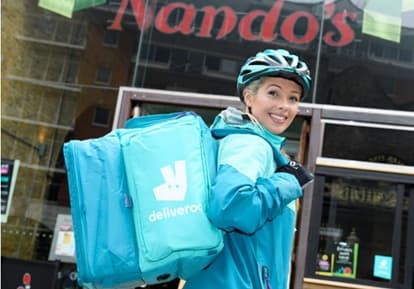
Deliveroo Media has integrated its 'Order Tracker' page into Google Ad Manager to support programmatic advertising in the UK, France, Italy, and the UAE. The new features enable advertisers to utilize first-party audience segments and real-time cuisine-based contextual targeting for post-checkout ad placements.
The immediate implication is the bridging of food delivery signals with standardized programmatic infrastructure, allowing non-endemic brands like travel or finance to target based on specific real-time consumption habits. Within the broader ecosystem, this move signals the maturation of commerce media beyond basic search, forcing delivery platforms to compete with traditional retailers for high-intent display budgets. Streaming and CTV strategists should watch for the integration of these food-based audience segments into omnichannel campaigns as platforms like Deliveroo seek to monetize the 'shortlist economy' through automated buying tools. The key metric to monitor is the adoption rate of Programmatic Guaranteed deals by non-food advertisers.
The expansion of Deliveroo Media arrives as the commerce media landscape enters what analysts call the 'infrastructure era' in 2026. Per EMARKETER report in June 2026, commerce media is the fastest-growing digital channel, projected to reach $62 billion as advertisers demand stronger deterministic ROAS following the degradation of cookie-based tracking. While Amazon and Walmart continue to command significant market share—holding roughly 89% of new spend—a secondary tier comprising DoorDash, Uber Eats, and Deliveroo has emerged, recently surpassing a combined $4 billion in annual ad revenue according to a July 2026 analysis from AI & MadTech Advisor Chris Dorsey.
This growth is increasingly driven by interoperability and the standardization of buying across diverse networks. In June 2024, DoorDash announced a unification of its ad suite across DoorDash, Wolt, and Deliveroo into a single technology platform to simplify access for its 400,000 advertisers. This technical consolidation addresses a major friction point in 2026: the need for agencies to manage fragmented commerce networks through a single DSP. According to AdButler, global commerce media now accounts for over 15% of total ad spend, recently surpassing traditional TV advertising in volume.
Furthermore, the focus on non-endemic advertisers—such as the travel and automotive sectors—reflects a shift toward capturing full-funnel budgets. eMarketer reported in January 2026 that native content exposure on retail platforms leads to an 18% increase in purchase intent compared to standard display ads. As Deliveroo and its peers open 'previously unreachable' inventory like order tracking pages, they are positioning high-attention post-checkout moments as premium space for brands that do not sell directly on the delivery platform but want to reach a captive, engaged user base.
Add StreamingMeme as a preferred source on Google to see more of our streaming news at the top of your Search results.
Add as preferred source