

Bornan Sports Technology proposes AI-driven officiating to automate sports decision-making
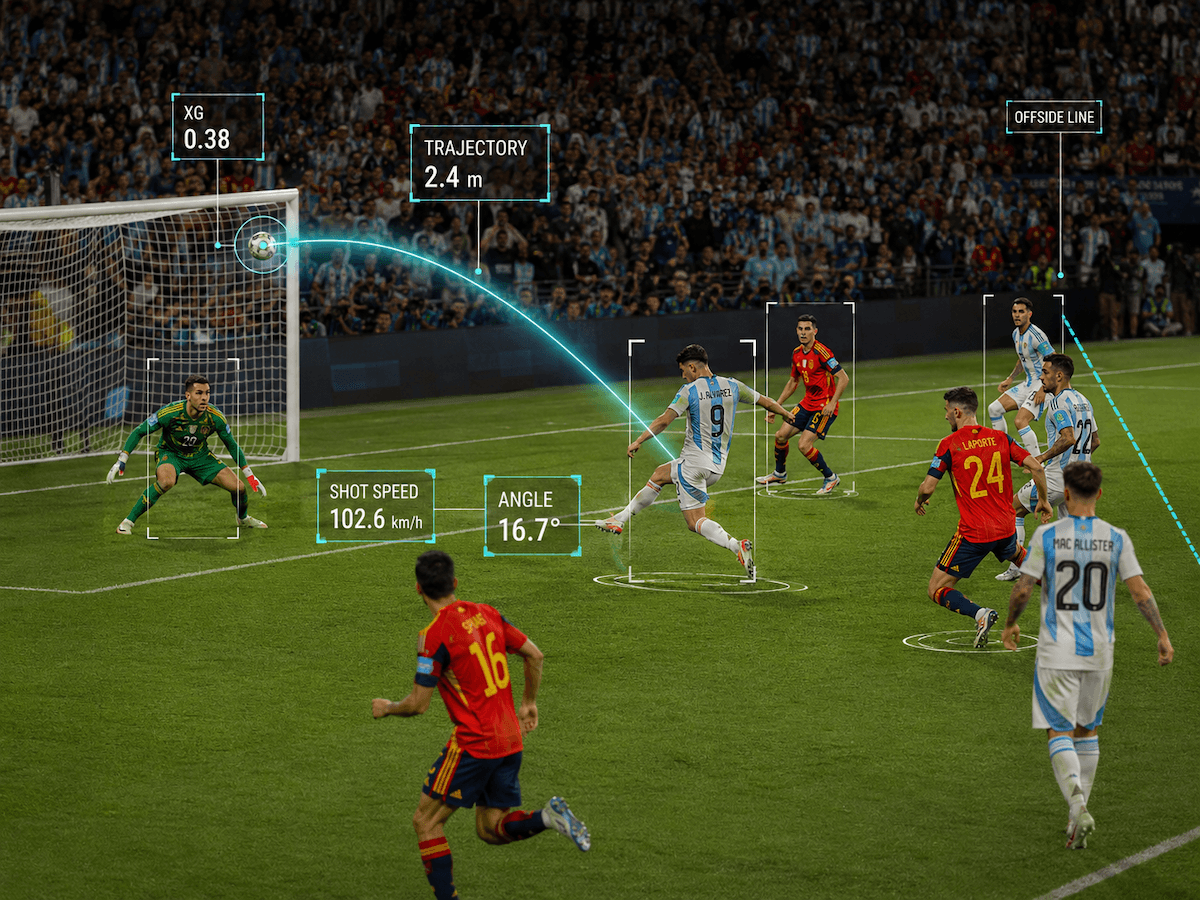
Bornan Sports Technology outlines how computer vision and AI can automate sports officiating through real-time analysis of video feeds and player trajectories. The company proposes integrating this technical data directly into television graphics to provide fans and broadcasters with evidence-based visual support for referee decisions.
Key Takeaways
- AI systems will enable real-time tracking of player positions, contact zones, and ball trajectories to provide instant recommendations rather than static reviews.
- Computer vision advances allow cameras to reconstruct technical plays in seconds, measuring offsides and prior fouls down to the millimeter.
- Borman argues for integrating technical evidence, such as offside lines and contact zones, directly into television graphics for viewer transparency.
- Official decisions for objective actions like goal-line timing and offsides are trending toward automation, with referees shifting toward technical oversight roles.
Why It Matters
This move signals a transition from video-assisted review to automated detection, which could significantly reduce the latency in match-altering decisions. For broadcasters and streaming platforms, the automation of technical graphics provides a more data-rich viewer experience without manual producer intervention. As AI impartiality becomes the standard for objective calls like offsides, the human referee's role will likely contract to focus on subjective rules and overall game management. Watch for the integration of these automated alert systems into the core streaming tech stack of major sports leagues by the next World Cup cycle.
Additional Context
The push toward automated officiating is gaining rapid traction across elite global sports leagues. In April 2025, the NFL announced it would replace the traditional chain crew for measuring first downs with Sony’s Hawk-Eye technology starting in the 2025 season. This system utilizes a network of six 8K cameras per stadium to provide virtual line-to-gain measurements within roughly 30 seconds. Similarly, the Premier League voted to introduce semi-automated offside technology (SAOT) for the 2024/25 season. Per league reports, the system uses Genius Sports’ computer vision power to track thousands of data points on each player and the ball, aiming to reduce VAR offside review times by an average of 30 seconds per incident.
Institutional support for these AI transitions has been robust as the 2026 World Cup approaches. Per reports from June 2026, FIFA has fully instrumented all 16 tournament stadiums with 12 to 16 tracking cameras each. The 2026 setup includes the Adidas Trionda match ball, which features a 500Hz internal sensor to pinpoint the exact millisecond of contact. This sensor fusion strategy allows the AI to generate 3D animations of offside incidents for stadium screens and global broadcasts in real-time. Meanwhile, companies like Bornan Sports Technology are expanding their footprints through strategic partnerships; in July 2026, Bornan was named the official technology partner for the 2026 Asian Indoor and Martial Arts Games in Riyadh, where they will manage the timing, scoring, and video arbitration systems across 18 disciplines.
Read full article at atalayar.com
Enjoy our coverage?
Add StreamingMeme as a preferred source on Google to see more of our streaming news at the top of your Search results.
Add as preferred source