
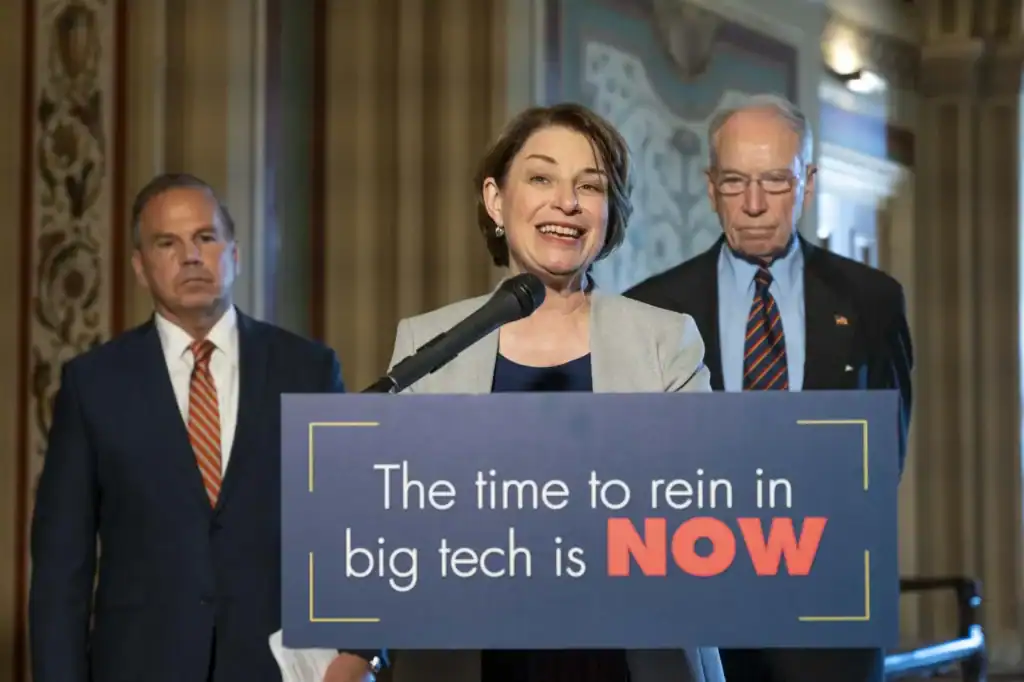
Sens. Chuck Grassley and Amy Klobuchar have introduced the American Innovation and Choice Online Act (AICOA), which seeks to empower regulators to challenge discriminatory conduct by large digital platforms. Apple has voiced strong opposition to the bill, labeling it a European-style regulation that could negatively affect privacy, security, and domestic innovation.
If enacted, AICOA would represent a seismic shift in U.S. antitrust enforcement, moving from retroactive litigation to ex-ante rules for platforms like the App Store and Prime Video. For streaming stakeholders, this could force an end to ecosystem bundling and favorable placement for first-party content over third-party apps. While the bill aims to lower consumer costs, Apple’s vocal opposition suggests a long legal fight over whether 'security' justifies walled-garden economics. Watch for a floor vote in the Senate Judiciary Committee by late Q3 to gauge legislative momentum before the midterm cycle.
The reintroduction of AICOA in July 2026 follows an intensifying period of regulatory pressure on large technology platforms. Per internal reporting from the European Commission in April 2026, the first formal review of the Digital Markets Act (DMA) concluded the framework remains 'fit for purpose,' despite significant corporate pushback. However, research from the Center for Strategic and International Studies (CSIS) indicates the DMA and the Digital Services Act could collectively impose up to €71 billion in annual costs on European businesses, sparking fears that similar U.S. legislation could burden domestic small-to-mid-sized enterprises.
Simultaneously, the Department of Justice (DOJ) is actively pursuing a blockbuster antitrust case against Apple. Per court filings in May 2026, Apple has accused the U.S. government of evading discovery obligations, claiming that 14 federal agencies are withholding documents that show they prioritize using iPhones for their own secure communications. This legal friction underscores Apple's broader defense: that its integrated 'walled garden' is a feature for security rather than a bug of monpolization. U.S. District Judge Xavier Neals denied Apple's motion to dismiss in June 2025, setting a timetable that likely pushes a full trial to 2027 or 2028.
Beyond antitrust, the Federal Trade Commission (FTC) has shifted toward more aggressive enforcement of digital consumer protections. In July 2026, the FTC proposed a new policy statement targeting AI companies for 'deceptive conduct' if they manipulate model outputs to contradict consumer expectations of objectivity, per Retail & Consumer Products Law reports. This regulatory climate, combined with the new Supreme Court ruling in June 2026 allowing for-cause removal of FTC commissioners, creates a volatile environment for B2B strategists trying to forecast long-term compliance requirements.
Add StreamingMeme as a preferred source on Google to see more of our streaming news at the top of your Search results.
Add as preferred source