

Balanga Employs AI for Historical Docs; YouTube's Role in Funding Criticized
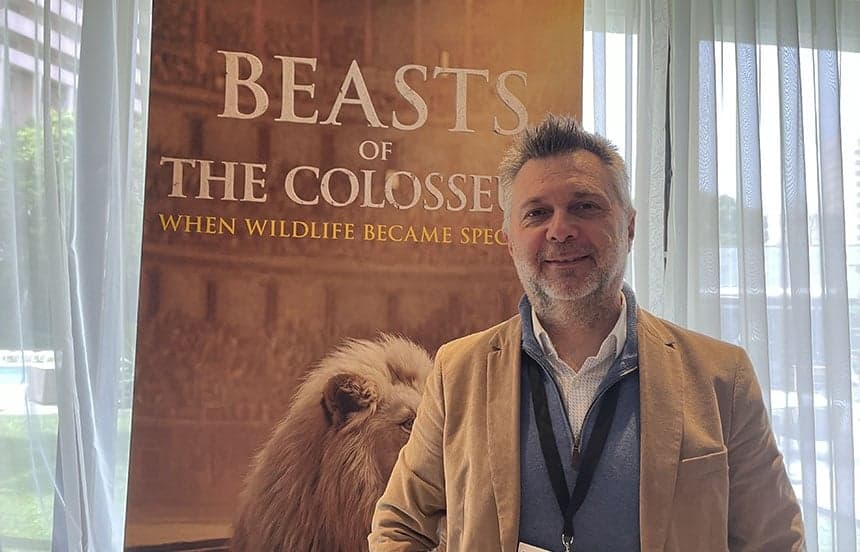
Balanga's president, Christophe Bochnacki, discusses the innovative use of AI in historical documentaries, highlighting its potential as a "game-changer" for immersive storytelling while emphasizing the need for editorial integrity. He also criticizes YouTube's lack of content financing, which he views as a danger to the traditional distribution model, and notes Balanga's plans to explore new distribution markets in Eastern Europe.
Key Takeaways
- Balanga uses AI-driven reenactments in new projects like "Beasts of the Colosseum" and "Odysseus, the First Hero" to create immersive historical narratives.
- Christophe Bochnacki states AI must serve storytelling and maintain editorial integrity in documentary production.
- Bochnacki critiques YouTube for consuming market share without content financing, claiming it undercuts traditional broadcasters who fund over 90% of content.
- Balanga sees a market return to balance after a decade of overproduction but faces challenges from shifting audience habits and digital giants.
- The company plans to expand into Eastern European markets, attending NEM Dubrovnik and other summer market circuits.
Why It Matters
Balanga's strategy highlights a growing trend among production houses using generative AI to enhance historical documentary realism and breadth, making complex narratives more accessible and cost-effective. However, this push into AI-driven content surfaces critical discussions about maintaining editorial integrity and financial sustainability within the broader streaming ecosystem. Companies will need to navigate balancing emerging technologies with traditional funding models if they are to retain audience trust and economic viability. Watch for how other production entities address the ethical and financial implications of AI integration in their content pipelines.
Additional Context
The debate around AI in documentary filmmaking continues to evolve. Filmmaker Darren Aronofsky's studio, Primordial Soup, partnered with Time magazine to launch "On This Day… 1776" (Ars Technica, February 2026), a short-form series using AI to produce photorealistic historical scenes. Despite critical reception noting "repetitive camera movements" and "waxen characters," sources close to the production indicate that the AI tools and team's expertise are expected to improve, viewing it as a "huge experiment." Similarly, ZED announced an ambitious slate of AI-powered historical documentaries (Señal News, March 2026), including "William the Conqueror: The Great Landing" and "Spartacus, The Man Who Shook Rome," utilizing AI for cinematic reconstructions while emphasizing ethical standards. This trend underscores AI's potential for visual enhancement and cost reduction in historical content, often allowing for productions that might otherwise be prohibitively expensive. However, academic research notes the increasing use of AI in documentary filmmaking, particularly with deepfake technology, raises significant ethical concerns about authenticity and the manipulation of reality (Journal of Video & Photo Arts, undated). The core challenge remains ensuring transparency about AI's role to preserve viewer trust, especially as AI-generated content becomes more sophisticated and blurs the lines between factual representation and creative simulation. As Balanga asserts, editorial integrity must remain paramount.
Read full article at senalnews.com
Enjoy our coverage?
Add StreamingMeme as a preferred source on Google to see more of our streaming news at the top of your Search results.
Add as preferred source