

AI video enhancement market shifts as dedicated tools challenge editing suites
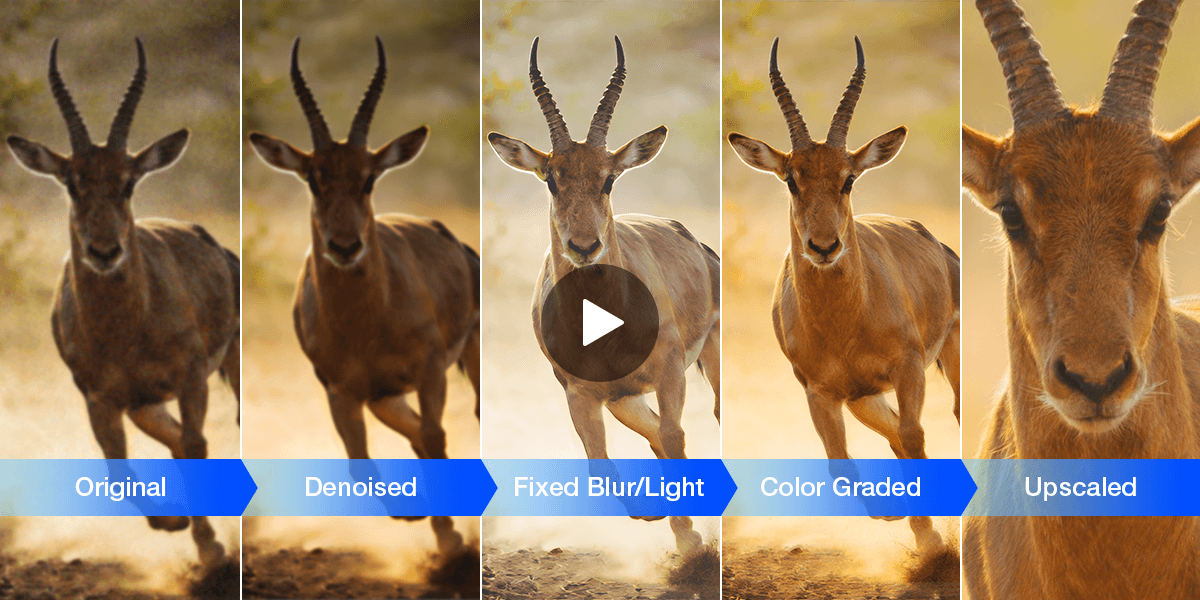
Aiarty published a comparison of six video enhancement tools, including its own Aiarty Video Enhancer, Topaz Video AI, DaVinci Resolve Studio, Video2X, Remini, and Cutout.pro. The article details how these AI-powered tools perform in restoring details, denoising, and upscaling video to 4K, highlighting their suitability for various industry workflows and hardware requirements. It provides insights into features, pricing models, and specific use cases for each tool.
Key Takeaways
- Topaz Video AI maintain status as a high-end industry standard but now requires a $299 recurring annual subscription following a late-2025 pricing shift.
- Aiarty Video Enhancer uses a specialized 'Clean-then-Scale' workflow to prevent the waxy 'oil painting' artifacts common in aggressive AI upscaling.
- DaVinci Resolve Studio’s Super Scale and UltraNR tools focus on surgical edge definition rather than synthetic pixel generation, benefiting high-bitrate ProRes and RAW sources.
- Consumer-grade tools like Remini and Cutout.pro have bifurcated into mobile-first facial reconstruction and cloud-based, GPU-agnostic rendering for lightweight social media edits.
- Hardware demands vary significantly, with professional local tools frequently requiring top-tier NVIDIA RTX GPUs for viable 4K render times.
Why It Matters
The rise of specialized video enhancers signifies a shift from general-purpose editing to targeted AI restoration in the post-production stack. For streaming operators, these tools allow for the cost-effective repurposing of archival or low-resolution UGC footage into high-fidelity 4K assets, critical as subscription growth slows and content margins tighten. The ecosystem is moving toward a hybrid model where AI plugins are integrated directly into NLE timelines, yet the hardware barrier remains high. Watch for whether NVIDIA’s upcoming RTX Video Super Resolution integrations, per recent June 2026 reports at Computex, can commoditize high-end upscaling and reduce the need for expensive third-party software licenses.
Additional Context
The video enhancement market is evolving as AI-powered features move from 'experimental' to 'infrastructure' status across the streaming industry. According to the June 2026 State of the AI Video-Creation Industry Report from Pictory, professionals are now the primary drivers of growth, with content teams increasingly using AI to scale production and repurpose existing assets. This shift is reflected in the technical landscape: NVIDIA recently showcased DLSS 4.5 and its upcoming DLSS 5 neural rendering system at Computex 2026, which can generate up to six frames for every rendered frame to sustain high-resolution performance on modern displays. This software-first strategy is crucial because local hardware availability is currently constrained by GDDR7 memory shortages, as reported by industry sources in February 2026.
Beyond individual software tools, the broader streaming ecosystem is integrating AI at every layer. Per Broadpeak and Unified Streaming in early 2026, 78% of the top-100 streaming services have now deployed AI features, ranging from content-aware encoding that reduces bitrate costs by up to 40% to automated scene detection for dynamic ad insertion. As video consumption increasingly shifts toward vertical formats—forecasted by Vivideo to surpass landscape as the default aspect ratio by mid-2026—AI enhancers are being optimized to handle 9:16 social-first content. The market is consolidating around hyperscalers like AWS and pure-play AI vendors, making tool interoperability and GPU efficiency the primary competitive metrics for production houses in the second half of 2026.
Read full article at videomaker.com
Enjoy our coverage?
Add StreamingMeme as a preferred source on Google to see more of our streaming news at the top of your Search results.
Add as preferred source