

AI upscaling technology shifts from novelty to core streaming production workflow
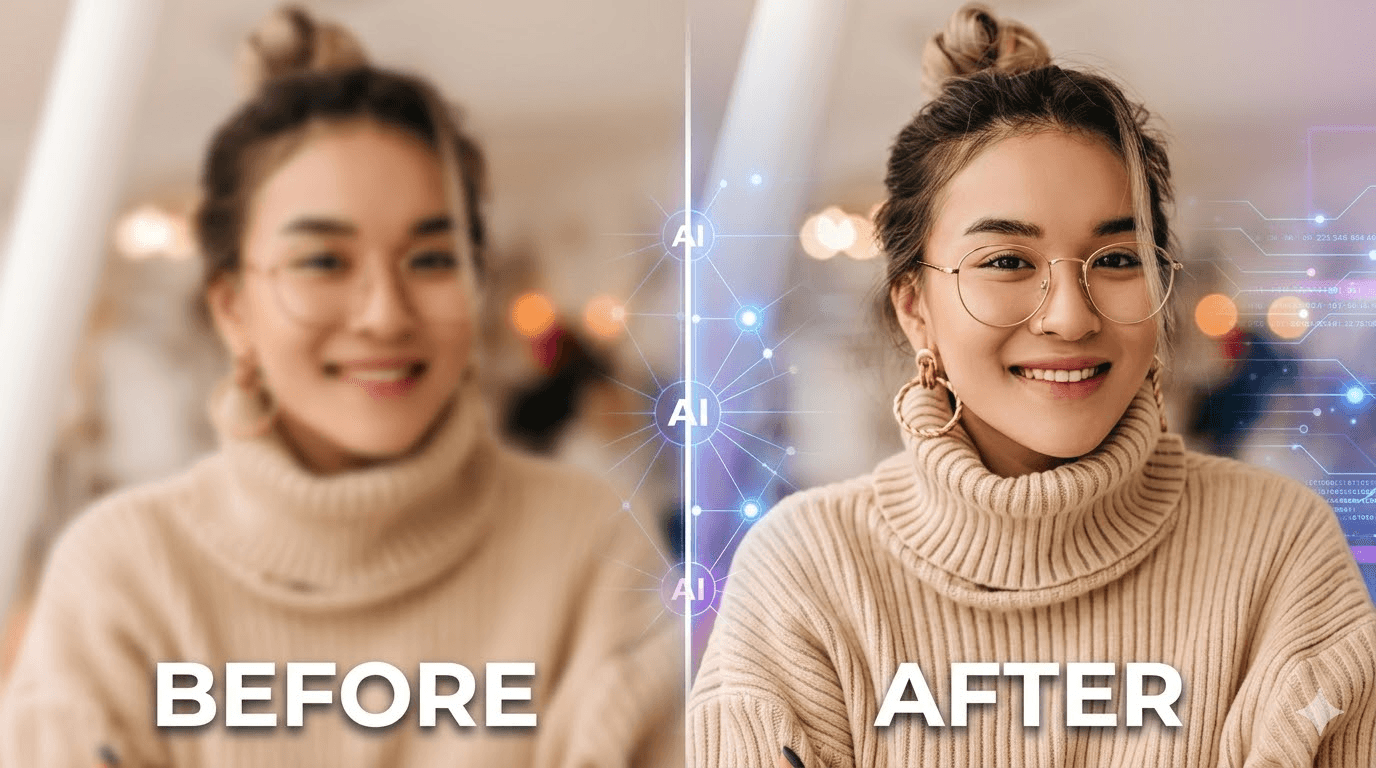
AI image and video enhancement tools are transforming digital content creation by leveraging deep learning to sharpen details, reduce noise, and upscale resolution, making high-quality visual production more accessible. These tools benefit creators, marketers, gamers, and small businesses by improving visual quality across various platforms. The article emphasizes how AI enhancement, unlike traditional upscaling, intelligently restores details and maintains authenticity.
Key Takeaways
- AI video enhancers use temporal consistency models to prevent flickering across sequential frames during the upscaling process
- Deep learning restoration manages six distinct model families, including denoising, sharpening, and facial clarity improvement
- Automated enhancement tools allow small-scale creators to bypass complex manual editing for product demos and social media content
- Transformer-based upscalers in 2026 have narrowed the visual quality gap between traditional rendering and real-time diffusion models
Why It Matters
The immediate implication is a lower technical barrier for high-fidelity content, allowing SVOD and FAST platforms to refresh aging libraries at scale without expensive frame-by-frame restoration. For the broader ecosystem, this creates a 'quality floor' where even low-budget production can compete for viewer attention on ultra-HD displays. However, the risk of 'over-enhancement'—where skin textures and details appear artificial—remains a critical tension for platforms balancing technical specs with creative authenticity. Watch for VMAF (Video Multi-Method Assessment Fusion) scores to become the standard metric for validating AI-enhanced streams against original intent.
Additional Context
The practical application of AI restoration reached a high-profile inflection point in early 2025. Per Digital Camera World in March 2025, streaming platforms faced significant social media backlash for the AI-driven upscaling of classic sitcoms like 'Roseanne' on Peacock and 'A Different World' on Netflix. Fans criticized the results for 'horrible' facial distortions and nonsensical text rendering, highlighting that while AI can intelligently predict missing data, it still struggles with 1980s-era film artifacts and complex human anatomy. This public friction has forced a pivot toward more conservative 'augmentation' pipelines where human editors validate AI outputs.
Despite these quality hurdles, the enterprise shift toward AI-integrated production is accelerating. According to a June 2026 report from Meticulous Research, the global AI video generation and editing software market is projected to grow from $3.67 billion in 2026 to nearly $25 billion by 2036. This growth is fueled by major studio partnerships, such as the 2024 Lionsgate-Runway deal, which focuses on training AI models specifically on proprietary film libraries to support localization and post-production. Furthermore, per AICerts in July 2025, Netflix co-CEO Ted Sarandos confirmed that generative AI had already been used to complete complex visual sequences ten times faster than traditional methods for the original series 'El Eternauta.'
In the real-time sector, hardware and cloud integration are maturing to meet low-latency demands. Per Forasoft in October 2025, the 2026 technical stack for video enhancement has fractured into specialized tools: NVIDIA Maxine for sub-80ms live denoising, and cloud-native APIs like Pixop for VOD scaling. This maturation allows providers to offer per-frame billing through REST APIs, removing the need for in-house GPU farms. As noted by CDNetworks in January 2026, these advancements in real-time upscaling and adaptive compression are becoming essential for platforms to maintain high-quality playback across various devices and network conditions.
Read full article at geekvibesnation.com
Enjoy our coverage?
Add StreamingMeme as a preferred source on Google to see more of our streaming news at the top of your Search results.
Add as preferred source