
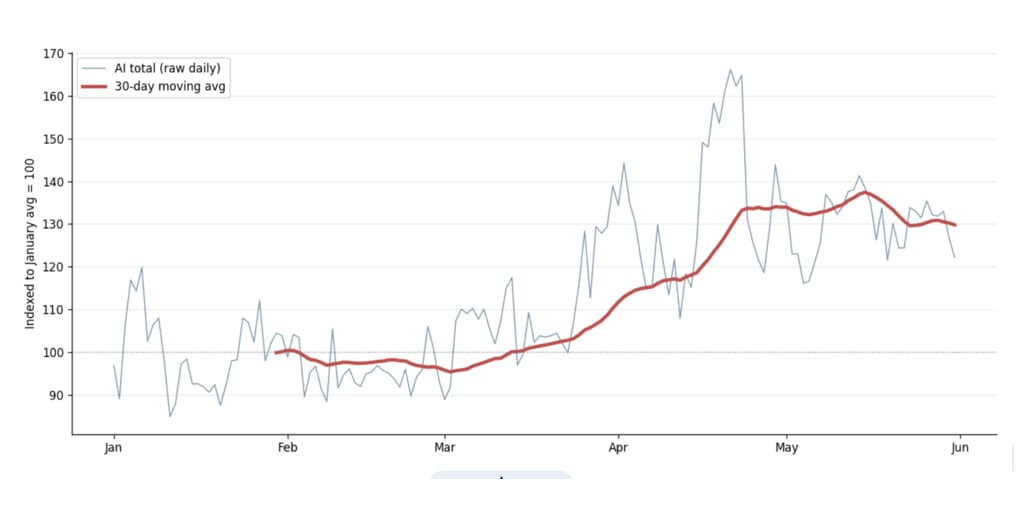
Fastly reports that AI-generated traffic grew 30% between January and May 2026, outpacing human traffic by 6.5 times and fundamentally changing how the internet operates. This shift necessitates new strategies for organizations to manage automated requests, protect infrastructure, and capture value from machine interactions. Fastly offers solutions to help customers execute this machine traffic strategy at the edge, providing visibility, context, and precision.
The explosion of machine-to-machine traffic fundamentally alters the cost structure of content delivery, as AI agents bypass edge caches to hit origin servers directly. For streaming and media companies, this creates a tension between protecting intellectual property and maintaining discoverability in AI-driven search environments. Relying on simple bot blocking is no longer sufficient; organizations must now distinguish between high-value 'fetchers' that drive engagement and resource-heavy 'crawlers' that offer no immediate return. Watch for a rise in tiered access models where publishers charge AI firms to exit the edge and hit origin databases.
The transition to a machine-dominated internet has accelerated even faster than industry leaders predicted. Per Mashable, June 2026, Cloudflare data indicates that bots now account for approximately 57.5% of all global web traffic, crossing the 50% threshold eighteen months earlier than original 2027 forecasts. This shift has significant economic implications for the media sector, where AI chatbots are reportedly driving 96% less referral traffic than traditional Google search engines as of Q4 2024, according to Akamai. Publishers are effectively being asked to fund the infrastructure for automated systems that bypass their primary monetization funnels.
In response, major media entities are moving toward aggressive 'default-deny' policies to force licensing negotiations. Per Digiday, June 2026, both Reuters and Time have recently implemented blocks against all AI bots by default, only allowing verified crawlers through specific allowlists. This strategy mirrors moves by The Atlantic and People Inc. aimed at creating friction against unlicensed scraping. However, data from Tollbit suggests that 30% of AI bot scrapes in late 2025 ignored explicit robots.txt directives, highlighting a growing arms race in technical enforcement.
Infrastructure providers are also adapting their business models to help publishers capture value from this shift. Per Forbes, June 2026, Cloudflare launched a 'Pay Per Crawl' service in 2025, providing a mechanism for site owners to charge AI companies for content access. Meanwhile, Akamai reports that the publishing sector remains the primary target for AI bot activity, accounting for 63% of all AI-related triggers in the media industry. As AI agents increasingly act on behalf of human users to complete complex tasks, the streaming industry must prepare for a future where 'users' are behaviorally indistinguishable from automated software.
Add StreamingMeme as a preferred source on Google to see more of our streaming news at the top of your Search results.
Add as preferred source