

Agora integrates chat features to target 24% user retention benchmark
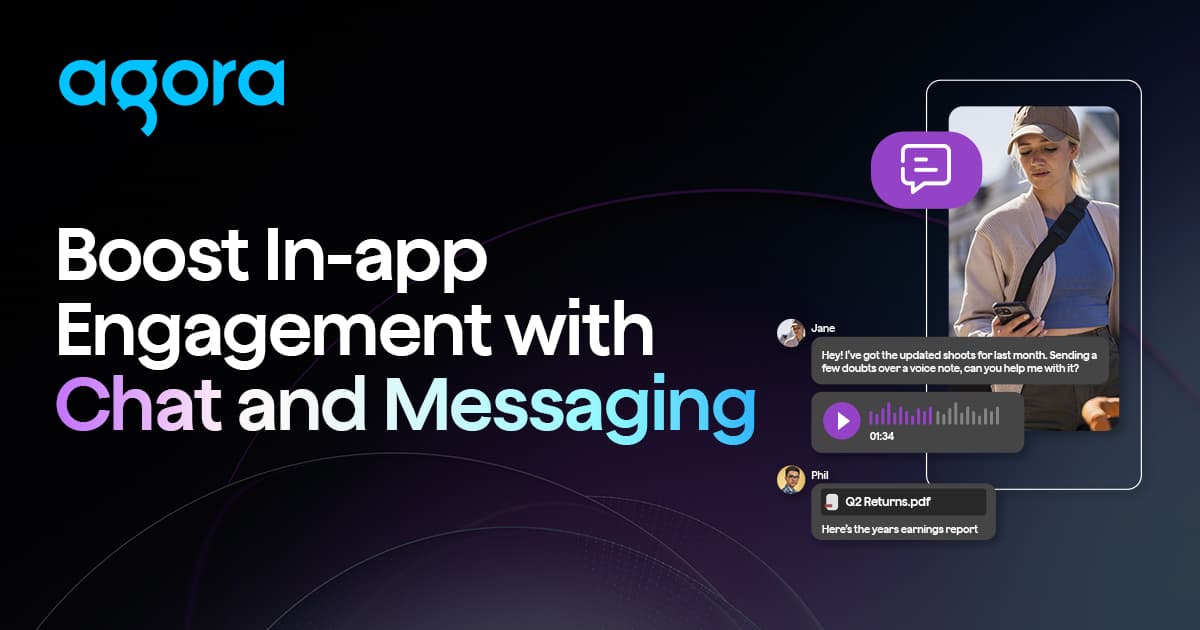
Agora highlights how integrating chat and messaging features can boost user retention in social apps, citing an A16Z study that found a 24% retention rate 30 days post-installation. The company advocates for a scalable, future-proof messaging solution to enhance user engagement and community building. This guide from Agora suggests best practices for implementing such features.
Key Takeaways
- A16Z research found a 24% retention rate 30 days after installation in apps that prioritize messaging features.
- Agora's Chat SDK provides transition-ready capabilities including message storage, typing indicators, and rich media support.
- The solution focuses on community safety through content moderation tools to protect users from inappropriate text and images.
- The infrastructure is designed for scalability across one-to-one, group, and large-scale interactive conversations.
Why It Matters
In-app messaging is transitioning from a secondary feature to a core retention engine for fragmented social platforms. As the focus shifts from user acquisition to lifetime value, the ability to build internal communities directly impacts a platform's defensibility against established social giants. Integrating specialized chat infrastructure allows streaming providers to lower technical debt and speed up development cycles while maintaining the low-latency requirements of live environments. Watch for Agora’s integration with recently launched AI-driven tools, like their Agent Studio, to see if automated conversational agents further boost these retention percentage benchmarks.
Additional Context
The strategic emphasis on real-time messaging comes as the broader communication market undergoes a significant shift toward private, community-first spaces. Per a January 2026 report from CDNetworks, video streaming services are increasingly adopting social features like real-time commenting and watch parties to counter content fragmentation. This trend aligns with consumer data from Sprout Social in late 2025, which indicated that while short-form video remains the dominant format, conversational steps within the app are becoming essential for trust-building and monetization.
Financial performance reflects this demand for integrated real-time engagement (RTE) infrastructure. In its Q1 2026 earnings report released in May 2026, Agora reported a 13.5% year-over-year revenue increase to $37.7 million, alongside its sixth consecutive quarter of GAAP profitability. Per the earnings release, this growth was driven primarily by expanded usage in live shopping and social entertainment sectors. The company’s focus has expanded beyond simple messaging; the May 2026 launch of Agent Studio, a no-code platform for conversational AI, suggests that Agora is betting on the convergence of automated voice agents and traditional chat to drive platform stickiness.
Market-wide infrastructure is also evolving to support these features. According to Technavio data from February 2026, the real-time communication market is projected to expand significantly through 2029, with a compound annual growth rate exceeding 60%. This expansion is supported by new protocols like Media over QUIC (MoQ), which aim to combine the low latency of WebRTC—the underlying tech for much of Agora's stack—with the massive scale required for broadcast streaming. As social commerce becomes standard, the integration of messaging and checkout features is expected to shorten the consumer journey, as noted by National University analysts in March 2026.
Read full article at prod.agora.io
Enjoy our coverage?
Add StreamingMeme as a preferred source on Google to see more of our streaming news at the top of your Search results.
Add as preferred source